
What is the phase of the moon today January 15th and complete lunar calendar 2026


This Thursday, January 15, 2026, Lua is in the waning phase. The illuminated portion of the satellite continues to decrease, with visibility below 20% in a large part of the Brazilian territory. Essa stage of the lunar cycle follows the full Lua recorded at the beginning of the month and precedes the new Lua expected for the next few days.
The lunar cycle maintains an average duration of 29.5 days, a period known as lunation. Durante this interval, Lua passes through four main phases, each lasting approximately seven days. The relative position between Terra, Lua and Sol determines the amount of reflected light visible from our planet.
Observers may notice that the waning Lua appears later in the night sky. Sua lighting progressively reduces until it disappears completely in the new phase.
Lunar calendar for January 2026
The month of January 2026 presents four main phase changes. Essas dates follow precise astronomical calculations and are valid for observation throughout the Brazilian territory.
- Full moon: January 3, at 7:02 am
- Waning moon: January 10th, at 12:48 pm
- New moon: January 18th, at 4:51 pm
- Crescent moon: January 26th, at 1:47 am
The transition between phases occurs gradually. Cada change marks the beginning of a new stage in the complete lunation cycle.
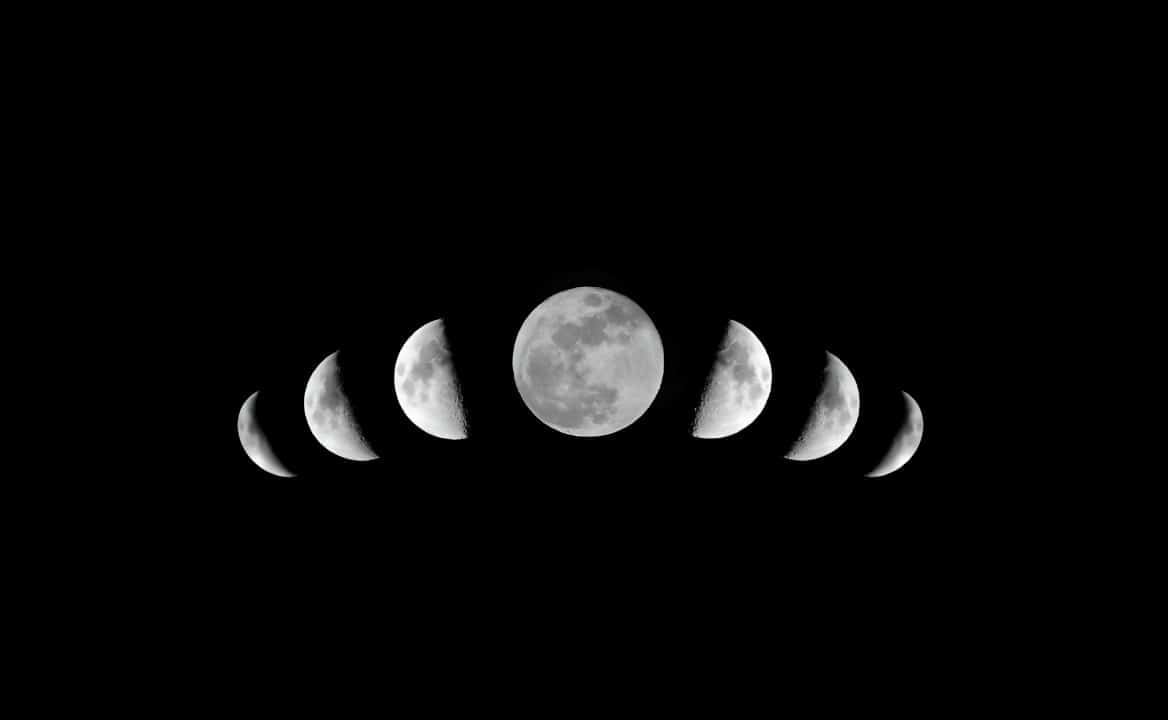
Lunar cycle and its stages
The movement of Lua around Terra generates the different phases observed. The gravitational interaction with Sol illuminates specific parts of the satellite at each moment.
A complete lunation lasts an average of 29.5 days. Esse period varies slightly due to the elliptical orbit of Lua. The four main phases divide the cycle in a balanced way.
The new phase occurs when the Lua is positioned between the Terra and the Sol. Nesse alignment, the illuminated side faces away from our planet.
Features of the waning phase
In the waning phase, the illuminated part of Lua decreases daily. The satellite rises later in the morning and remains visible until early morning.
Illumination is concentrated in the left portion when viewed from Hemisfério Sul. Essa configuration resembles the letter C inverted on some days. Visibility progressively reduces until the proximity of the new Lua.
Nighttime observers notice the lunar disk getting smaller. The phase favors activities that involve completing projects according to popular traditions.
New phase and invisibility
The new Lua represents the beginning of a new lunar cycle. Nesse moment, the satellite aligns directly with Sol as seen from Terra.
The illuminated face turns completely towards the king star. Do our planet, Lua becomes practically invisible in the daytime sky. Esse alignment explains the absence of characteristic night glow.
The transition to the growing phase begins soon after. A thin band of light appears on the right side of the lunar disk.
Rising crescent moon
The crescent phase marks the growth of the illuminated portion. Sunlight reaches progressively more visible surface area.
From Hemisfério Sul, the shape resembles the letter D in its early stages. Lua rises in the afternoon and remains visible longer at night. Illumination increases until it reaches the full Lua setting.
This step completes half of the growing lighting cycle. The official crescent moon occurs when exactly 50% of the disk appears illuminated.
Full moon and maximum illumination
The full Lua offers the brightest spectacle in the night sky. The satellite is positioned opposite Sol in relation to Terra.
The entire visible face reflects sunlight directly. The lunar disk appears completely illuminated throughout the night. Lua rises at sunset and sets at the rising of the king star.
This phase lasts a few days at its peak. The transition to waning begins shortly after peak lighting.
Observation in different hemispheres
The appearance of the Lua varies depending on the observer’s location on the Terra. No Hemisfério Sul, the phases have an inverted orientation compared to Hemisfério Norte.
The illuminated face of the crescent Lua resembles the letter C in Sul. No Norte, the same format resembles the letter D. Essa difference results from the geographical perspective.
We always see the same face of Lua as Terra. The satellite’s rotation period exactly coincides with its translation around the planet.
Distance and orbital motion
The average distance between Terra and Lua reaches approximately 384,400 kilometers. Esse value varies due to the satellite’s elliptical orbit.
At perigee, Lua approaches Terra. At its apogee, it reaches the furthest point. Essas variations influence the apparent size of the lunar disk.
The orbital movement maintains perfect synchronization. The rotation of Lua equals the revolution time around Terra.
Basic gravitational influence
Lunar gravity directly affects ocean tides. The attraction exerts greater force on the oceans facing the satellite.
During Lua full and new, the tides reach greater amplitudes. Esses periods known as spring tides result from the Terra-Moon-Sun alignment. The combined gravitational force amplifies the phenomenon.
The influence extends to other Earth systems. Estudos record subtle variations in different environmental contexts.
The lunar cycle continues to influence everyday astronomical observations. The current waning phase prepares the sky for the next Lua nova in a few days.



