
Apple plans four new MacBooks with M5 chips and an affordable model to renew its entire lineup


Growing rumors in the technology industry indicate that Apple is preparing for one of the biggest updates to its notebook line. The company is expected to launch up to four new MacBook models in mid-2026, with the aim of reaching a broader spectrum of consumers. The new product family should include everything from a more competitively priced entry-level option to high-performance versions equipped with the next generation of M series processors.
The information, which circulates among analysts and supply chain sources, suggests that Apple’s strategy is to diversify its portfolio to serve both students and casual users as well as professionals who demand maximum processing power. Entre expected news is a low-cost MacBook to compete directly with the Chromebooks, updates to the Air and Pro lines with the M5 chip, and a premium model with an OLED technology screen and touch features.
Although Apple maintains its traditional policy of not commenting on future launches, the technical details that have emerged point to a launch schedule distributed throughout 2026.
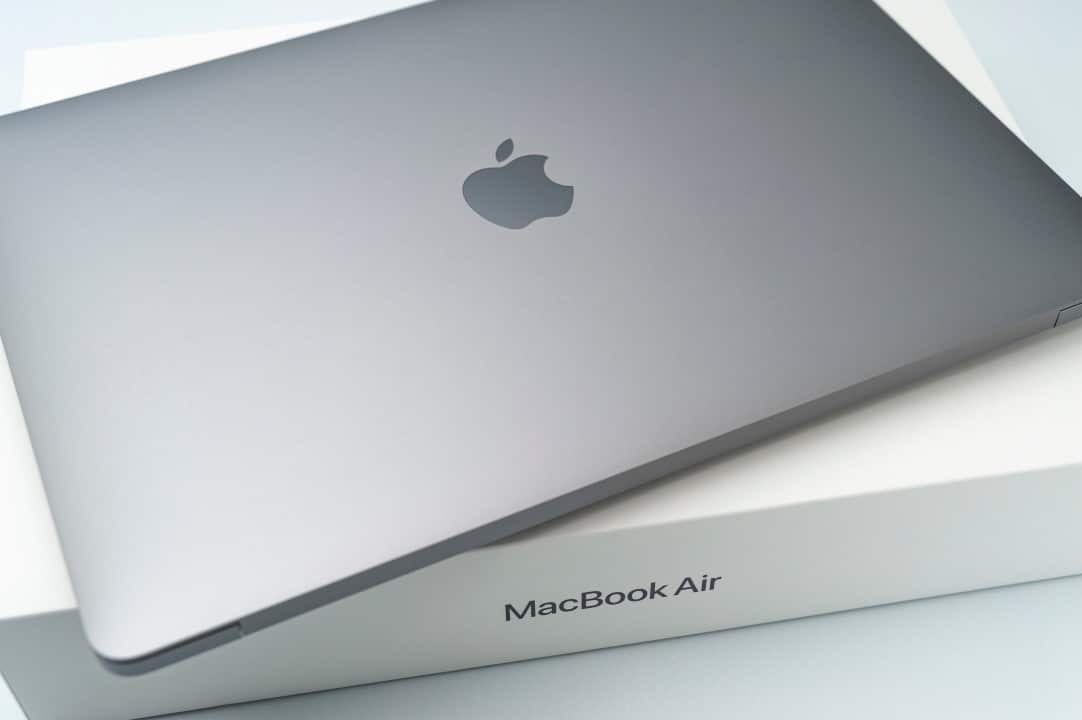
An entry-level MacBook for the education sector
One of the most anticipated launches is a more affordable MacBook, designed to compete directly with the Windows and Chromebooks notebooks in the educational and corporate market. Especula This model can be equipped with the A18 chip The design should be focused on lightness and portability, with a 13-inch Liquid Retina screen and a simplified construction to reduce production costs.
To reach a more competitive value, estimated between 700 and 800 dollars, the Apple may choose to simplify connectivity, replacing the Thunderbolt ports with standard USB-C. The color palette should also be a differentiator, with vibrant options such as blue, pink and yellow to attract the young audience. The launch of this model is scheduled for the first half of 2026, strategically positioning it for the back-to-school period in several global markets.
| モデル | メインチップ | 画面 | 推定開始価格 (米ドル) | 主な対象者 |
|---|---|---|---|---|
| 低価格MacBook | A18プロ | 13インチ液晶 | 699-899 | 学生と基本的な使い方 |
| MacBook Air | M5 | 13 インチまたは 15 インチ | 999 | プレミアムモバイルユーザー |
| 標準MacBook Pro | M5 プロ/マックス | 14 インチまたは 16 インチのミニ LED | 1999-3499 | 中級者向け |
| MacBook Pro OLED | M6(予定) | 14ンチまたは 16インチのタッチ OLED | 非開示 | 一流のクリエイター |
The evolution of performance with M5 series chips
The MacBook Air line, known for its balance between portability and performance, should be one of the first to receive the new M5 chip. Preliminary benchmarks indicate a performance jump of between 12% and 15% in single-core and multi-core tasks compared to the previous generation, consolidating the model as a powerful tool for the majority of users. The integrated GPU will also see a significant advancement, with gains of up to 36%, which will make the Air more capable for mid-tier graphics tasks and casual gaming.
The 14-inch and 16-inch MacBook Pro models will be updated with the most powerful variants, the M5 Pro and M5 Max chips. Fabricados with TSMC’s 3 nanometer technology, these processors promise a significant increase in speed and energy efficiency, making them ideal for professionals working with video rendering, 3D modeling and other intensive applications. Além of the new processor, the new Pro are expected to offer faster SSD storage options and greater RAM capacity.
Apple continues to focus on optimizing the efficiency of its chips, seeking to extend battery life even with increased processing power. The architecture of the M5 series processors is also expected to include an improved Neural Engine, accelerating artificial intelligence and machine learning tasks directly on the device. Essa improvement will be crucial to the performance of future versions of macOS and its native applications.
While the design of the Pro models should remain in line with the current generation, rumors already point to a complete visual overhaul with the arrival of the M6 generation. The pricing strategy should be maintained, with the entry-level MacBook Air remaining in the $999 range, while the Pro models will start at $1,999, reinforcing the positioning of each product within the company’s ecosystem.
MacBook Pro with OLED screen and touch capabilities
The big innovation for the high-end segment is reserved for the second half of 2026, with the launch of a MacBook Pro equipped with an OLED screen and touch support. Esta will be the first time that Apple will integrate OLED technology into its notebooks, offering superior contrast, deeper blacks and more vibrant colors, following a trend already present in the brand’s other premium devices, such as the iPhone and the Apple Watch. The touch functionality is seen as a spiritual successor to the Touch Bar, offering a new way of interacting with macOS that was previously exclusive to the iPad. Especula This model is expected to be driven by the future M6 chip, which will be optimized to manage the new screen and its interactive capabilities, and may also feature a thinner and more modern design, with improvements to the camera and audio system. The introduction of an OLED display with improved energy efficiency, direct touch support for hybrid interactions, an M6 chip with accelerated graphics and AI capabilities, and a sleeker chassis with a camera notch will position this model as the pinnacle of the MacBook lineup.
Strategic expansion of the Mac line
With these four launches, Apple signals a strong intention to diversify and strengthen its presence in the portable computer market. The segmentation strategy is clear: the entry model aims to capture a new user base, the MacBook Air continues to be the ideal choice for everyday use and portability, and the Pro models meet the needs of content creators and developers who demand maximum performance.
This diversification is Apple’s most ambitious in years and puts the company in a competitive position across all key price segments. The continued evolution of M-series chips is the cornerstone of this strategy, enabling the company to offer products with a longer lifecycle and a consistent user experience across its hardware and software ecosystem.
Details of the new processor architecture
The A18 Pro chip, priced for the entry-level MacBook, represents an important milestone, bringing the architecture of iPhone processors to macOS in a mass consumer product. Sua performance is compared to that of the 2020 M1 chip, which ensures a fluid experience and the ability to efficiently run the entire Apple application ecosystem, setting a new standard for low-cost notebooks.
In turn, the M5 family will focus on improving artificial intelligence processing power with a faster Neural Engine and a more robust GPU. Essas improvements are designed to directly benefit workflows involving video editing, graphic design and software development, making tasks faster and more efficient.
Market positioning and pricing
The pricing structure of the new models will be fundamental to the success of the new strategy. The entry-level MacBook, with a projected value of under $800, has the potential to shake up the education and entry-level market. Já the MacBook Air will maintain its position as the best value for money for most consumers, starting in the $999 range. The Pro models, in turn, will continue to be premium products, with prices that can range from $1,999 to over $3,499, depending on the configuration. The version with an OLED screen and M6 chip will position itself at the top, as a niche product for the most demanding enthusiasts and professionals.
A release schedule to maintain interest
Apple plans to distribute launches throughout 2026. The entry-level MacBook and the updated MacBook Air with M5 chip should arrive in the first half of the year. Já MacBook models Pro with M5 Pro and M5



