
Apple plans to launch four new MacBooks with M5 chips, OLED screens and a long-awaited entry-level model


Rumors circulating in the technology industry indicate that Apple is preparing one of the biggest renewals of its notebook line, with the launch of up to four new MacBook models expected over the next year. The company’s strategy appears focused on diversifying its portfolio to serve a wider range of consumers, from students looking for a more affordable option to professionals demanding maximum performance. The news includes the introduction of a low-cost MacBook to compete directly with the Chromebooks, the update of the Air and Pro lines with the long-awaited M5 series chips and, possibly, a top-of-the-line model equipped with a revolutionary OLED technology screen. Essa move signals an offensive by Apple to consolidate its leadership in the personal computer market, betting on hardware innovation and product segmentation to boost sales and attract new users to its ecosystem.
The new generation of processors, which should include the M5, M5 Pro, M5 Max and even a future M6 variants, is at the heart of this strategy. The expectation is that these components, manufactured with second-generation 3-nanometer technology, will offer significant leaps in performance and energy efficiency, strengthening the devices’ artificial intelligence and graphics processing capabilities.
The launch schedule, not yet officially confirmed, suggests a strategic distribution throughout the year, starting with the most popular models and culminating with niche and high-performance launches, keeping the brand in constant evidence in the market.
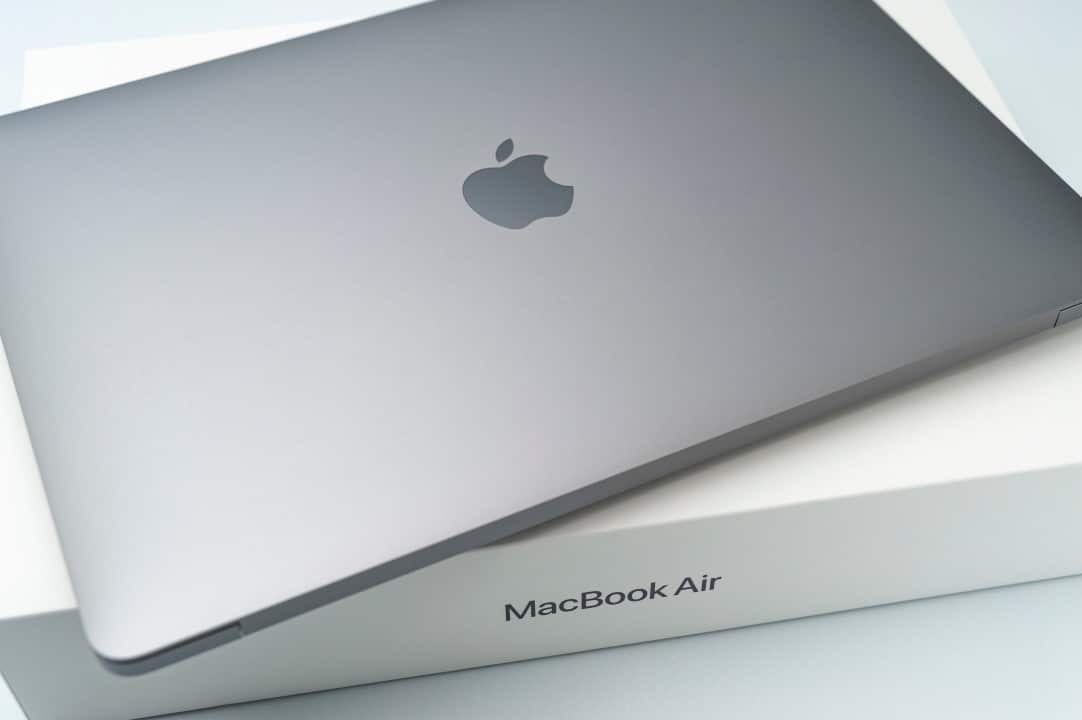
The long-awaited low-cost MacBook to compete in the education market
One of the most anticipated launches is an entry-level MacBook, designed specifically for the educational sector and for users looking for a more accessible entry point into the Apple ecosystem. The Este model, according to sources, would have a metal body with a simplified design to reduce production costs, competing directly with the growing popularity of the Chromebooks in schools and universities. Especula can be equipped with the A18 Pro chip, the same one expected to debut in the next generation iPhone, offering robust performance for everyday tasks such as web browsing, document editing and video conferencing. Para maintain a competitive price, estimated between 700 and 800 dollars, the Apple could opt for a 13-inch LCD screen and a limited number of ports, possibly two USB-C, giving up more expensive features such as the high-resolution screen Liquid Retina and the Thunderbolt port. The launch of this product could take place in the middle of the year, targeting the back-to-school period in the northern hemisphere.
Performance upgrades with M5 Pro and M5 Max chips
For the professional segment, the Apple should present the new 14-inch and 16-inch versions of the MacBook Pro, equipped with the powerful M5 Pro and M5 Max chips. Construídos Based on TSMC’s 3-nanometer manufacturing process, these processors promise a considerable increase in speed and efficiency compared to the previous generation. The improvements should be felt mainly in heavy tasks, such as 8K video rendering, code compilation and 3D modeling, areas where the Pro line already stands out. The M5 Pro and M5 Max are expected to offer more CPU and GPU cores, as well as an improved Neural Engine to accelerate AI-based workflows.
| モデル | メインチップ | 画面 | 推定開始価格 (米ドル) | 主な対象者 |
|---|---|---|---|---|
| 低価格MacBook | A18プロ | 13インチ液晶 | 699-899 | 学生と基本的な使い方 |
| MacBook Air | M5 | 13 インチまたは 15 インチ | 999 | プレミアムモバイルユーザー |
| 標準MacBook Pro | M5 プロ/マックス | 14 インチまたは 16 インチのミニ LED | 1999-3499 | 中級者向け |
| MacBook Pro OLED | M6(予定) | 14ンチまたは 16インチのタッチ OLED | 非開示 | 一流のクリエイター |
In addition to the processor upgrade, the new MacBook Pro models may receive other incremental improvements, such as support for greater RAM memory capacities and even faster SSD storage. The design, which was well received in the last major redesign, should be maintained, preserving the Liquid Retina XDR screen, the high-fidelity sound system and extensive connectivity with HDMI, MagSafe and SD card reader ports. Prices should remain in line with current models, starting at around $1,999 for the 14-inch version with the M5 Pro chip.
MacBook Air with the new generation M5 chip
The MacBook Air, Apple’s most popular notebook, will also receive a significant upgrade with the introduction of the M5 chip. Previsto to be launched in the first half of the year, the new model should maintain its thin and light design, but with a performance gain that will make it even more versatile.
Preliminary comparisons suggest that the M5 chip could offer a 12% to 15% increase in single-core and multi-core performance over the M4, as well as up to a 36% jump in graphics performance. Isso will make the Air more capable for light photo and video editing, and even some gaming.
The Apple should continue to offer the MacBook
The revolution of OLED screens on the MacBook Pro
Perhaps the biggest innovation reserved for the end of the year is the launch of a MacBook Pro with an OLED screen. Essa technology, already present in iPhones and Apple Watches, offers notable advantages over LCD, such as infinite contrast, true blacks and more vibrant colors, as well as greater energy efficiency.
The transition to OLED would enable an unprecedented visual experience on an Mac, ideal for creative professionals working with image and video. The implementation of this technology could be accompanied by a new design, even thinner and lighter, thanks to the nature of OLED panels, which do not require a backlight layer.
It is speculated that this high-end model could debut the M6 chip, a processor designed to maximize the benefits of the new screen and introduce advanced artificial intelligence features. Entre possible new features would be superior graphics performance and optimized battery consumption.
In addition to the screen, this premium model could bring other innovations, such as the reintroduction of a touch-sensitive interface to replace the old Touch Bar, offering contextual shortcuts in a more intuitive and functional way for users.
Pricing strategy and market positioning
The diversification of the MacBook line with four distinct launches demonstrates a clear strategy by Apple to cover all price ranges and usage profiles. Do entry model focused on cost-benefit to the Pro with an OLED screen for the ultra-performance market, the company seeks to leave no gaps for the competition.
This approach allows Apple to grow its user base, attracting consumers who previously considered MacBooks inaccessible, while at the same time retaining its professional base with the latest in hardware technology.
What to expect from the architecture of the new processors
The heart of all these launches will be the new generation of Apple Silicon chips. The A18 Pro, intended for the entry-level model, should inherit the efficiency and processing power of the iPhone line, offering a fluid experience on macOS. Já the M5 series, with its improved architecture, will focus on accelerating AI tasks with a faster Neural Engine and delivering superior graphics performance, benefiting both content creators and gamers. The transition to a more advanced manufacturing process will also result in greater energy efficiency, which could translate into even longer battery life for the entire notebook lineup.
The expected release schedule
Although Apple does not comment on future products, the release schedule appears to follow a logical pattern. The MacBook Air with M5 chip should arrive in the first quarter, taking advantage of its market appeal to start the year with a large sales volume.
Then the low-cost MacBook would be released in the middle of the year, followed by the MacBook Pro models with M5 Pro and M5 Max chips in the second half of the year. Finally, the innovative MacBook Pro with OLED screen and M6 chip would close the launch cycle, positioning itself as the aspirational product of the line.



