Artificial intelligence and new camera system promise to define Samsung’s future Galaxy S26 Ultra

The technology market is already turning its attention to the innovations that Samsung plans to introduce with the long-awaited Galaxy S26 Ultra. Embora the launch is only scheduled for 2026, expectations indicate that the device will not just be an incremental evolution, but rather a technological milestone, designed to redefine user interaction with mobile devices through substantial advances in artificial intelligence and computational photography.
Industry sources point out that the South Korean manufacturer is focused on delivering a user experience that transcends hardware. The goal is to create an ecosystem where predictive software and cutting-edge hardware operate in perfect synergy, anticipating user needs and automating complex tasks in a transparent and efficient way.
With this strategy, Samsung seeks to consolidate its leadership in the premium segment, responding to the growing demands for devices that not only perform tasks, but that function as intelligent personal assistants. The Galaxy S26
Artificial intelligence as the brain of the operation
The big bet for the Galaxy S26 Ultra lies in an artificial intelligence system deeply integrated into the core of the operating system. The technology will work in a predictive manner, analyzing usage patterns to optimize device performance in real time, from energy management to suggesting applications and contextual actions.
Consistent rumors indicate that the device will be equipped with a state-of-the-art Unidade of Processamento Neural (NPU), specifically designed to process complex algorithms directly in hardware. Essa approach, known as “on-device AI”, guarantees greater speed and, crucially, greater privacy, as sensitive data will not need to be sent to the cloud for analysis.
In practice, this will translate into features such as simultaneous translation in calls and messaging applications, photo and video editing with automatic suggestions and a virtual assistant capable of understanding more complex and contextual commands. Personalization will be one of the pillars, with the device continually adapting to its owner’s behavior.
This way, AI will no longer be a set of isolated functionalities to become the true brain of the smartphone. The device will learn and evolve with the user, transforming into a proactive tool that simplifies everyday life and increases productivity in a safe and intuitive way.
A revolution in the camera system
The Galaxy S26 Ultra’s camera set is perhaps the most anticipated component, with projections that point to an unprecedented technological leap in mobile photography. The Samsung should invest in a larger format main sensor, possibly approaching an inch, which would allow drastically superior light capture, resulting in sharper images, with less noise and more natural background blur, even in low light environments. Artificial intelligence will be key in post-processing, refining details, optimizing dynamic range and applying color adjustments based on improved scene recognition. Especula is also based on a periscopic zoom system with moving elements, allowing continuous optical magnification instead of fixed levels, which would eliminate the loss of quality between focal lengths. In video recording, support for higher resolutions with high frame rates is expected, combined with a hybrid stabilization system that combines optics and electronics, powered by AI to predict movements and deliver cinematic results.
Cutting-edge performance and energy efficiency
At the heart of the Galaxy S26 Ultra will be a new generation processor, which should be one of the first on the market to be manufactured using the 2 nanometer process. Essa evolution in chip architecture represents an exponential leap in processing power and, more importantly, in energy efficiency. Thinner lithography allows more transistors to be allocated in the same space, resulting in significantly faster performance for intensive tasks such as graphics-intensive gaming, 8K video editing, and running complex artificial intelligence algorithms. Essa new platform will be essential to ensure a fluid and seamless user experience.
The hardware improvement will not be limited to the CPU and GPU, but will also extend to the device’s thermal management. Espera is a cooling system with a larger and more efficient vapor chamber, capable of dissipating heat more effectively during long periods of intense use. Complementando as a whole, the device must feature the latest LPDDR6 RAM memory and UFS 5.0 storage technologies, which offer superior reading and writing speeds. Essa combination will ensure that multitasking runs effortlessly and heavy applications and files open almost instantly, meeting the needs of the most demanding users.


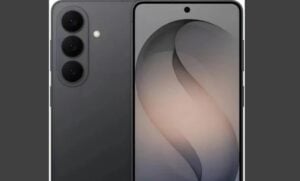
Design and screen with improved aesthetics
The Samsung should further refine the visual identity of its top of the line, combining elegance and durability. The design of the Galaxy S26
The screen, traditionally a strong point of the brand, should be an improved version of the Dynamic AMOLED technology. Improvements should focus on an even higher peak brightness for perfect viewing in direct sunlight, as well as more accurate color calibration and an adaptive refresh rate with a wider operating range, optimizing fluidity and power consumption.
The main visual innovation, however, could be the implementation of a new generation under-display camera (UDC). If the technology reaches the expected maturity, the S26 Ultra could be the first in the line to offer a fully immersive viewing experience, without any type of cutout or hole in the display.
Battery autonomy beyond conventional
Energy autonomy remains a priority for consumers, and the Galaxy S26 Ultra is expected to address this demand with a multi-faceted approach. Além of a possible increase in the physical capacity of the battery, the big difference will come from the combined efficiency of the new processor and software optimization.
Power management will be driven by AI algorithms that learn user habits, intelligently hibernating background applications and adjusting resource consumption to maximize charge duration, promising autonomy that easily supports a full day of intense use.
Connectivity and integrated ecosystem
Integration with the Galaxy ecosystem, which includes watches, headphones and tablets, will be even more transparent. Artificial intelligence will act as a link, enabling a fluid transition of tasks between different devices and creating a seamless and unified user experience.
In terms of connectivity, the device will come equipped with support for the latest standards, such as Wi-Fi 7.
Security and privacy as pillars
With the increasing sophistication of digital threats, data security will be reinforced. The Galaxy S26 Ultra will feature an updated version of the Samsung Knox security platform, which combines hardware and software level protection to create a secure environment against malware, phishing and other vulnerabilities, ensuring the privacy of user information.
Veja Tambem em News (EN)

Research reveals that parents are unaware of how their children use artificial intelligence

Samsung releases new system update with new features for Galaxy Watch 4 users
Digital retail reduces the value of the Galaxy S25 5G smartphone with bank bonuses and device exchange
Amazon’s wireless CarPlay adapter has a 50% discount and high approval ratings from drivers

Zach Cregger’s new Resident Evil ignores games and focuses on an unprecedented story with new characters

Rumor suggests that Nintendo is preparing a special edition of the Switch 2 with a remake of Ocarina of Time
Apple accelerates production of the iPhone 17e and develops new Air model with dual camera system

Epic Games platform releases twelve high-budget games at no permanent cost for PC users

PlayStation 5 Pro price drop accelerates digital retail sales and eliminates global stocks
New Galaxy Watch 9 firmware appears on server and confirms progress in software development

Apple’s commemorative project tests cell phone with 1.1 millimeter edge and curved screen for 2027