
Resident Evil Requiem details classic mode with ink ribbons and dual camera for Leon and Grace

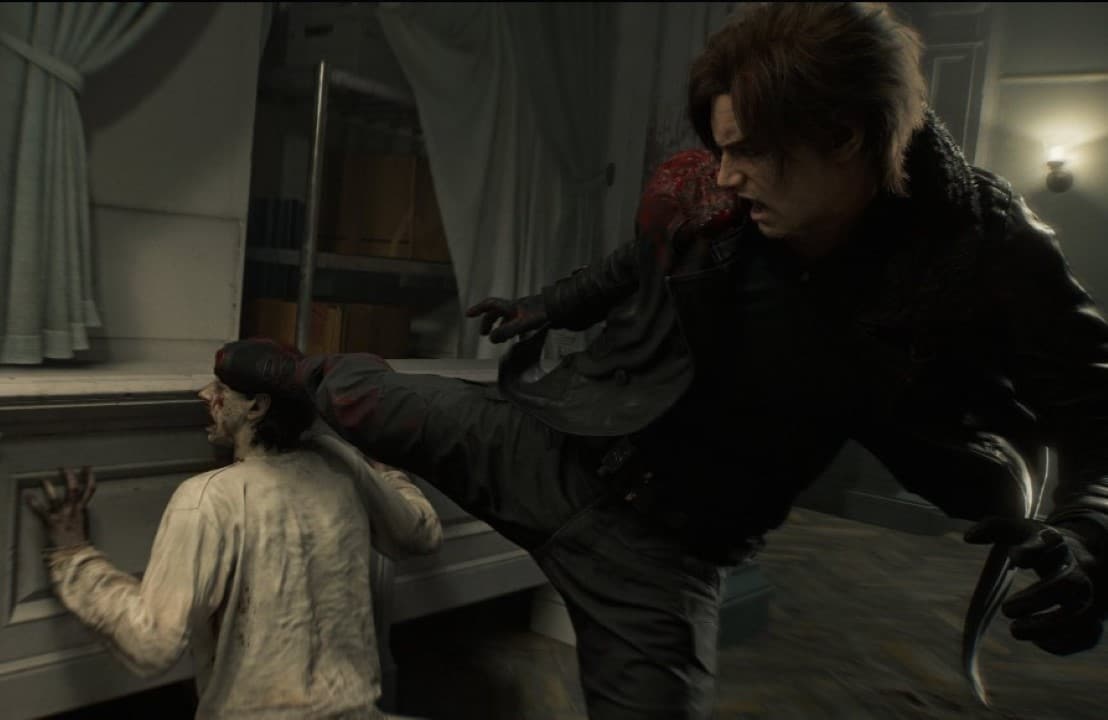
Capcom revealed new details about the highly anticipated Resident Evil Requiem, confirming the return of a classic mechanic that marked the first games in the franchise. Durante a special presentation, the developer announced that the “Standard Classic” mode will require the use of ink ribbons to save progress, a feature that promises to increase tension and strategic challenge for veteran players. The game is scheduled for release on February 27, 2026.
In addition to the restricted save system, the title will bring an innovative camera customization option. Players will be able to freely switch between first- and third-person perspectives independently for each of the protagonists, newcomer Grace Ashcroft and veteran Leon S. Kennedy. Essa flexibility will allow you to adapt the gaming experience to the style of each character.
The information details an approach that seeks to balance the nostalgia of survival horror with the conveniences of modern design. With different difficulty levels and distinct gameplay systems for each protagonist, Resident Evil Requiem positions itself as one of the most ambitious and customizable entries in the acclaimed Capcom horror series.
Resident Evil Requiem | New Gameplay + Details
Full Video ▶️https://t.co/4qMBspDYJn
GZLa0▪️Originally tried to make a Leon horror game but the team felt people wouldn’t want to see a “timid Leon”
▪️Grace sections are more similar to RE2 and RE7
▪️Leon sections are more…pic.twitter.com/TWdtpj0iGT— Shinobi602 (@shinobi602)January 15, 2026
The return of an iconic mechanic
The reintroduction of ink ribbons in the “Standard Classic” mode is a direct homage to the series’ roots, where every save was a critical decision. In the original PlayStation games, the limited quantity of these items forced players to manage their resources with extreme care, deciding the exact moment to register their progress and avoiding waste in less risky situations. Em Resident Evil Requiem, this mechanic will be applied mainly during the segments with the new protagonist, Grace Ashcroft, reinforcing the atmosphere of vulnerability and oppression that defines classic survival horror. Autosaves will be rare, making each typewriter a true sanctuary in the midst of danger.
This design choice is not only a nod to longtime fans, but also a way to differentiate gameplay experiences within the game itself. Enquanto the sections of Grace will require planning and caution, the campaign of Leon S. Capcom seems to seek the best of both worlds, offering a punishing challenge to those looking for it, without alienating players who prefer a more fluid and less restrictive progression, ensuring that horror and action coexist in an organic way.
Challenge levels for all players
To ensure that both newcomers and veterans can enjoy the experience, Resident Evil Requiem will offer three distinct difficulty modes from the start. Cada mode adjusts specific game parameters to suit different player profiles, maintaining the central proposal of horror and survival.
“Casual” mode is aimed at those who want to focus on the story, offering automatic aim assistance and making enemies less aggressive. Já the “Standard
Finally, “Standard Classic” is where nostalgia meets challenge, requiring the use of ink ribbons and limiting autosaves. Essa difficulty structure guarantees accessibility without compromising the hardcore identity that established the franchise.
Flexibility from a gaming perspective
One of the great new features of Resident Evil Requiem is the freedom given to the player to choose the camera perspective. Diferente from the recent remakes, which adopted a fixed third-person view, or from Resident Evil 7 and Village, which focused on the first person, this new title will allow you to switch between the two styles.
This customization can be done independently for each protagonist. Será It is possible, for example, to play with Grace in first person for a more intense and claustrophobic immersion, while opting for a third-person view for Leon, facilitating spatial perception during intense combat.
Capcom itself encourages the use of first person for sections of Grace, suggesting that the environments were designed to maximize the sense of panic and surprise from that perspective. Já to Leon, the over-the-shoulder camera proves to be more suited to his arsenal and combat skills.
This duality represents a significant step in customizing the experience, allowing each player to shape the game to their liking. The decision reflects the hybrid nature of the gameplay, which combines psychological horror with unbridled action.
Two campaigns, two different experiences
Resident Evil Requiem deepens the narrative by introducing two protagonists with fundamentally different play styles, creating a campaign that unfolds on two fronts. On one side, we have Grace Ashcroft, an FBI analyst recently arrived in the series’ universe, whose journey is designed to evoke pure survival horror. Suas sections are marked by a shortage of ammunition and healing items, forcing the player to adopt a stealthy stance, solve complex puzzles and, often, opt for escape instead of direct confrontation. The choice of first-person camera for Grace intensifies this sense of vulnerability, putting the player directly in their shoes as they explore dark, oppressive corridors. Do On the other hand, the return of Leon S. Kennedy brings the explosive action that fans learned to love in Resident Evil 4 and the recent remakes. Equipado with a robust arsenal and agile combat movements, Leon faces hordes of enemies in more open scenarios, with gameplay that rewards precision and aggression. The narrative will alternate between these two points of view, not only to advance the plot, but to create a dynamic contrast between tension and adrenaline, meaning the player never knows what to expect from the next segment.
Legacy and innovation in the franchise
The ink ribbon mechanic is one of the pillars of the first games in the series, such as the 1996 original and its direct sequels. Sua’s absence in later titles, starting with Resident Evil 4, marked a transition in the franchise to a greater focus on action, a change that divided opinion at the time.
The return of this system, albeit optional, in Resident Evil Requiem demonstrates Capcom’s attention to community feedback and desire to honor the series’ legacy. The hybrid implementation, restricted to a specific difficulty mode, is a clever solution that pleases purists without alienating younger audiences.
Multiplatform Release Details
As announced by Capcom,
Additionally, a version for Nintendo Switch 2 has also been confirmed, indicating that the game was developed to take advantage of the hardware of the new Nintendo console. On PC, players will be able to count on cutting-edge technologies, such as DLSS, to optimize performance and graphic quality.
What to expect from the new protagonist
Grace Ashcroft is introduced as an FBI analyst, a character who, at first, does not have extensive combat training like other protagonists in the series. Essa feature makes it the perfect vehicle for the survival horror experience, where intelligence and caution are more important than brute strength.
Community reception and expectations
The announcement of the new mechanics generated a mostly positive reaction among fans of the series. The decision to include game modes that cater to both veterans and newcomers was praised as a smart move by Capcom to broaden the title’s reach.
On social media, the discussion focuses on how the narrative will connect the journeys of Leon and Grace. The expectation is that the duality of gameplay will serve as a tool to tell a more complex and multifaceted story.



