
Avi Loeb analyzes three symmetrical mini-jets at 120 degrees on the interstellar comet 3I/ATLAS as a possible technological signature


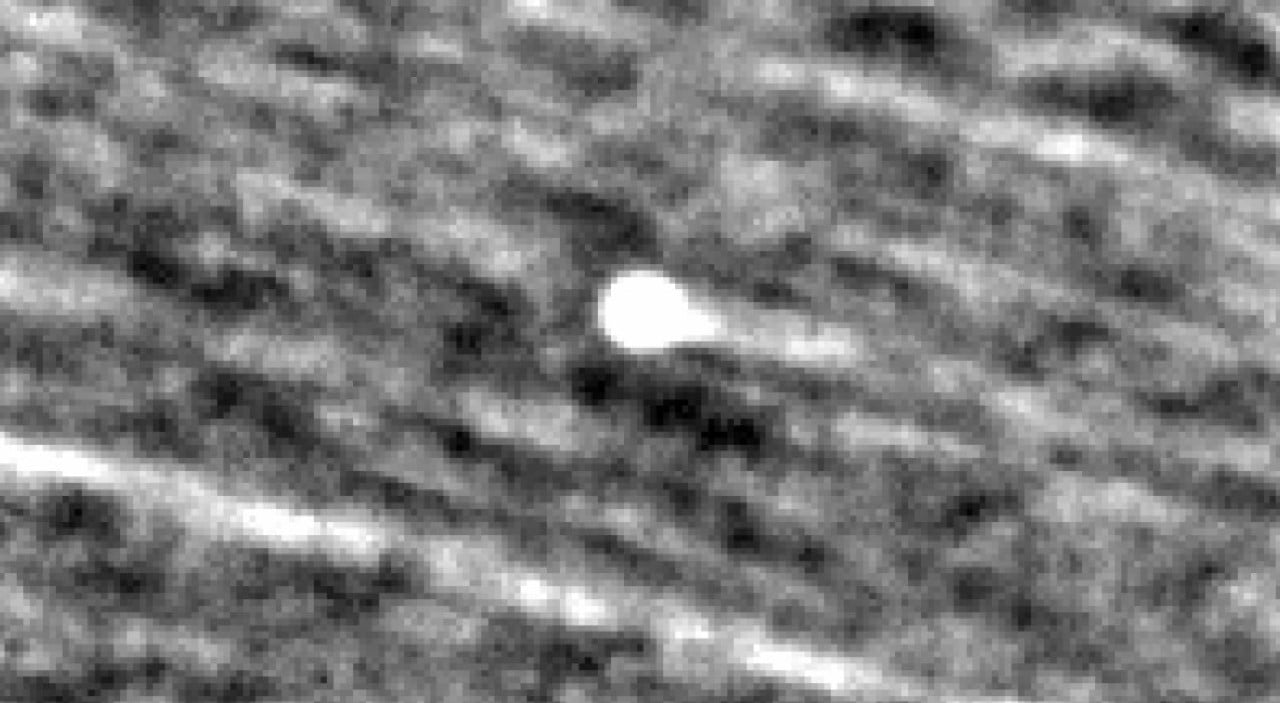
Astrophysicist Avi Loeb, professor at Universidade Harvard, published a recent analysis of the interstellar comet 3I/ATLAS, the third confirmed object of extrasolar origin to visit the solar system. Observações from Telescópio Espacial Hubble revealed three mini-jets emerging from the nucleus exactly 120 degrees apart, a structure that Loeb considers unusual for natural processes.
These formations were detected in images processed between November 2025 and January 2026, after the object’s perihelion in October 2025. The equidistant symmetry raises the possibility of artificial configuration, similar to propulsion systems for attitude control in spacecraft.
Loeb highlights that the 120-degree arrangement represents a minimum efficient arrangement for reorientation in three dimensions, especially for an object rotating every 7.1 hours.
Context of interstellar objects
3I/ATLAS follows a hyperbolic trajectory that confirms its origin outside the solar system. Ele was identified as the third confirmed visitor after 1I/’Oumuamua in 2017 and 2I/Borisov in 2019.
‘Oumuamua showed non-gravitational acceleration with no visible coma, which sparked debate about possible artificial origins. Borisov exhibited typical comet characteristics with a pronounced tail.
3I/ATLAS showed a luminous halo and multiple jets after approaching Sol. Observações of Hubble, under proposal ID 18152, allowed the application of filters such as Larson-Sekanina to highlight linear structures.
- Perihelion reached on October 29, 2025
- Minimum distance from Terra recorded in December 2025
- Estimated rotation period of 7.1 hours
- Axis of rotation inclined between 10 and 20 degrees in relation to Sol
Details of observations at Hubble
Images captured between November 30, 2025 and January 14, 2026 show three mini-jets extending up to 25,000 kilometers from the core. Essas structures maintain 120 degree separation in projection into the sky.
A fourth anti-tail jet extends about 250,000 kilometers in the solar direction. Processing with a rotational filter removed the symmetrical halo and revealed persistent linear shapes.
The jets present periodic oscillation of more or less 20 degrees, compatible with the effect of a rotating beacon. Essa variation reinforces inference about object rotation and axis alignment.
Technological signature hypothesis
Avi Loeb argues that perfect symmetry of 120 degrees makes explanation by macroscopic natural processes difficult. Ele compares configuration to minimum thrusters for control in rotating spacecraft.
Experts such as Frank Laukien described the spacing as impressive and difficult to occur in a natural object. Loeb suggests that three thrusters in a plane orthogonal to the axis of rotation would be sufficient for complete maneuvers.
The astrophysicist contextualizes observation within the specific classification scale for anomalies in interstellar objects. 3I/ATLAS accumulates points for multiple unusual features among 18 recorded anomalies.
Natural explanations considered
Natural processes in comets include sublimation of ices that generate directional jets. Fragmentação or rapid rotation can produce asymmetric structures, but exact symmetry remains rare.
Jets observed on solar comets like Hale-Bopp have shown irregular patterns. In the case of 3I/ATLAS, persistence and equidistance challenge conventional outgassing models.
Scientists point out that applied filters can highlight optical artifacts. Composição Typical comet chemistry, detected in spectroscopic analysis, favors natural origin.
Reactions in the scientific community
Several astronomers expressed skepticism about the technological interpretation. Estudos independently classified 3I/ATLAS as an interstellar comet without conclusive evidence of artificiality.
Analysis published on arXiv deconstructs anomalies identified by Loeb as compatible with natural phenomena. Ausência of radio or communication signals reinforces conventional view.
Similar debates occurred with ‘Oumuamua, whose characteristics received explanations based on sublimated hydrogen or nitrogen.
Planned future observations
The alignment scheduled for January 22, 2026 will position 3I/ATLAS close to the Sol-Earth line with an angle of just 0.69 degrees. Essa configuration will facilitate detailed imaging of the core and jets.
Terrestrial and space telescopes will follow the event to clarify three-dimensional geometry. Additional Dados will help distinguish between rotational oscillation and possible artificial modulations.
Continuous monitoring occurs as the object moves away from the solar system. Hyperbolic Trajetória prevents future return.
Importance for astrobiology
Discoveries of interstellar objects expand understanding of the distribution of material between stars. Cada visitor offers unique window into chemistry of other planetary systems.
Research like that of Loeb encourages an open approach to anomalies. Scientific Comunidade prioritizes collection of robust data before extraordinary conclusions.
3I/ATLAS contributes to the growing catalog of extrasolar travelers. Futuros telescopes like Vera Rubin promise to detect dozens of similar ones per decade.
- Discovery of 1I/’Oumuamua in October 2017
- Identification of 2I/Borisov in August 2019
- Initial detection of 3I/ATLAS in 2025
- Perihelion recorded in October 2025
- Hubble Key Observations through January 2026
Ongoing research perspectives
Projects dedicated to interstellar objects gain priority in space agencies. Missões proposals aim to intercept future visitors for on-site analysis.
Development of advanced instrumentation improves detection of subtle anomalies. Colaborações international coordinate multi-wavelength observations.
Theoretical studies model the formation and evolution of comets in extrasolar environments. Comparações with local population reveal relevant compositional differences.



