
Carlos Alcaraz and Aryna Sabalenka confirm favoritism and win in their Australian Open debut

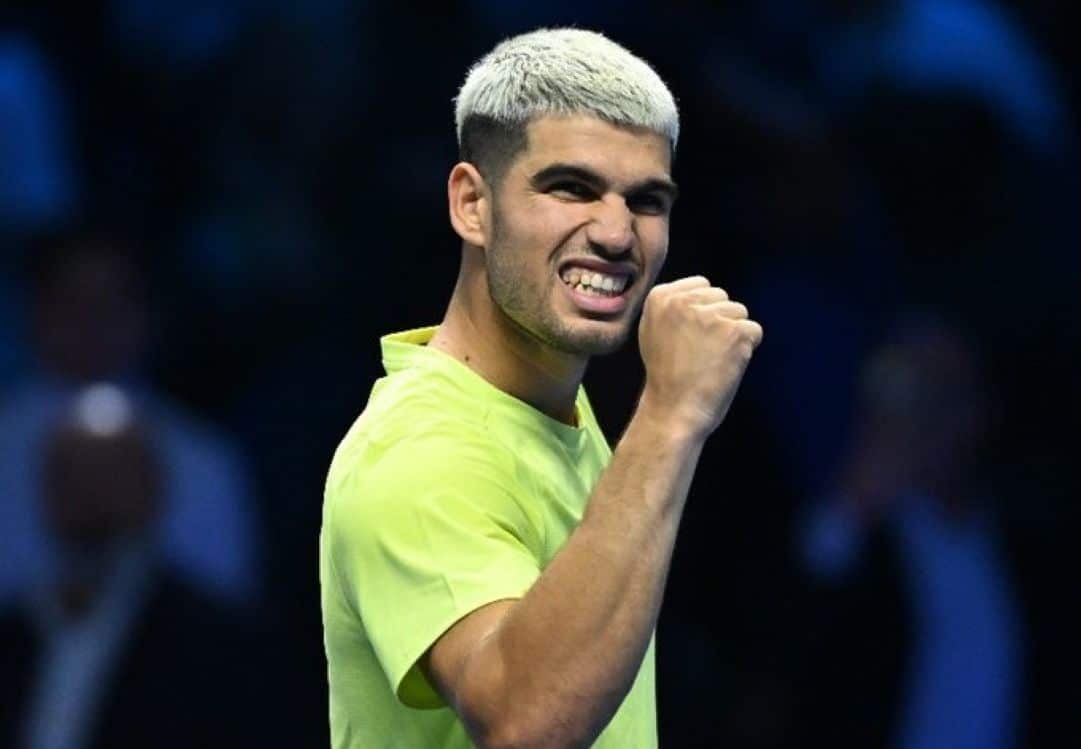
The first day of main draws at Australian Open 2026 consolidated the strength of the current leaders of the world rankings, who gave no chance for surprises in their respective debuts. Carlos Alcaraz and Aryna Sabalenka demonstrated high physical and technical preparation by overcoming their opponents in straight sets, guaranteeing passage to the second round of the first Grand Slam of the season. The presence of Roger Federer in the stands of honor brought an extra historical and motivational element to the matches held at Rod Laver Arena, in Melbourne.
The Belarusian Aryna Sabalenka began her journey of defending points and looking for another title with a consistent performance against the French Tiantsoa Rakotomanga Rajaonah. The game presented moments of high technical level, especially in the second set, when the world number one imposed a fast pace of strikes from the back of the court.
- Sabalenka’s victory was sealed with splits of 6/4 and 6/1.
- The Frenchwoman Rajaonah, who entered as a guest, offered resistance only at the beginning of the confrontation.
- The Belarusian’s first serve success rate exceeded 75% throughout the match.
- The ranking leader’s next opponent will be the Chinese Bai Zhuoxuan, coming from qualifying.
Off to a hot start 🔥
— #AusOpen (@AustralianOpen)January 18, 2026
Aryna Sabalenka begins her quest for a third Australian Open title.#AO26https://t.co/loRxmTaM7P
Carlos Alcaraz dominance in Australian synthetic flooring
Carlos Alcaraz entered the court with the mission of confirming his excellent form and did not disappoint the fans who filled the sports complex. The Spanish tennis player faced the Australian Adam Walton, who had the massive support of the local fans, but was unable to contain the world number one’s aggression and variation in play.
The triumph by 3 sets to 0, with partials of 6/3, 7/6 (2) and 6/2, showed a Alcaraz focused and capable of resolving adverse situations, such as the balance imposed in the second set. Mesmo under pressure in the tie-break, the young Spaniard remained calm and used precise shots to unbalance Walton’s pace.
Illustrious presence of Roger Federer in Melbourne
The presence of Roger Federer at Rod Laver Arena transformed the atmosphere of the inaugural matches into an even more memorable event for athletes and spectators. The Swiss, who has a deep historical connection with the Australian tournament, closely followed the performance of the young talents who today dominate the ATP and WTA professional circuit.
Watching the leaders of the rankings through the eyes of a living legend of the sport added a layer of prestige to the first round clashes. Para Sabalenka, the experience was described as rewarding, while Alcaraz saw the presence of the veteran as an incentive to maintain the pursuit of his goal of winning the four major world tennis titles.
Historical goals and records of Carlos Alcaraz
At 22 years old, Carlos Alcaraz carries the weight of being one of the absolute favorites and is looking for a feat that would definitely place him in the pantheon of the greatest of all time. Caso wins the trophy in Melbourne, the Spaniard will become the youngest player in history to win the four Grand Slam tournaments, surpassing the marks of past legends.
The Spaniard’s record at Australian Open has been one of constant evolution, although he has not yet reached the quarter-final stage in previous editions. Esta season represents the ideal opportunity to break this barrier, especially considering his quick adaptation to the extreme weather conditions of the Australian summer and the speed of the court.
Alcaraz’s next challenge will be against the German Yannick Hanfmann, current number 102 in the ATP rankings, in a clash that promises to test the Spaniard’s consistency. Hanfmann is known for his solid base game, but will struggle to match the power of the right jabs that Alcaraz has been displaying since training began at Melbourne.
Trajectory of Aryna Sabalenka in the female key
Aryna Sabalenka arrives in 2026 with the status of the player to beat on the women’s circuit due to her finishing power and mental resilience. Sua victory against Rajaonah was just the first step in a bracket that promises to be highly competitive, with young promises trying to overturn the dominance of the top players.
Chinese Bai Zhuoxuan, Sabalenka’s next opponent, is seen as a surprise after eliminating Russian Anastasia Pavlyuchenkova. The Belarusian will need to maintain high concentration, as the playing style of Asian tennis players tends to involve a lot of movement and quick counterattacks, requiring patience in building points.
Maintaining leadership in the rankings directly depends on a deep campaign in this tournament, which puts additional pressure on each game played. Sabalenka has been working intensely on his serve, which was previously a point of vulnerability, transforming it into one of the most lethal weapons in contemporary tennis.
Competitor performance and tournament scenario
This year’s Australian Open is also marked by generational transition, with names like the Brazilian João Fonseca gaining prominence in behind-the-scenes discussions. Expectations surrounding the under-20 players are high, as many experts believe they have the necessary arsenal to challenge the hegemony established in recent years.
While Alcaraz and Sabalenka celebrate their victories, other favorites face difficulties or seek to regain their path to titles after periods of fasting. The competitive scenario in Melbourne remains open, but the solidity presented by the world numbers one in the first round sends a clear signal to the other competitors in the bracket.
Court conditions in this edition have favored aggressive players who are able to dictate the pace of points from the return. Alcaraz used this characteristic masterfully, pressing Walton in all of the Australian’s vulnerable moments, while Sabalenka used his physical strength to shorten ball changes and avoid excessive wear and tear in the intense heat.
Tournament logistics and scheduling also play a crucial role in athletes’ recovery between rounds. With their debuts quickly ending, both the Spaniard and the Belarusian gain valuable time for rest and tactical adjustments with their respective technical teams before their next commitments on the court.
Alcaraz’s technical evolution in recent months has included a significant improvement in his defensive positioning, allowing him to execute quick transitions into attack. Essa versatility is what sets him apart from other powerful players, making him an unpredictable and extremely difficult opponent to beat in best-of-five set formats.
On the women’s side, Sabalenka’s consistency has been the determining factor for her impressive results on fast surfaces. The ability to generate power without sacrificing precision is a differentiator that puts it a step above most competitors, especially in decisive moments of balanced sets.
The Australian Open continues to be an acid test of tennis players’ mental toughness, and starting with convincing victories is key to building the necessary confidence. The public at Melbourne eagerly awaits the next rounds, hoping to see if the favorites will be able to maintain the level of excellence demonstrated in the opening matches monitored by
As the tournament progresses, attention also turns to possible crossovers in the final stages, where clashes between the top seeds could define the course of the 2026 season. For now, Alcaraz and Sabalenka are enjoying early success and preparing for the technical challenges that the second round will certainly present on Australian soil.
The integration between veterans and the new generation in the corridors of Melbourne Park creates a unique atmosphere that only major tournaments can offer. The influence of figures like Roger Federer lives on, shaping the way new leaders approach their careers and the responsibilities that come with being at the top of the tennis world rankings.



