
FIFA updates list of the best teams in the world with Spain in the lead and Brazil outside the top 4

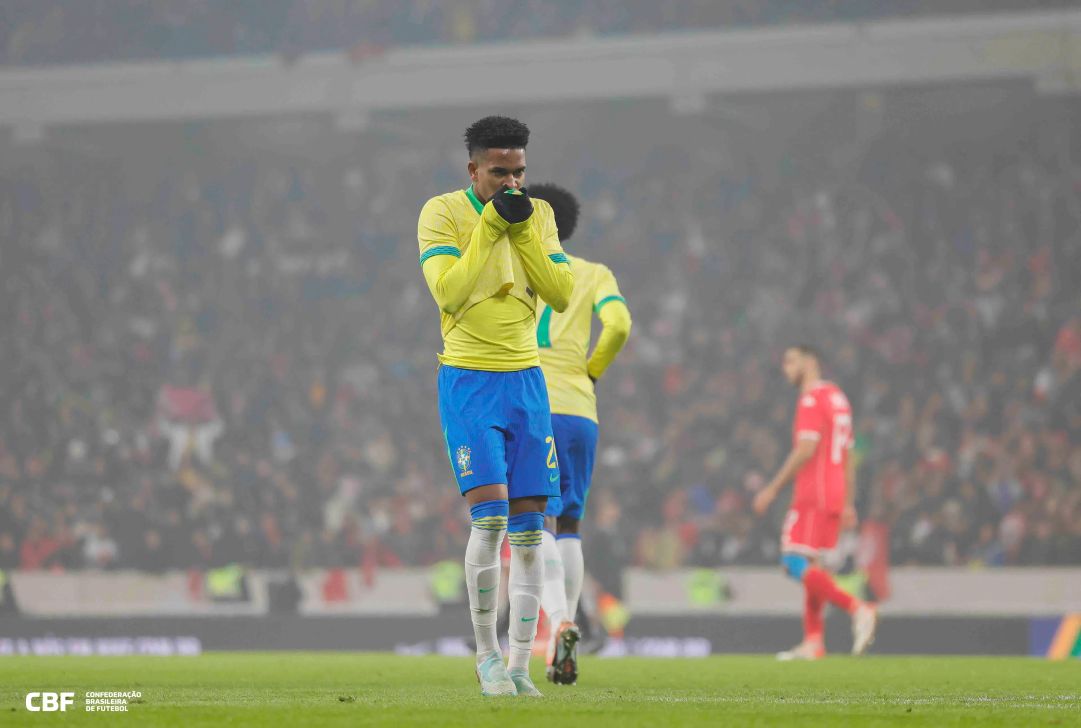
Federação Internacional of Futebol (Fifa) released, this Monday (19), the first official update of its ranking of men’s teams for the year 2026. Brasil, under the technical management of the Italian Carlo Ancelotti, did not show enough changes in its score to move up steps, remaining in fifth place and still outside the select group of the four best teams on the planet.
The list reflects recent results from continental competitions and international friendlies held earlier this year. Atrás of the Spanish team, the traditional powers that complete the top of the classification table appear:
- Argentina (2nd position)
- France (3rd position)
- England (4th position)
- Brazil (5th position)
The international scene shows stability among the leaders, while African teams gained immediate prominence due to the closure of important regional tournaments. Marrocos, which will be one of Brasil’s main opponents in the group stage of the next Copa of Mundo, took advantage of its recent good performance to move up the table and is now in eighth place overall.
🇲🇦 Morocco rise to all-time high of eighth
— FIFA (@FIFAcom)January 19, 2026
🇸🇳 Senegal break new ground after AFCON triumph, climbing to 12th
The January 2026 edition of the FIFA/Coca-Cola Men’s World Ranking is here:
African rise and movements after Copa Africana of Nações
The highlight of the new list of football’s highest entity was the Senegal team, which won the Copa Africana title from Nações last Sunday (18). With the positive result and the continental trophy, the Senegalese team jumped seven positions, reaching 12th place and getting closer to the top ten group. Esse advancement demonstrates the effectiveness of the Fifa scoring system, which assigns high weights to decisive matches in continental tournaments.
The Marrocos team also reaped the rewards of its journey to the final of the African tournament, establishing itself as the eighth force in world football at the moment. The Moroccan performance raises an alarm for the Brazilian technical committee, as the two teams will soon face each other in the world tournament. Outras selections with lesser expression also had their positions updated, such as Escócia, which occupies 38th position, and Haiti, currently in 83rd place.
How the official score calculation algorithm works
Since 2018, Fifa has been using the mathematical model called SUM, which was specifically developed to reflect the competitive reality of international football in a fairer and more accurate way. Diferente from previous models that took annual averages, the current algorithm adds or subtracts points directly from each match played by the national teams. The calculation takes into account the final result, the importance of the confrontation and the strength of the opponent faced on the field.
The formula applied to define the new points is P = Pbefore + I * (W – We). Neste system, the variable “I” represents the importance of the game, which can vary drastically between a common friendly match and an Copa Mundo knockout match. Já the variable “W” indicates the result obtained, while “We” establishes the expected result based on the difference in position between the two teams facing each other.
Breakdown of weights by importance of matches
The score given for the importance of the confrontation is one of the pillars that supports Espanha’s leadership and the pursuit of other opponents. Jogos of qualifiers and continental tournaments have a much greater weight than friendlies, which explains the sudden variations after championship finals. A estrutura de pesos definida pela Fifa segue critérios rigorosos de relevância para o calendário esportivo global:
- Friendlies outside of Data Fifa receive only 5 points of importance.
- Group stage clashes in continental competitions total 35 points.
- Copa knockout games from Mundo from the quarter-finals onwards peak at 60 points.
In this way, victories in high-level competitions guarantee a much faster climb in the rankings than a sequence of triumphs in preparatory games. Teams seeking the top need to maintain a high performance in the final stages, where exposure and the risk of losing points are also significantly greater.
Result criteria and performance expectations on the field
Calculating the expected result (We) is essential to protect better ranked teams and reward those that beat theoretically stronger opponents. Quando an inferior team defeats a powerhouse, the transfer of points is massive, causing rapid changes in the leaderboard. A draw also generates distribution of points, but on a reduced scale, generally favoring the team that entered the field with the lowest previous score.
To define the value of “W”, Fifa applies 1 point for a win, 0.5 for a draw and no points in case of a loss in normal time or overtime. Nas penalty decisions, the winner receives 0.75 points, while the loser receives 0.5, recognizing the balance of the technical confrontation. Essa statistical detail aims to ensure that the ranking is a faithful mirror of the competitiveness and current situation of each country.
Structure of the fifteen best teams in world football
European and South American hegemony remains evident in the top positions, with Portugal, Holanda and Bélgica remaining firmly in the top ten. Alemanha, which went through a period of restructuring, consolidated its return to the top 10, occupying exactly tenth position in this update. Itália, a traditional force in the sport, appears in 13th, just behind the growing Senegal team.
The list of the 15 best selections updated this Monday is as follows:
- Spain
- Argentina
- France
- England
- Brazil
- Portugal
- Netherlands
- Morocco
- Belgium
- Germany
- Croatia
- Senegal
- Italy
- Colombia
- States Unidos
Challenges for managing Carlo Ancelotti in the current cycle
The maintenance of Brasil in fifth position indicates that, although the team is at a high level, there is still a gap to be overcome in relation to the European leaders and Argentina. Carlo Ancelotti faces the challenge of optimizing performance in official competitions to accumulate the necessary high “I” points. The distance to Inglaterra, fourth placed, requires significant results in the next international windows for the country to return to the top 4.
Brazilian preparation now turns to clashes against teams that are on the rise, aiming not just to score, but to affirm a solid game model. Monitoring the African teams, especially Marrocos and Senegal, has become mandatory, given that the Fifa ranking now mathematically validates what is seen on the pitch: an increasingly greater balance between the continents.



