
Geomagnetic storm G4 arrives at Earth on January 20 and can generate intense auroras in mid-latitudes

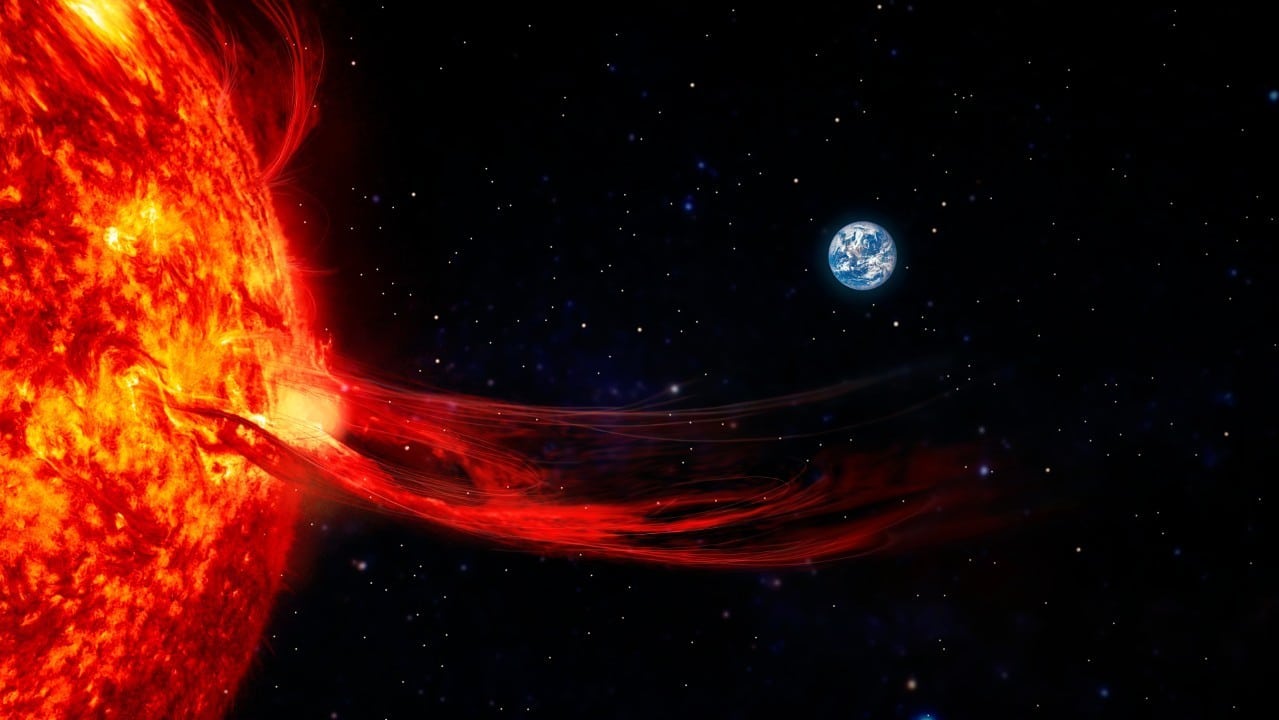
NOAA’s Centro of Previsão of Clima Espacial issued a G4 (severe) geomagnetic storm warning for January 20, 2026, UTC time. The phenomenon arises from the arrival of a coronal mass ejection (CME) launched by Sol on January 18, associated with a class X1.9 solar flare, classified as R3 (strong).
The forecast indicates that the CME could reach Terra as early as the end of January 19 (EST time), with maximum intensity the following day. Especialistas maintain moderate to high confidence regarding the arrival time and expected effects.
Although the peak is classified as G4, levels between G1 and G3 may occur in the initial phase. Activity should decrease throughout the 20th, but remnants may maintain G1 conditions until January 21st.
- Continuous monitoring occurs by NOAA’s SWPC.
- Regular updates are available on the official website.
- Aurora watchers should watch local clear sky forecasts.
Origin of the solar phenomenon
The coronal mass ejection came from active region 4341, located near the center of the solar disk. Essa position favored the direct trajectory towards Terra, increasing the probability of significant impact.
Class X solar flares represent the highest level of intensity in X-rays. The January 18 event generated temporary radio blackouts of level R3 in some regions illuminated by Sol.
Experts note that solar cycle 25, the current phase of maximum activity, has produced more frequent events. Active Regiões such as 4341 concentrate complex magnetic fields that facilitate energy releases.
Scale of geomagnetic storms
NOAA uses a scale from G1 to G5 to classify geomagnetic storms, based on the disturbance of the Earth’s magnetic field. Nível G4 indicates severe disturbances, capable of affecting technological infrastructure in wide areas.
In G4, electrical network operators implement protocols to mitigate current inductions that can overload transformers. Sistemas satellite navigation systems face temporary degradation in GPS signals.
High frequency (HF) communications suffer from interference, especially at high latitudes. Satélites in low orbit register an increase in atmospheric drag, requiring orbital adjustments.
Expected effects on infrastructure
G4 level storms cause fluctuations in power transmission networks, with the risk of preventive shutdowns in polar regions. Operadoras monitor high voltage lines to prevent permanent damage.
Radio navigation and maritime communication systems face intermittent outages. Aviação on polar routes adjusts procedures to compensate for errors in positioning.
Communications and earth observation satellites may experience anomalies in solar panels or electronics. Empresas of the space sector activate automatic protection modes.
Possibility of northern lights
One of the visible consequences of intense geomagnetic storms is the expansion of the aurora borealis to lower latitudes. In G4 events, the phenomenon can be observed up to 45 degrees north or south latitude.
In Estados Unidos, northern and central-northern states offer better nighttime visibility conditions. Observação requires dark skies, away from light pollution, and a clear horizon.
In Hemisfério Sul, southern auroras follow a similar pattern in regions such as southern Austrália, Nova Zelândia and Chile. Intensidade varies depending on the exact strength of the storm and local atmospheric conditions.
Photographers and enthusiasts use long exposure cameras to record typical green, red and purple colors. Aplicativos aurora forecast helps with observation planning.
Updated monitoring and forecasts
The SWPC maintains constant surveillance using satellites such as ACE and DSCOVR, positioned between Sol and Terra. Esses instruments detect charged particles minutes before main arrival.
Computational models combine observational data with simulations of CME propagation. Previsões are refined as more information arrives.
International space agencies collaborate to share real-time data. Observatórios Terrestrial solar systems complement measurements with images at multiple wavelengths.
Protection measures adopted
Electrical grid operators in high latitudes reinforce monitoring of induced currents. Protocolos include load reduction on critical lines during activity peaks.
Satellite companies activate safety modes that minimize exposure of sensitive components. Ajustes Preemptive orbitals avoid potential collisions.
Civil aviation receives alerts for polar routes, with recommendations for alternative use of inertial navigation. Emergency Comunicações maintain redundant channels.
Context of the current solar cycle
Solar cycle 25 reached its maximum phase in 2025 and maintains high activity in 2026. Especialistas register an increase in the number of sunspots and significant eruptions.
Complex active regions, such as the one responsible for the January event, appear more frequently during this period. Previsões indicate continued intense activity in the coming months.
Historical observations show that solar maxima coincide with a greater incidence of geomagnetic storms. Registros since the 19th century, they have helped calibrate current models.
Recommendations for observing auroras
Observers should choose locations with minimal light pollution and a clear northern horizon at Hemisfério Norte. Horários between midnight and 4am local offers the best odds during the peak.
Using cameras with a tripod and manual settings improves detail capture. Exposições long images reveal colors and movements not visible to the naked eye.
Specialized applications provide real-time Kp indexes, an indicator of global geomagnetic intensity. Valores above 7 suggests a high probability of auroras in mid-latitudes.



