
US Congress considers law requiring manual door handles on new vehicles to prevent tragedies

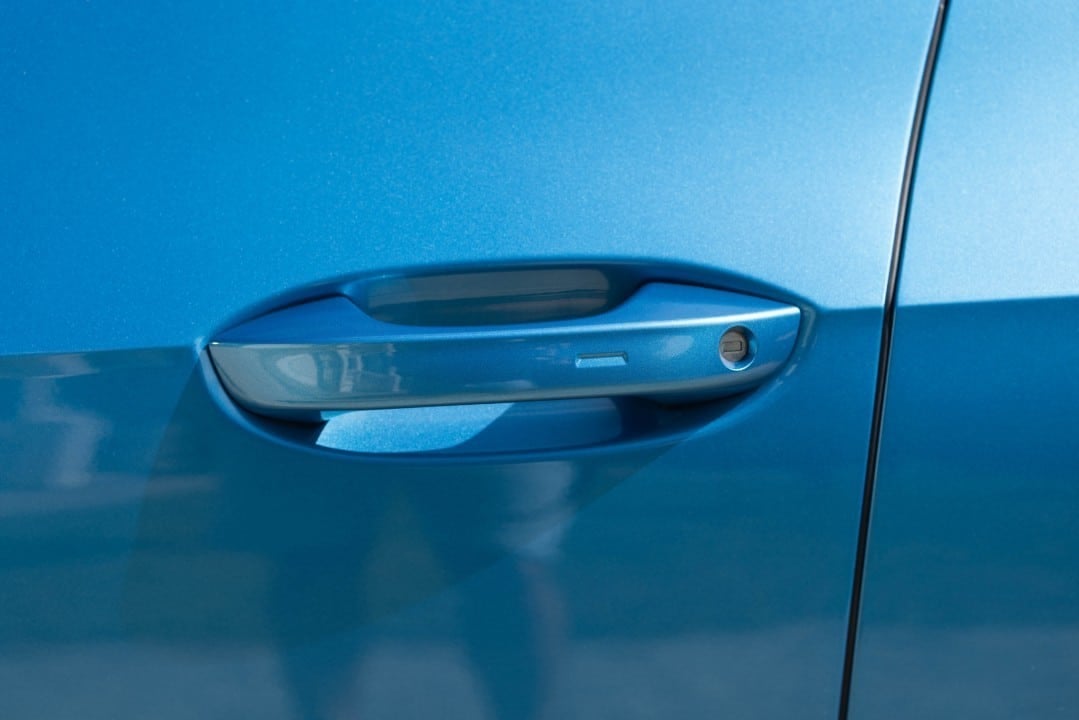
A new legislative proposal presented in Câmara of Representantes of Estados Unidos seeks to increase passenger safety in modern vehicles. The project, called SAFE Exit Act, was introduced by congresswoman
The measure comes as a direct response to a series of fatal incidents where occupants of vehicles, mainly electric ones, were trapped after accidents resulting in loss of power. The electronic and retractable door handles, although offering a cleaner and more aerodynamic design, presented critical failures in emergency situations, preventing passengers from quickly exiting and accessing rescue teams.
The project text establishes a clear timeline for implementation. Após the sanction of law, the Administração Nacional of Segurança of the Tráfego Rodoviário (NHTSA) will have the responsibility for developing and publishing detailed technical regulations. From the publication of these standards, car manufacturers will have up to two years to adapt all their new models to the requirements.

The trigger for legislative change
The urgency to create SAFE Exit Act was driven by a series of tragic accidents that gained notoriety in the media and raised questions about the safety of new automotive technologies. Relatórios security and journalistic investigations have compiled dozens of cases in which the failure of electronic door handles after a collision became a fatal factor. Pelo minus 15 deaths were directly associated with the inability to open the doors of Tesla vehicles following a power outage. In one emblematic case, a man and two children were unable to escape their car after an impact. In another, three young people, including a university student, died when the Cybertruck they were in caught fire after a collision, and the doors could not be opened. The compilation of more than 140 reports from drivers and passengers who were trapped in their vehicles by similar failures demonstrated that the problem was not isolated, but rather a systemic risk associated with this type of design, justifying regulatory action at the federal level to protect consumers.
Details of the proposal under analysis
SAFE Exit Act proposes a significant change to the federal vehicle safety code of Estados Unidos, focusing on creating a mandatory standard for opening doors in emergencies. The main requirement is that each passenger door must be equipped with a purely mechanical opening device that can be operated from inside the vehicle without any dependence on the battery or electrical system. Este mechanism must be clearly visible, easily identifiable and designed to be intuitive even to a person under the stress of an accident.
In addition to the internal mechanism, the legislation also requires the presence of a form of external manual access for rescuers. The proposal does not ban electronic door handles, but conditions them to the existence of this mechanical alternative as a safety redundancy. NHTSA will be the agency charged with defining the exact performance criteria, testing protocols for these systems, and specifications on the positioning and labeling of emergency devices, ensuring they are standardized and easily recognizable across all vehicle models.
Currently affected manufacturers and models
Tesla is the brand most associated with the use of electronic door handles, using the system across its entire line of vehicles. Embora your cars have secondary manual releases, the location and method of operation are often not intuitive for users, especially in a panic situation.
However, the problem is not restricted to a single automaker. Diversas other companies have adopted similar designs in their latest models, especially in the electric and luxury vehicle segments.
Brands such as Hyundai, Kia, Nissan, Infiniti, Chevrolet and Land Rover already offer variants with retractable or electronic door handles. The new law would directly impact the future projects of these companies, forcing them to integrate standardized and visible mechanical solutions.
International regulatory context
Concern about the safety of electronic door handles is not exclusive to Estados Unidos. Outros Important automotive markets are already moving to regulate this technology. China, for example, recently announced new guidelines that will come into force from 2027, restricting the use of door handles that rely exclusively on electrical energy.
Chinese regulations require that all new light vehicles have mechanical opening mechanisms both inside and outside. Nos Estados Unidos, the absence of a specific federal standard on the subject allowed the proliferation of these designs. Public pressure has also been growing, with online petitions organized by consumer protection groups collecting more than 35,000 signatures to demand changes even before the bill’s formal presentation.
Support from specialized entities
Shortly after its introduction at Congresso, SAFE Exit Act received public endorsements from leading consumer safety and advocacy organizations. Consumer Reports, one of the most respected entities in the sector, classified the measure as a necessary and appropriate response to a real and growing safety risk, directly linked to the rapid expansion of the electric vehicle fleet.
Vehicle safety experts draw a parallel between this proposal and the evolution of other safety items that are standard today. Componentes such as three-point seat belts, airbags and ABS brakes also faced a regulation and standardization process to become mandatory, and the inclusion of a manual release for the doors follows the same logic of creating redundancy in systems critical for survival in accidents.
Next steps in the legislative process
The bill now begins its processing at Legislativo. The first step is the analysis in thematic committees of the Câmara of the Representantes, where it may be amended and debated in public hearings.
If approved at Câmara, the text will go to Senado for a similar analysis and voting process. Approval in both houses is necessary for the project to be sent for presidential approval.
In parallel, NHTSA will begin its own technical studies to prepare for rulemaking. The agency will conduct a public consultation period, in which manufacturers, experts and the general public will be able to submit contributions.
These contributions will help shape the final technical details of the standards, striking a balance between consumer safety and technical feasibility for the industry.
Expected impact on the automotive market
The adoption of electric vehicles continues to grow exponentially in the Estados Unidos, and updating safety standards is seen as a natural step to accompany this technological transition. The approval of the law could accelerate the standardization of mechanisms that combine modern design with the safety of mechanical redundancy, something that some automakers have already begun to explore in their most recent models.
Additional security measures
While the legislation does not come into force, experts recommend that owners of vehicles with electronic door systems familiarize themselves with emergency procedures. Instructions are usually detailed in the owner’s manual, and knowing the exact location of secondary manual devices is crucial.
Rescue teams and firefighters already undergo specific training to deal with different models of electric vehicles. The standardization and mandatory labeling proposed in the bill aim to facilitate and speed up these interventions, saving precious time in life and death situations.
Evolution of American vehicle standards
Federal vehicle safety regulations in the Estados Unidos have constantly evolved since the creation of the NHTSA in the 1970s.
The new discussion on door requirements reflects the continued incorporation of new digital and electronic technologies in the automotive sector. The current regulatory challenge is to find the ideal balance between enabling innovation in design and functionality, without compromising the fundamental safety principles that ensure occupant protection in all circumstances.



