
Geomagnetic storm G4 of January 2026 causes intense aurora borealis in several countries in Europe and North America with impressive records


A geomagnetic storm classified as G4 (severe) hit Terra on January 19 and 20, 2026, caused by the arrival of a coronal mass ejection (CME) originating at Sol. The phenomenon resulted in the visibility of aurora borealis in regions where the luminous spectacle is considered rare, covering parts of Europa and América of Norte.
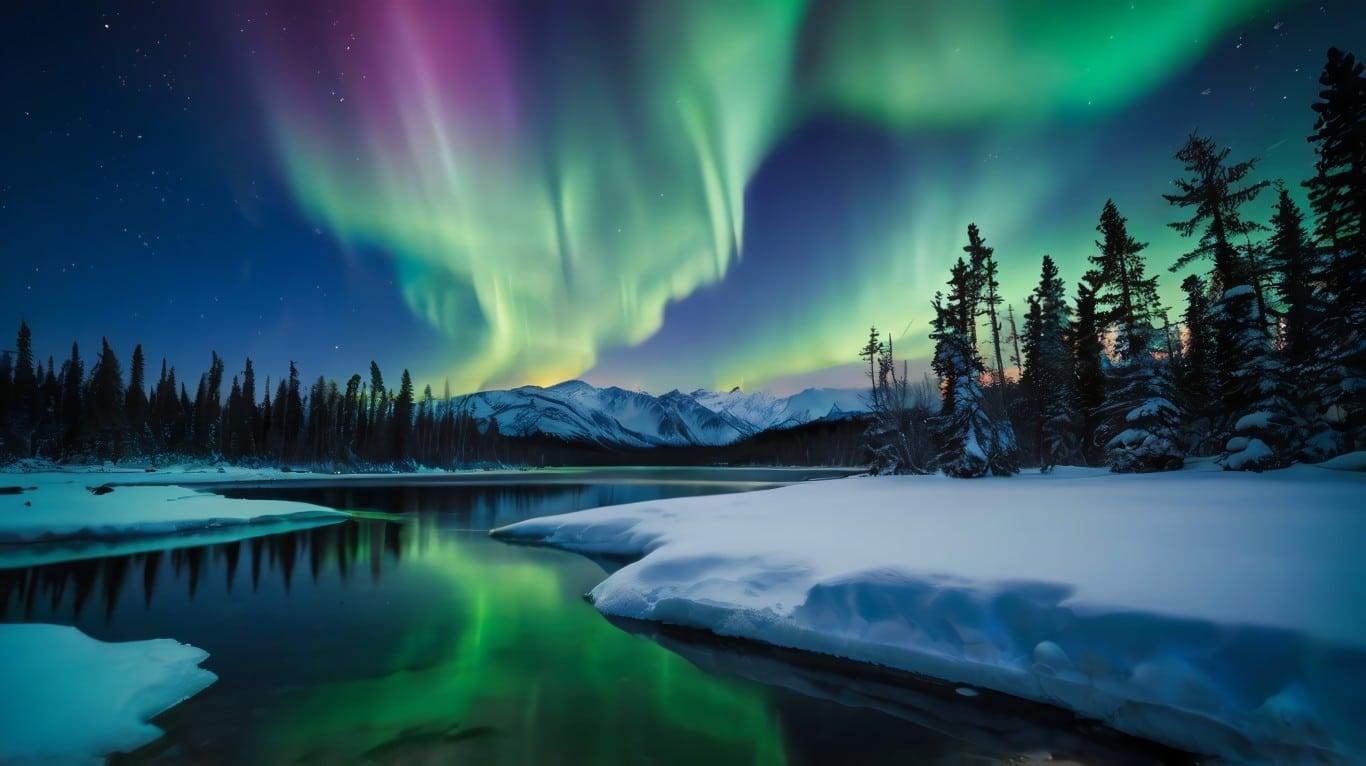
Observers recorded the colorful lights in the night sky, with shades of green, red, purple and blue dominating the captured images. The intensity of the storm also included an S4 level solar radiation storm, the strongest in more than 20 years on some records.
The disturbance in the Earth’s magnetic field began to be felt from the afternoon of January 19, with G4 levels initially reached at 19:38 UTC. The continuation of the event was confirmed the following day, with new peaks recorded by NOAA.
Causes of solar storm
Coronal mass ejections represent massive releases of plasma and charged particles from the Sol that travel to the Terra. Quando these particles interact with the Earth’s magnetic field, they are directed towards the poles, where they collide with atmospheric gases.
Collision with oxygen produces green and red tones, while nitrogen generates blue and purple lights. Esse process explains the formation of auroras, which become more intense during severe geomagnetic storms.
Solar cycle 25, the current phase of activity of Sol, reaches its peak between 2025 and 2026. Essa stage increases the frequency of solar eruptions and coronal mass ejections, increasing the probability of events like the one recorded.
Aurora viewing locations
The aurora borealis was seen over a wide area of Hemisfério Norte during the nights of January 19th and 20th. Regiões Traditional viewing, like Canadá, recorded intense activity across the territory.
In the Estados Unidos, northern states clearly presented the phenomenon, while more central and southern areas reported occasional sightings due to the strength of the storm. Na Europa, countries such as Áustria, França and western Alemanha captured distinct images.
Some records highlight:
- Auroras over churches and rural landscapes at Áustria.
- Lights visible in the coastal region of França.
- Vibrant tones observed at Alemanha during the night.
- Activity recorded in places such as the state of Washington, in the USA.
The extension to lower latitudes occurred due to the compression of the Earth’s magnetic field.
Impacts recorded on the planet
G4-level storms can interfere with high-frequency radio communications systems, affecting operations in polar regions. Redes power plants in high latitudes face the risk of current induction, although no significant blackouts have been reported in this event.
Satellites in orbit recorded an increase in atmospheric drag, requiring adjustments in some operations. Voos on polar routes received warnings for increased radiation exposure.
The S4 radiation storm raised risks for astronauts on Estação Espacial Internacional, who adopted protection protocols. GPS Sistemas showed minor degradations in some areas.
Forecasts and current monitoring
NOAA remains alert for possible continuation of G3 activity on January 20, with a gradual reduction to G1 the following day. Solar wind speed has remained high, reaching 941 km/s in recent measurements.
Experts indicate that the main CME event has already passed, but remnants may keep auroras visible in polar regions. Observadores in favored areas can still register residual activity during the night.
Continuous monitoring involves centers such as Space Weather Prediction Center, which issue regular updates on radio streams and geomagnetic indices.
Understanding the current solar cycle
The Sol goes through cycles of approximately 11 years, with periods of maximum and minimum activity. Cycle 25 began in 2019 and reaches its peak scheduled for the period between 2025 and 2026.
During solar maximum, sunspots and flares increase significantly. Esses events release energy that can reach Terra in the form of charged particles.
Geomagnetic storms are classified on a G1 to G5 scale, with G4 representing a severe level capable of expanding auroras to mid-latitudes. Eventos similar events occurred in previous years of the cycle, but the current one registers notable intensity.
Photographic record of the phenomenon
Photographs captured by amateur and professional observers circulated widely on the networks. Imagens show auroras contrasting with urban and rural landscapes in different countries.
Records at Áustria highlight green lights over historic structures. Na França, coastal photos reveal reflections in the sea.
At Alemanha, sequences captured movement of the light curtains. Nos Estados Unidos, images of mountainous areas show dominant red tones.
These records document the rarity of the event at lower latitudes.
Protection measures and guidance
Power grid operators in affected regions monitored fluctuations to avoid overloads. Empresas of satellites preemptively adjusted orbits.
Space agencies advised crews in orbit to remain in protected areas of the station. Companhias airlines on polar routes assessed radiation levels for crew and passengers.
Space weather authorities recommend following official advisories for real-time updates.
Historical context of similar events
Severe geomagnetic storms have occurred in previous solar cycles, with varying impacts on technologies. The 1989 event caused electrical outages on Canadá.
Advances in monitoring have allowed for more accurate predictions in recent decades. NOAA’s current scale classifies risks into clear categories for different systems.
Cycle 25 presents higher activity than initially predicted, contributing to a greater frequency of intense auroras.
Safe observation of the sky
Those interested in observing auroras should look for places with little light pollution. Aplicativos and forecast sites indicate best times and directions.
Long exposure photography equipment captures details not visible to the naked eye. Condições Clear weather is essential for visibility.
The phenomenon remains safe for terrestrial observation, without direct health risks.
Solar activity in the coming months
Forecasts indicate that high activity will continue throughout 2026. The peak of the cycle may bring new events of similar intensity.
Forecasting centers track active sunspots on the solar disk. Ejeções directed to Terra receive priority attention.
Aurora observers in favored regions are preparing for possible new spectacles in the following months.



