
New MacBooks with Apple’s M5 chip arrive in four versions with cheaper entry model


Apple is preparing one of the biggest updates to its notebook lineup, with plans to launch four new MacBook models powered by the upcoming M5 processor family. The company’s strategy aims to not only improve the performance of its Air and Pro lines, but also introduce a new product category: a more affordable entry-level MacBook designed to compete directly with the Chromebooks in the education and corporate sector. Esta move signals Apple’s intention to expand its presence in market segments where cost is a decisive factor, potentially attracting a new audience to its ecosystem.
The new line will range from casual users to the most demanding professionals. Além of the low-cost model, the company plans to update the MacBook Air and the 14-inch and 16-inch versions of the MacBook Pro.
Each of these models will be equipped with a corresponding variant of the M5 chip, ensuring that the brand’s entire range of notebooks benefits from the advances in performance and energy efficiency of the new architecture.
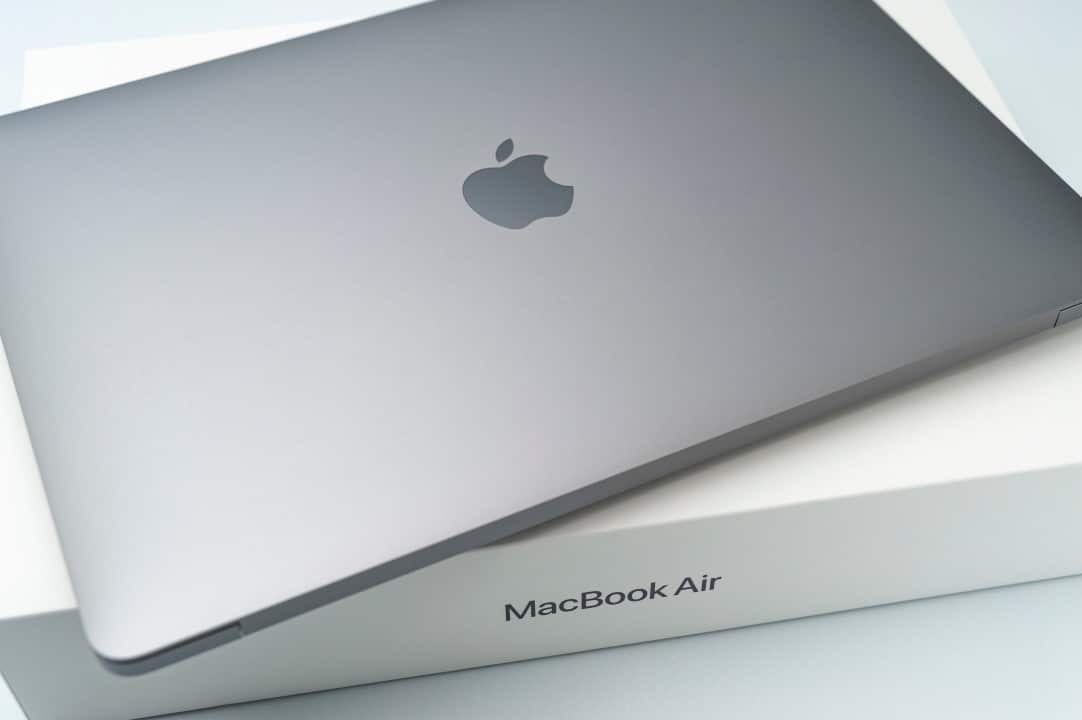
An affordable MacBook to compete in the education market
The highlight of the new strategy is the development of an entry-level MacBook, with an estimated price of between 700 and 800 dollars. Para reaches this value, the Apple should simplify the design and construction materials, possibly using a metal chassis with a more basic finish compared to the Air and Pro models.
This new device would be a direct response to the dominance of Chromebooks, which are widely adopted in schools and companies due to their low cost and simplicity of management. By offering a complete macOS experience on more affordable hardware, Apple aims to capture a share of this lucrative market.
| モデル | メインチップ | 画面 | 推定開始価格 (相当) | 主な対象者 |
|---|---|---|---|---|
| 低価格MacBook | A18プロ | 13インチ液晶 | 699-899 | 学生と基本的な使い方 |
| MacBook Air | M5 | 13インチまたは15インチRetina | 999 | プレミアムモバイルユーザー |
| 標準MacBook Pro | M5プロ/マックス | 14インチまたは16インチのミニLED | 1999-3499 | 中級者向け |
| MacBook Pro OLED | M6(予定) | 14インチまたは16インチのタッチOLED | 非開示 | 一流のクリエイター |
Technical specifications must be optimized for everyday tasks. Rumores indicate that the device may be equipped with a 13-inch screen and a processor derived from the A18 Pro chip, ensuring sufficient performance for internet browsing, document editing and media consumption.
To further reduce production costs, this model is likely to have a limited number of ports, focusing on essential connectivity such as USB-C, and giving up premium features such as Thunderbolt technology, present in the brand’s most expensive notebooks.
The evolution of the M5 processor family
The heart of the new MacBooks will be the M5 processor family, which promises a significant leap forward compared to the previous generation. Fabricados with TSMC’s second-generation 3-nanometer technology, these chips should deliver more performance and, at the same time, optimize power consumption, resulting in greater battery life for the devices.
Initial projections indicate a CPU performance increase of between 12% and 15%, while the GPU could see a gain of up to 36%. Esse advancement will make the new MacBooks even more capable of handling heavy tasks, from 8K video editing to complex software development and graphics-intensive games. The enhanced Neural Engine should also accelerate artificial intelligence and machine learning tasks, making the operating system and supported applications smarter and more responsive.
Updates for MacBook Air and MacBook Pro
The popular MacBook Air, known for its balance of portability and performance, will be one of the first to receive the standard M5 chip. The update will consolidate its position as the ideal choice for students, professionals and general users looking for a light and powerful notebook for everyday life.
For professionals who demand maximum processing power, the 14-inch and 16-inch MacBook Pro models will be updated with the M5 Pro and M5 Max chips. Essas variants will offer more CPU and GPU cores, as well as greater memory bandwidth, and are designed for extreme workflows in areas such as 3D design, music production and data analysis.
The external design of the Air and Pro models is expected to remain largely unchanged, with the Apple focusing on improvements to the internal hardware. Maintenance of ports such as HDMI, SD card reader and MagSafe on the Pro models should continue, meeting the connectivity needs of professional users.
The future with OLED screens and the M6 chip
Although the M5 generation must maintain current screen technologies, such as Liquid Retina and mini-LED, the Apple is already working on a major innovation for the future. Relatórios indicate that MacBook models Pro equipped with the M6 chip, expected in the coming years, will be the first to adopt OLED panels.
OLED technology will offer superior image quality, with true blacks, infinite contrast and more vibrant and accurate colors. Essa change will represent a significant advance for image and video professionals, in addition to improving the content consumption experience for all users.
Market strategy and launch schedule
The introduction of four new models demonstrates an aggressive strategy by Apple to diversify its portfolio and serve a wider range of consumers. The launch of an entry-level MacBook is a move calculated to attract users who previously considered the brand’s products inaccessible, integrating them into the Apple ecosystem. At the same time, performance upgrades to the Air and Pro lines ensure the company maintains its leadership in the high-performance computer segment, offering a clear upgrade path for its loyal customer base. The launch schedule should be staggered, with the first models equipped with the M5 chip, possibly the MacBook Air, hitting the market between the end of this year and the beginning of next, while the Pro versions and the new entry-level model would be launched in the following months.
What to expect from the new processors
In addition to the speed increase, the M5 family chips should bring a more powerful Neural Engine, improving the MacBooks’ artificial intelligence capabilities. Isso will translate into smarter Siri, faster image and video processing, and new functionality on macOS that relies on machine learning running locally on the device.



