
Honda CR-V has reduced prices to challenge Toyota RAV4’s leadership in the hybrid SUV segment


Honda began a strong offensive in the European market by announcing a significant price reduction for the CR-V. The measure, which in some versions can generate savings of up to 9,600 euros, aims to intensify direct competition with the Toyota RAV4, the consolidated leader in the mid-size SUV segment. With this new pricing policy, the Japanese automaker seeks to make its model more attractive to consumers, especially in hybrid and plug-in versions, which are crucial for sales volume in the region.
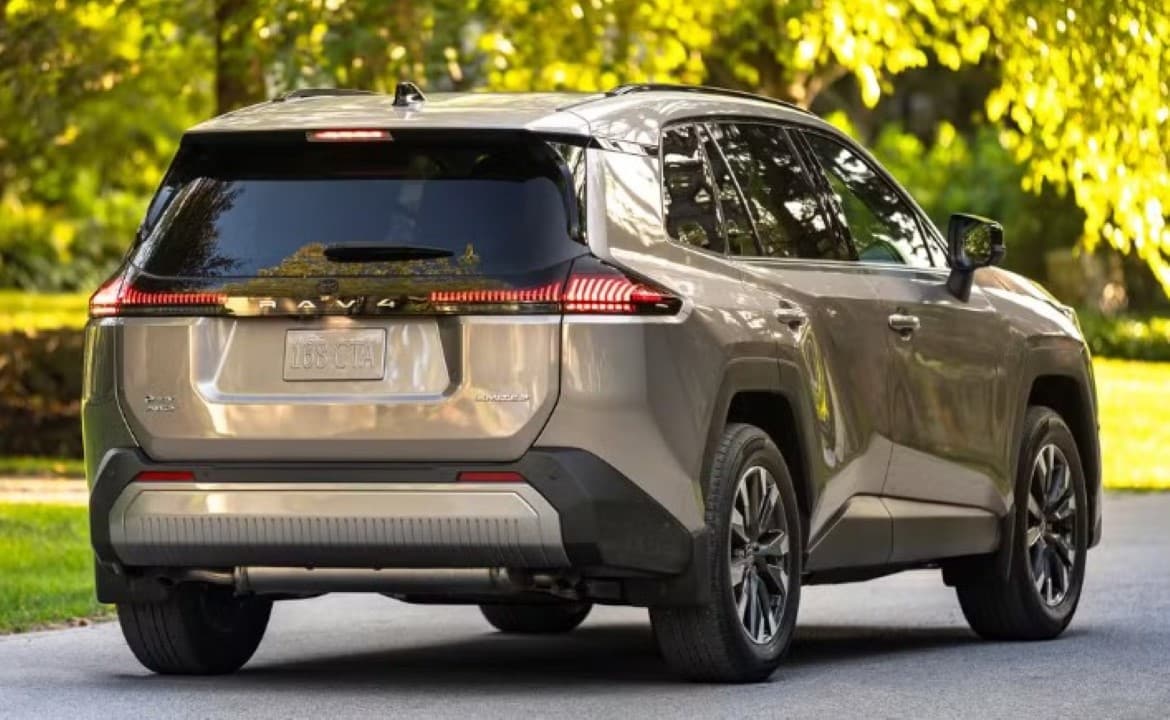
The strategy is a direct response to the price positioning of the RAV4, which in its entry-level version for the 2026 model year is sold from 45,500 euros. By adjusting the CR-V’s values, Honda is not only getting closer to its main competitor, but also preparing to face growing competition from other brands, including new manufacturers arriving with aggressive proposals on the continent. The promotional action is seen as fundamental to maintaining the CR-V’s relevance in one of the most sought-after segments of the global automotive sector.
In the Brasil, the Honda CR-V is sold in a single version, the Advance Hybrid, which combines a 2.0 gasoline engine with two electric motors, delivering a combined power of 207 hp. The model stands out for its good level of equipment, premium finish and energy efficiency. However, the aggressive discount policy applied to the Europa has not, to date, been announced for the national market, where the SUV competes with other premium hybrid models and maintains a distinct price positioning.
Price adjustments in the European market
The new price list for the Honda CR-V in the Spanish market, one of the main ones for the Europa, demonstrates the seriousness of the brand’s investment. The entry-level version, Elegance e:HEV with 4×2 traction, had its price reduced from 51,545 euros to 46,645 euros, representing a discount of 4,900 euros. The Essa configuration is now becoming more competitive, approaching the starting value of the direct competitor, the Toyota RAV4. The intention is clear: to capture customers who are looking for a well-equipped hybrid SUV, but who consider price a decisive factor in their purchase.
For the more equipped versions, the discounts are even more significant. The Advance e:HEV model with 4×4 traction, for example, received a cut of 4,200 euros, costing 52,365 euros. The highlight, however, is the top-of-the-line version Advance Tech e:PHEV (plug-in hybrid) with 4×2 traction. Seu price fell from 61,760 euros to 52,160 euros, an impressive reduction of 9,600 euros. With this new value, the Honda positions its plug-in model extremely aggressively, offering more technology and electric range for a price very close to that of the competition’s conventional hybrid versions.
Commercial strategy to gain market share
Honda’s decision to reduce CR-V prices is not an isolated move, but part of a broader strategy to preserve and increase its market share. The Toyota RAV4 has maintained a comfortable lead in the midsize SUV segment for years, thanks to its reputation for hybrid system reliability and efficiency. Honda, aware of this, focuses on a value approach, offering its product at a more competitive price without compromising on quality and equipment.
With this action, the brand seeks to attract an audience that, although loyal to Japanese brands, is increasingly attentive to cost-benefit opportunities. Aggressive pricing also serves as a protective barrier against the arrival of new brands, especially Chinese ones, which enter the European market with technologically advanced electric and hybrid vehicles at very competitive prices.
By making the CR-V more affordable, Honda hopes to not only challenge the RAV4, but also cement its SUV’s image as one of the smartest options in its class. The campaign focuses on showing that it is possible to have a spacious, safe and technologically advanced vehicle, with the efficiency of a state-of-the-art hybrid system, for a more advantageous price.
Technical comparison between rivals
The rivalry between the Honda CR-V and the Toyota RAV4 goes beyond prices and extends to technical specifications, where both models present different, although efficient, proposals. The CR-V e:HEV uses a system that prioritizes the electric motor to move the vehicle most of the time, with a 2.0 gasoline engine working mainly as a generator, resulting in a combined power of 184 hp in European versions. On the other hand, the RAV4’s hybrid system is known for its robustness and delivers superior power, reaching 218 hp in the front-wheel drive version. However, the Honda aims for a smoother and quieter driving experience, similar to that of an electric car. In the dispute between plug-in hybrids, the CR-V e:PHEV has the advantage with a declared electric range of up to 82 km, surpassing the 75 km of the RAV4 PHEV, an important difference for those who drive predominantly in the city and seek to minimize fuel use. In terms of internal space and practicality, the CR-V also stands out, offering a larger trunk, with capacity for up to 617 liters in hybrid configuration, a crucial point for families. The RAV4, although spacious, has a sales history and a broader service network in certain markets, which weighs on many buyers’ decisions.
The scenario of the Honda CR-V in the Brasil
In the Brazilian market, the Honda CR-V follows a different path than the Europa. Lançado in its new generation, the model is offered exclusively in the Advance Hybrid version, positioning itself in a more premium niche in the SUV segment. The launch price reflects this strategy, placing it in direct competition with other hybrid models from established brands.
The engine available in the Brasil is the e:HEV, which delivers a combined power of 207 horsepower, higher than the European version, and a torque of 34.2 kgfm, ensuring good performance and low fuel consumption. Honda’s local strategy appears to focus on a consumer who seeks exclusivity, embedded technology and the efficiency of the hybrid system, rather than competing for volume with entry-level models from other brands.
The evolution of the hybrid SUV segment
The electrified midsize SUV segment is constantly transforming and has become one of the most important battlegrounds for automakers around the world. Competition, previously centered between traditional Japanese and European brands, now includes new and strong competitors.
Chinese brands, such as BYD and GWM, are quickly gaining ground by offering products with modern design, lots of technology and, above all, efficient hybrid and electric systems at highly competitive prices. Essa new reality forces established manufacturers to reevaluate their strategies.
Consumers are the biggest beneficiaries of this scenario. The diversity of options increases, and the price war results in better offers and purchasing conditions. Electrification went from being a niche differentiator to becoming an essential requirement in the category.
Models like the CR-V and RAV4 therefore need to not only compete with each other, but also prove their value in the face of a new wave of products arriving to redefine market expectations in terms of cost-benefit and technological innovation.
Features of the Honda e:HEV system
The Honda e:HEV system, which equips the CR-V, is one of its main technological differentiators. Ele operates intelligently, switching between three driving modes: electric, hybrid and combustion. Most of the time in urban environments, the vehicle operates in electric mode, with the gasoline engine acting only to generate energy for the battery, ensuring silent driving and zero local emissions. Essa approach optimizes fuel consumption and provides more immediate throttle response.
Global positioning of Honda
The CR-V price offensive at Europa reflects Honda’s global effort to remain one of the most competitive brands on the automotive scene. The company seeks to balance its tradition of high-quality engineering and reliability with the need to adapt to a dynamic market, where price is an increasingly determining factor.
By making its flagship SUV more affordable in key markets, Honda not only aims to increase sales in the short term, but also strengthen the value perception of its products. The strategy indicates that the brand is attentive to the movements of the competition and willing to take bold steps to ensure that its vehicles remain a relevant choice for a wide range of consumers around the world.



