
James Webb Telescope reveals secrets of early galaxies and atmospheres of distant exoplanets

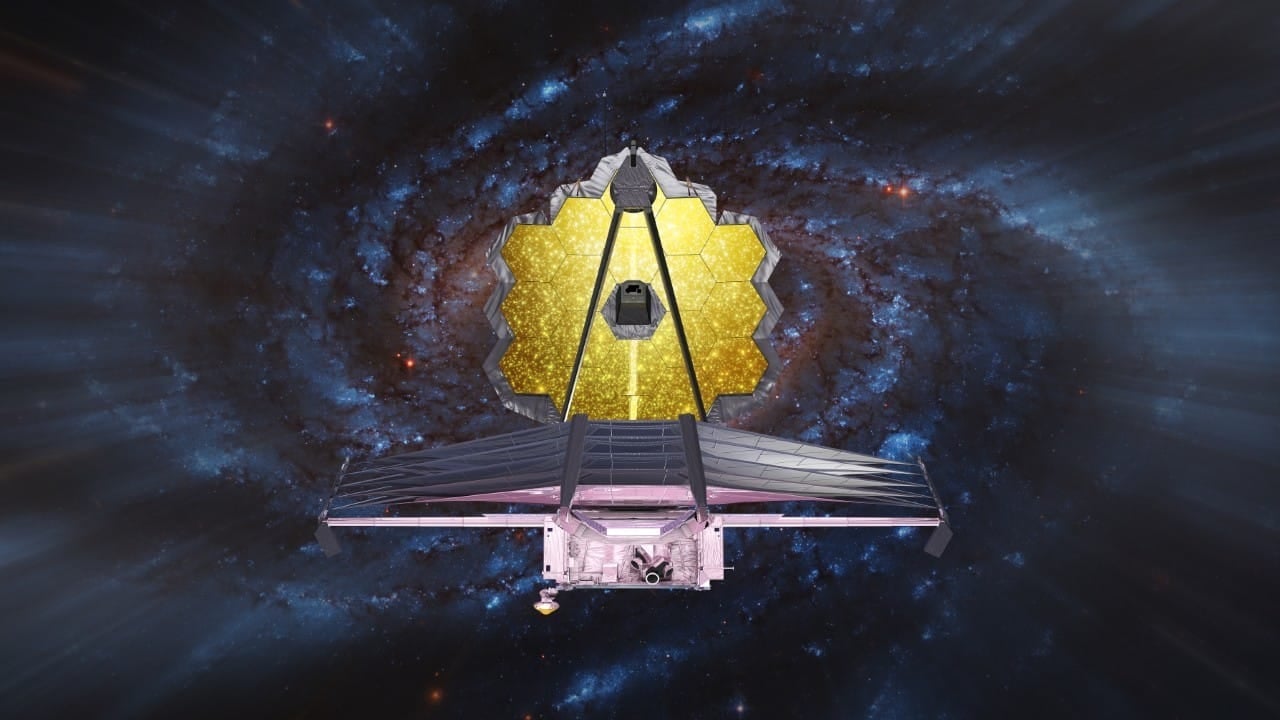
The Telescópio Espacial James Webb (JWST) continues to transform human understanding of the cosmos, delivering images and data that redefine the limits of astrophysics. Operando approximately 1.5 million kilometers from Terra, the space observatory has provided unprecedented glimpses of the first galaxies formed after Big Bang, in addition to analyzing in unprecedented detail the atmospheres of planets that orbit other stars, the so-called exoplanets.
Desde the beginning of its operations, JWST exceeded all expectations, using its advanced infrared instruments to see through dense clouds of cosmic dust that previously obscured the view of other telescopes. Essa capability allows scientists to directly observe the processes of star and planet formation, offering a new window into the most primordial moments in the history of the universe.
The mission, an international collaboration between NASA, Agência Espacial Europeia (ESA) and Agência Espacial Canadense (CSA), remains focused on answering some of the most fundamental questions in science: how the universe began, how galaxies evolved and whether there is potential for life beyond Terra. Recent discoveries solidify the telescope’s role as the primary tool of modern astronomy.
The infrared window to the early cosmos
One of the James Webb’s most notable capabilities is its ability to observe light from extremely distant objects. Como the universe is expanding, the light emitted by the first stars and galaxies is stretched to longer wavelengths, a phenomenon known as redshift. JWST’s instruments are optimized to detect this infrared light, allowing it to function like a true time machine.
Deep-field images captured by the telescope revealed galaxies that existed just a few hundred million years after Big Bang. Surpreendentemente, many of these early galaxies turned out to be brighter, more massive and more structured than theoretical models predicted, forcing cosmologists to revise their theories about how quickly the first cosmic structures formed and evolved.
Essas observations are helping to piece together the puzzle of galactic evolution. By studying populations of galaxies at different cosmic epochs, astronomers can plot a detailed timeline of how they grew, merged, and formed the complex structures we see in the local universe, like our own Via Láctea.
Além Furthermore, the data collected is providing new clues about the era of reionization, a critical period in the history of the universe in which light from the first stars ionized the neutral hydrogen that filled the cosmos. Compreender this process is fundamental to explaining how the universe became transparent to light, allowing large-scale structure to become visible.
Investigating the composition of alien atmospheres
In the field of exoplanetary science, James Webb is providing a revolution. Utilizando a technique called transit spectroscopy, the telescope analyzes the light from a star passing through the atmosphere of an orbiting exoplanet. Molecules in the planet’s atmosphere absorb specific wavelengths of light, leaving a chemical signature that JWST can detect with incredible precision.
Essa detailed analysis has already allowed the identification of several molecules on distant worlds, including water vapor, carbon dioxide, methane and sulfur dioxide. The detection of these substances helps scientists determine the type of atmosphere, the presence of clouds or fog and even infer geological and chemical processes that occur on the planet’s surface. Discoveries are revealing a diversity of worlds that defies the imagination, from hot gas giants with silicate clouds to rocky planets that may be capable of harboring liquid water.
Stellar nurseries revealed in never-before-seen details
Star-forming regions, known as stellar nurseries, are shrouded in dense clouds of gas and dust that block visible light. James Webb’s infrared vision penetrates these clouds, revealing the intimate processes of the birth of new stars and their planetary systems with a clarity never before achieved.
Iconic Imagens, such as those in the “Pillars of Criação” in Nebulosa of Águia, show newborn stars still inside their dust cocoons, as well as jets of matter being expelled by young stars. Esses details are crucial to understanding how stars accumulate mass and how protoplanetary disks, where planets form, evolve around them.
The crucial role in the search for biosignatures
The ability to analyze exoplanetary atmospheres puts JWST at the forefront of the search for life beyond Terra. Scientists look for biosignatures, which are combinations of gases that, in Terra, are associated with biological processes. A classic example would be the simultaneous detection of oxygen and methane in large quantities, as these two molecules react quickly with each other and their coexistence suggests a source of continuous production, which could be life. The telescope is examining the atmospheres of rocky planets located in the “habitable zone” of their stars, where temperatures could allow liquid water to exist on the surface. Embora the detection of a biosignature is not definitive proof of life, it would be the strongest evidence ever found and would direct future research into that system. Thoroughly analyzing this data is a complex and long-term task, but it represents one of the mission’s most exciting objectives.
A scientific collaboration on a global scale
The continued success of Telescópio Espacial James Webb is a testament to the power of international collaboration. The union of efforts between the world’s main space agencies was essential to overcome the immense engineering and logistical challenges involved in the construction, launch and operation of such a complex observatory.
Cientistas from dozens of countries actively participate in the mission, submitting observation proposals and analyzing the data that is made publicly available. Esse open science model ensures that the telescope’s potential is exploited to its fullest, addressing a wide range of astrophysical questions.
Diversity of knowledge and perspectives enriches scientific analysis and accelerates the pace of discovery. With each new observation cycle, the global astronomical community comes together to unravel the mysteries that JWST reveals, sharing the excitement of exploring the universe in a completely new way.
Legacy and the next frontiers of exploration
Projetado for a lifespan of many years, the James Webb is just at the beginning of its journey of discovery. The continuous flow of data promises to rewrite the astronomy books and inspire a new generation of scientists, engineers and explorers.
JWST’s legacy will not only be measured by the answers it provides, but also by the new questions its observations will raise. Cada image and spectrum opens up new avenues of research, pushing the frontier of human knowledge ever further into the cosmos.
Technology that redefines astronomy
The technological heart of the JWST is its 6.5-meter primary mirror, comprised of 18 gold-coated hexagonal segments, and its four cutting-edge scientific instruments. Essa’s combination of size and sensitivity allows it to collect light from objects up to 100 times fainter than what Telescópio Espacial Hubble could detect, solidifying its status as the most powerful space observatory ever built by humanity.



