
Neural DSP launches Quad Cortex Mini at NAMM 2026 with touch screen and professional features

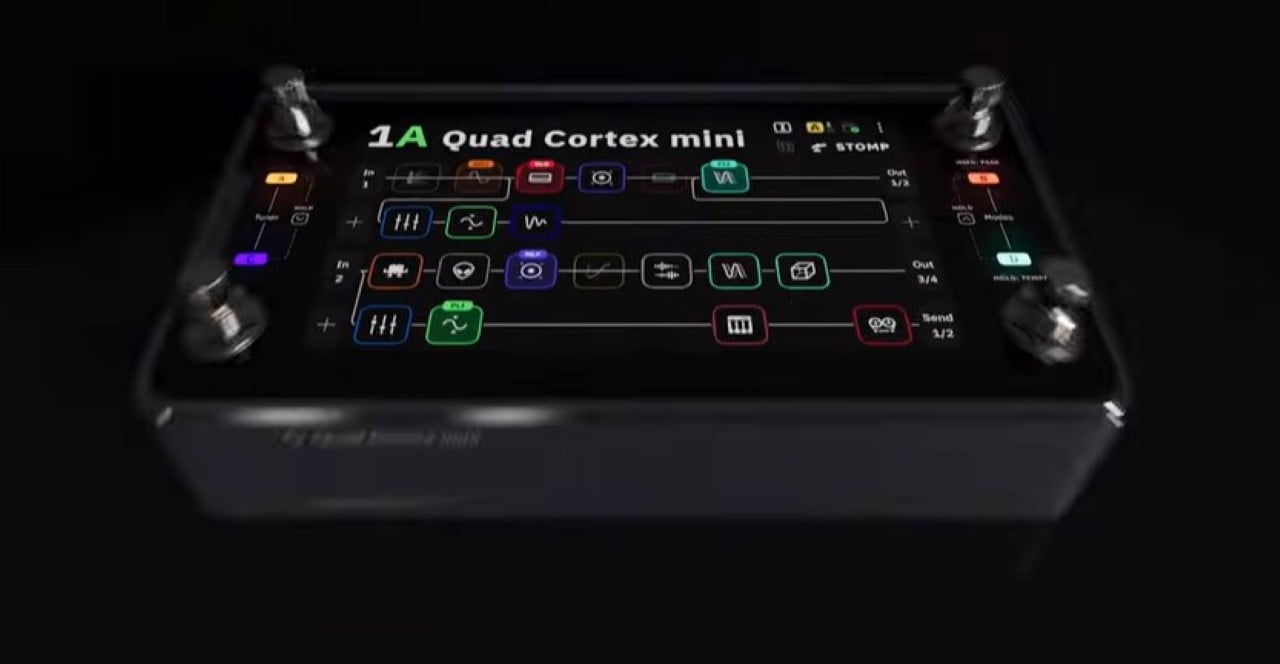
Neural DSP revealed the Quad Cortex Mini during NAMM 2026, held at Anaheim, at Estados Unidos. The equipment arrives as a more compact version of the Quad Cortex, maintaining advanced amplifier and effects modeling technologies. The launch took place this Tuesday, January 21st, with immediate availability for pre-sale at selected retailers.
The new multi-effects processor stands out for its 7-inch touchscreen, which makes browsing and editing presets easier. Ele incorporates Neural Capture technology, allowing you to accurately replicate the sound of real amps, pedals and cabinets. The device weighs just 1.5 kg and offers portability without compromising professional performance.
Guitar and bass players get an intermediate option between the full Quad Cortex and the Nano Cortex. The Quad Cortex Mini includes four rotary footswitches that function as pedals and parameter controls. Sua Rugged construction withstands heavy use on stages and studios.
Equipment design and portability
The Quad Cortex Mini significantly reduces the size compared to the larger model, taking up around 50% less space. Essa feature makes it ideal for musicians who need to transport the setup easily when traveling or performing. The compact structure does not sacrifice durability, with a housing resistant to impacts common in live environments.
The 7-inch multi-touch screen dominates the top panel, providing an intuitive tablet-like interface. Quatro knobs around the screen allow for quick parameter adjustments and switching between presets. Esses controls also serve as footswitches, optimizing flow during performances.
The 1.5 kg weight makes it easy to position on smaller pedalboards. The device includes power via the included power supply or USB-C with 12V, although it consumes 1,200 mA of current. Essa configuration balances mobility and energy stability in different usage scenarios.
Connections and technical versatility
The Quad Cortex Mini impresses with the number of connections in a reduced format. Ele offers balanced XLR outputs and 1/4-inch jacks for integration with professional sound systems. A dedicated input for neural capture allows you to record external equipment directly to the device.
The pedal includes stereo effects loops via TRS, MIDI in/out/thru for external control, and independent headphone output. The USB-C port functions as an audio interface with multiple input and output channels. Essa functionality turns the Mini into a central hub for studio recording.
- XLR and jack outputs for amplifiers or PA;
- Separate entry for Neural Capture;
- Stereo send/return loops;
- Full MIDI connections;
- USB-C with support for 16 audio channels;
- Dedicated output for personal monitoring.
These options ensure compatibility with complex setups, including integration of favorite analog pedals.
Modeling and capture technology
The Neural Capture technology remains the main differentiator of the Quad Cortex Mini. Ela uses biomimetic artificial intelligence to reproduce the sonic characteristics of amplifiers and pedals with human perceptual fidelity. The process captures nuances that traditional algorithms often miss.
The device shares the same processing engine as the larger Quad Cortex, ensuring identical modeling quality. Usuários access an extensive capture library via Cortex Cloud, with seamless transfer between models in the line. The CorOS 4.0.0 update adds new reverbs and phase alignment tools.
Musicians create captures directly on the equipment, without the need for external tools. Essa autonomy speeds up the creative workflow in rehearsals or recording sessions.
Comparison with other models in the line
The Quad Cortex Mini is strategically positioned between the complete Quad Cortex and the Nano Cortex. Diferente from Nano, which adopts minimalist approach without screen, Mini offers complete visual interface and more connections. Ele outperforms the smaller model in signal routing and control options.
In relation to the original Quad Cortex, the Mini reduces the number of footswitches but maintains the functional essence. The identical touch screen and neural capture preserve a premium experience in a portable format. The price reflects this balance, being below the flagship but above the entry-level.
This comparison highlights the Mini as a solution for professionals looking for power without excessive volume. Ele meets the demands of intense touring where stage space is limited.
Features for live performances
The four rotary footswitches allow for quick switching between presets and scenes within a rig. Stomp mode simulates traditional pedalboard, while Preset offers direct access to saved settings. Essas options adapt to different presentation styles.
Minimal latency and true bypass preserve signal integrity when turned off. The device supports external expression pedals for continuous control of parameters such as volume or wah. Essa flexibility benefits guitarists in varied contexts, from rock to jazz.
The touchscreen interface speeds up edits during shows, minimizing interruptions. Backups and presets are easily transferred via the cloud, facilitating remote preparation.
Integration as an audio interface
The Quad Cortex Mini works as a professional USB-C interface with up to 16 channels. Essa capability allows direct multitrack recording into DAWs without additional equipment. Baixa latency and optimized drivers guarantee stable performance in productions.
Re-amping becomes a simplified process with dedicated outputs. Músicos record clean signals and process them later with internal captures. Essa integration expands utility beyond the stage to home studios.
Compatibility with major operating systems ensures widespread use. Atualizações regular updates via CorOS maintain continuous evolution of features.
Availability and market positioning
The Quad Cortex Mini is available for immediate purchase with a suggested retail price of €1,299. International Revendedores already accept orders, including installment options. The value positions it as a premium investment accessible to established professionals.
The Neural DSP reinforces its line with this launch, responding to community feedback for compact options. The product arrives accompanied by updates that benefit the entire Quad Cortex ecosystem.
Interested musicians visit the company’s booth at NAMM 2026 for live demonstrations. The event at Anaheim continues until the end of the week, with local times running from 10am to 6pm.
Additional technical details
The processor uses SHARC quad-core architecture for high performance. Essa power supports complex signal chains with multiple simultaneous effects. The library includes classic amplifiers, overdrives and precisely modeled cabinets.
- Dedicated 2 GHz processing;
- Support for third-party IRs;
- Hybrid modes for combining shots;
- Bulk editing tools for presets;
- Phase Doctor for stereo alignment.
These features raise the bar for today’s digital multi-effects.
Power consumption requires an adequate source, but the USB-C option adds convenience. Construction includes overcurrent protection for increased reliability.
Applications for guitarists and bassists
Guitarists benefit from detailed modeling for vintage or modern tones. Baixistas access specific captures with optimized bass frequency response. The device covers different genres without limitations.
Integration with external pedals via loops preserves existing analog collection. Essa Hybrid combines the best of the digital and analog worlds.
Session professionals appreciate speed in creating custom tones. Neural capture accelerates replication of reference setups.



