
World number 1, Aryna Sabalenka calls for peace and moves away from controversy at the Australian Open

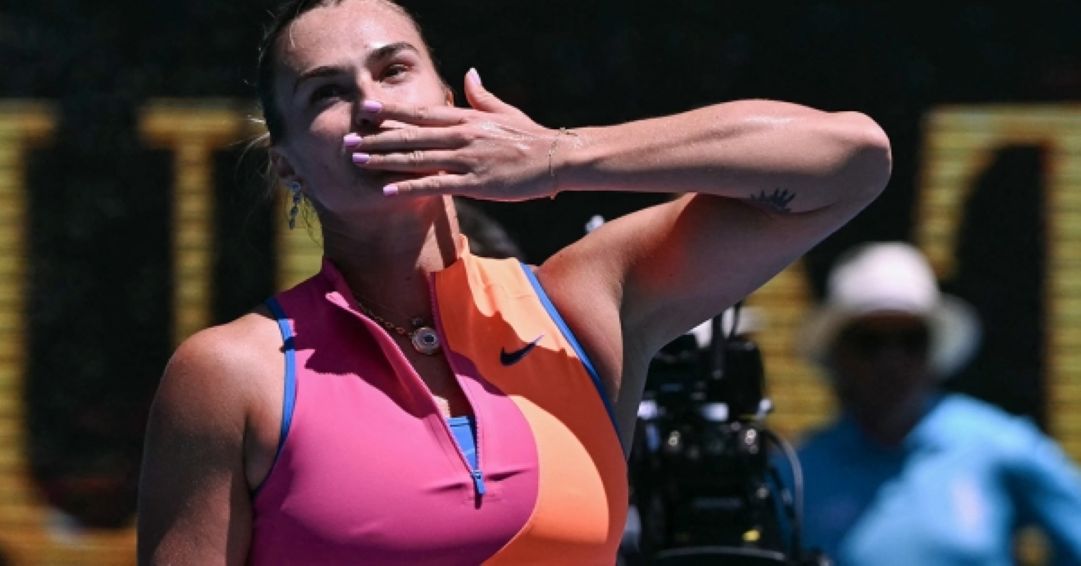
The Belarusian tennis player Após secure her place in the third round of Australian Open, in Melbourne, the athlete was asked about the role of her country, Belarus, as an ally of Rússia. In response, Sabalenka reinforced that his focus is entirely on his sporting performance and the search for the first Grand Slam title of the year.
The positioning of the number 1 in the world takes place in a scenario of growing tension in the women’s circuit, where political demonstrations have become more frequent. Sabalenka highlighted that, despite recognizing the seriousness of the humanitarian crisis, his role is to represent sport, not governments. In her journey through the tournament, the player beat the Chinese Zhuoxuan Bai with partials of 6/3 and 6/4, and is now preparing to face the Russian naturalized Austrian Anastasia Potapova. The atmosphere between Ukrainian, Russian and Belarusian athletes has remained tense since the start of the conflict in 2022, leading the event organizers to impose strict rules against political demonstrations.
Reactions and ethical stance on the professional circuit
Aryna Sabalenka’s approach is an ongoing effort to decouple his career from the actions of the Belarusian government, which provides logistical support to Russian forces. The tension in the circuit was evident recently when Ukrainian Marta Kostyuk, number 20 in the world, refused to greet Sabalenka at the net after Brisbane’s WTA 500 final. The gesture of not performing the traditional handshake became a symbol of the position of the Ucrânia tennis players against athletes from nations allied to the Kremlin.
Continuing to build 📈
World No. 1@SabalenkaAis continuing to add new tools to her game.#AO26https://t.co/uvOKOPdkao
— #AusOpen (@AustralianOpen)January 21, 2026
Sabalenka has publicly stated that if she had the power to stop the violence, she would do so without hesitation. Ela admitted that coexistence behind the scenes has become a challenge, but that he strives to maintain professionalism with colleagues who are facing family losses or have been forced into exile. The athlete argues that sport should serve as a bond of unity, although she understands that geopolitical reality creates complex emotional and ideological barriers.
Ukrainian demonstrations gain visibility in the tournament
While the leader of the ranking seeks neutrality, other competitors use the Australian Open global platform to draw attention to humanitarian causes. The Ukrainian Oleksandra Oliynykova, despite being eliminated in the first round by the North American Madison Keys, used her interview to deliver a message of help. Wearing an outfit that called for protection for women and children in her country, the 25-year-old tennis player shared a personal account of the direct impact of the war on her family.
Oliynykova said that her father is serving as a soldier on the front line, which left her without her main support during competitions. Ela revealed that his big dream was to see her play on a main court like Melbourne, and that her participation was a tribute to him. Essa duality of narratives, between Sabalenka’s call for neutrality and Oliynykova’s activism, exposes the complexity of managing an elite sporting event in the midst of an international crisis.
Technical performance and next steps in the competition
On the court, Aryna Sabalenka has justified its position at the top of the rankings with dominant performances, marked by power and precision. The victory over Zhuoxuan Bai was achieved in less than two hours, showing that external pressure did not impact his performance. The Belarusian used her powerful serve and aggressive groundstrokes to control the match and ensure her continued contention for the trophy.
Her next opponent, Anastasia Potapova, is seen as a greater technical challenge due to her versatility and agility. The clash is eagerly awaited, as it will define one of the places for the round of 16, a phase in which the level of competition increases significantly. Sabalenka remains the main favorite, maintaining a rigorous training routine and avoiding social media to protect herself from criticism linked to her nationality.
On-court safety and neutrality protocols
Federação Australiana of Tênis, in collaboration with the WTA, has implemented measures to ensure a safe environment for all participants. The guidelines prohibit the display of flags or symbols that could be interpreted as supporting the invasion or that generate conflicts between fans. The main objective is to protect the sporting spectacle and prevent arenas from becoming the stage for protests that compromise the safety of athletes.
Sabalenka’s neutral stance is interpreted by many as a form of self-protection, as more incisive statements could result in retaliation in Belarus, where his family still lives. At the same time, the tennis community debates the responsibility of elite athletes to speak out against the actions of authoritarian governments. Enquanto the discussion continues, the tennis player focuses on her preparation to try to lift the trophy in Melbourne.
The impact of family absences and emotional support
The reality of war drastically altered the dynamic for many competitors, especially those who saw family members or coaches called into military service. Para athletes like Oliynykova, each game carries an emotional weight that goes beyond the ranking score, transforming sport into a platform for resilience. Ciente of these stories, Sabalenka seeks to maintain a respectful distance behind the scenes, focusing on his technical team.
The psychological support provided by the tournament organization has been crucial in helping the players deal with media pressure and constant questions about the conflict. Especialistas in mental health are available to help process the grief and anxiety caused by the daily news. Esse support environment is vital to maintain the high technical level of the competition and preserve mutual respect between professionals.
Sabalenka’s trajectory towards the top of the ranking
Aryna Sua’s rise was marked by tactical evolution and greater emotional control, correcting the high incidence of unforced errors that had harmed it in the past. Atualmente, she is seen as the main reference of the circuit, combining physical strength with a new strategic maturity.
Leading the ranking also expands your responsibility as a global representative of the sport. Sabalenka has managed his social networks carefully, prioritizing content over training and commercial partnerships to avoid controversy. Ela understands that, as a global public figure, his words are closely analyzed, which justifies his insistence on keeping his responses focused on tennis.
Perspectives for the sequel to the season
The result at Australian Open will be an important indicator for the rest of the year, showing whether Sabalenka will be able to maintain its dominance against new and talented opponents. The women’s circuit is experiencing a moment of high competitiveness, with players of different nationalities challenging the elite. The Belarusian is aware that, to stay at the top, she will need not only technical excellence, but also strong emotional armor to navigate the ongoing political turmoil.
After the stage at Austrália, the tennis calendar moves on to Estados Unidos and Europa, where the same questions should resurface. Sabalenka’s plan is to maintain his policy of not commenting on extra-sport topics, in the hope that his victories on the court will speak louder. Seu’s call for peace in



