
World ranking leader Aryna Sabalenka calls for peace and avoids political topics at the Australian Open

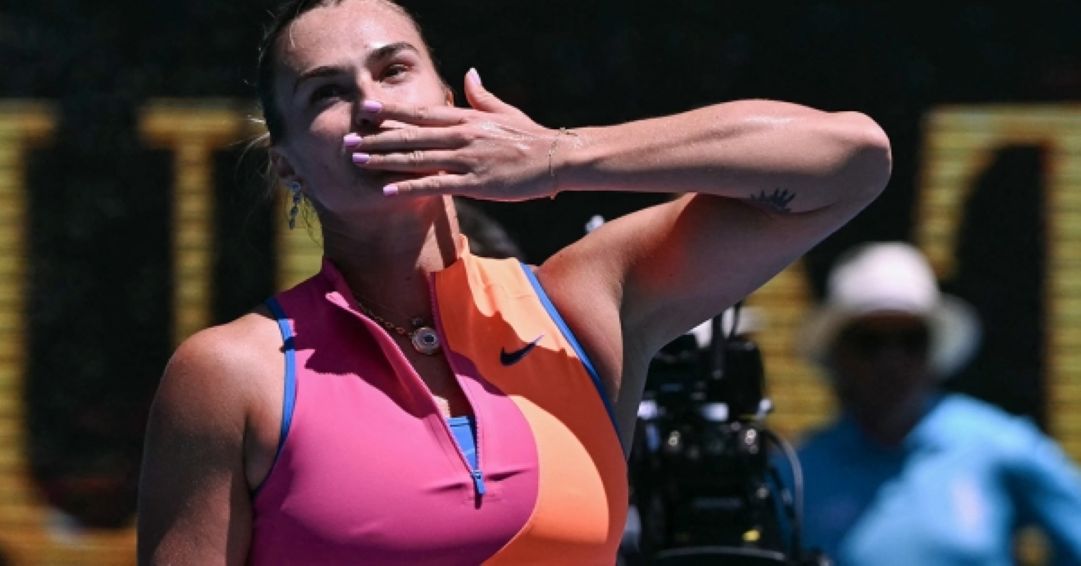
Belarusian tennis player Aryna Sabalenka, current number 1 in the world, used her space at a press conference this Wednesday, January 21, 2026, to reinforce her desire for an end to military conflicts in Leste Europeu. Após advance to the third round of Australian Open in Melbourne, the athlete was asked about the positioning of her home country, Belarus, which acts as a strategic ally of Sabalenka emphasized that his focus remains exclusively on developing his sporting career and competing in the first Grand Slam of the season.
The ranking leader’s positioning occurs at a time of high tension behind the scenes of the women’s professional circuit, where political demonstrations have become frequent among competitors. The athlete highlighted that, although she recognizes the seriousness of the humanitarian situation that has already resulted in thousands of fatalities, her role on the court is to represent the sport and not to serve as a government spokesperson. Ela reiterated that peace is the supreme desire, but that political discussions should not interfere with the integrity of the tennis tournament on Australian soil.
- The player beat the Chinese Zhuoxuan Bai with partials of 6/3 and 6/4 in Melbourne Park.
- Sabalenka will face Russian naturalized Austrian Anastasia Potapova in the next phase of the competition.
- The climate of hostility between Ukrainian and Belarusian athletes has persisted since the invasions began in 2022.
- The Australian Open organization maintains strict rules regarding political demonstrations during matches.
Continuing to build 📈
— #AusOpen (@AustralianOpen)January 21, 2026
World No. 1@SabalenkaAis continuing to add new tools to her game.#AO26https://t.co/uvOKOPdkao
Reactions and ethical stance on the professional circuit
Aryna Sabalenka’s stance reflects an ongoing effort to dissociate its image from decisions made by the government of Belarus, which provides logistical and territorial support to Russian troops. Recentemente, the tension reached its peak when the Ukrainian Marta Kostyuk, currently number 20 in the world rankings, refused to greet the Belarusian on the net after the WTA 500 final of Brisbane. Esse gesture of ignoring the traditional handshake became a symbol of the resistance of Ukrainian tennis players against representatives of nations allied to Kremlin.
Sabalenka openly declared that if she had the power to alter the course of geopolitical events and stop violence, she would do so immediately and without hesitation. Ela highlighted that coexistence in the locker rooms has been challenging, but that he seeks to maintain professionalism in the face of colleagues who have lost family members or been forced into exile. The athlete believes that sport has a universal language that should unite people, although she recognizes that the practical reality outside the courts imposes almost insurmountable sentimental and ideological barriers.
Ukrainian demonstrations gain visibility in the tournament
While the world number 1 tries to silence political debates, other tennis players use Australian Open’s global visibility to attract attention to urgent humanitarian causes. The Ukrainian Oleksandra Oliynykova, despite being eliminated in the opening round by the North American Madison Keys, used her press conference to deliver a message of help. Vestindo outfits that called for protection for Ukrainian women and children, the 25-year-old tennis player gave a personal account of the direct impact of the confrontation on her family structure.
Oliynykova revealed that her father is currently serving as a soldier on the front lines, which has left her without her main support network during circuit trips. Ela mentioned that her parent’s dream was to see her compete on main courts like Melbourne, and that her participation in the tournament was dedicated entirely to him. Essa duality of discourses between Sabalenka’s request for neutrality and Oliynykova’s activism highlights the complexity of managing an elite sporting event in times of international crisis.
Technical performance and next steps in the competition
In the strictly sporting field, Aryna Sabalenka demonstrated why she occupies the top of the world tennis hierarchy by dominating her initial opponents with power and technical precision. The victory against Zhuoxuan Bai was consolidated in less than two hours of play, showing that external pressure did not affect his physical or mental performance on the court. The Belarusian used her powerful serve and aggressive groundstrokes to destabilize her Chinese opponent, ensuring her continued pursuit of the title.
Sabalenka’s next opponent, Anastasia Potapova, poses a significant technical challenge due to her versatile playstyle and quick movement. The confrontation is eagerly awaited by analysts, as it will define who will advance to the round of 16 of the tournament, where the levels of demand rise considerably. Sabalenka remains the main favorite for the title, maintaining an intense training routine and trying to isolate herself from social media and criticism related to her nationality.
On-court safety and neutrality protocols
Federação Australiana of Tênis and the WTA have been working together to ensure the tournament environment remains safe for everyone involved, regardless of their background. Existem clear guidelines that prohibit the display of flags that could be interpreted as supporting the invasion or that generate discord among fans in the stands. The objective is to preserve the sporting spectacle and prevent arenas from becoming stages for protests that could compromise the physical integrity of athletes.
Sabalenka’s neutrality is seen by some as a measure of self-preservation, as more forceful statements could generate retaliation in his country of origin, where family members still reside. On the other hand, the international tennis community continues to debate whether high-profile athletes should have a greater responsibility to condemn authoritarian government actions. Enquanto the debate persists, the tennis player focuses on adjusting her strokes and maintaining the necessary concentration to lift the trophy at the end of the fortnight.
The impact of family absences and emotional support
The absence of father figures and coaches who have been called up for military service or who are unable to travel drastically alters the psychological dynamics of the competitors. Para athletes like Oliynykova, each match is charged with an emotional weight that transcends ranking points, transforming each victory into a message of resilience. Sabalenka, aware of these stories, tries to maintain a respectful distance, avoiding direct confrontations in the corridors and focusing on his reduced technical team.
The psychological support offered by the tournament has been essential for players to deal with media pressure and incessant questions about the conflict. The organization provides mental health experts to help process the grief and anxiety generated by the news that comes from the front daily. Esse supportive environment is crucial so that the technical level of tennis does not suffer a drastic drop and so that mutual respect, even without handshakes, is maintained between professionals.
Sabalenka’s trajectory towards the top of the ranking
Aryna Sabalenka consolidated her position as number 1 through an impeccable previous season, marked by important titles and a rare consistency on the women’s circuit. Sua transition to the top involved profound changes in his tactical approach and in controlling his unforced errors, which had previously been his weak point. Hoje, she is recognized as the player to beat, combining brute strength with a new strategic maturity that allows her to turn around adverse situations in long matches.
Leading the ranking brings with it an expanded responsibility to represent the values of sport on a global scale. Sabalenka has used his social networks cautiously, focusing on commercial partnerships and training moments to avoid dubious interpretations of his posts. Ela understands that, as a global icon, every word is meticulously analyzed by news agencies and governments, which justifies its insistence on keeping responses short and focused exclusively on the universe of rackets.
Prospects for the sequel to the 2026 season
The performance at Australian Open will serve as a thermometer for the remainder of 2026, indicating whether Sabalenka will be able to maintain dominance against rising rivals. The women’s circuit is more competitive than ever, with new players emerging from different regions of the world and challenging the hegemony of the veterans. The Belarusian knows that to stay at the top she will need more than just technique; You will need superior emotional armor to navigate the political turbulence that surrounds your nationality.
The tennis calendar will continue to Estados Unidos and Europa after the Australian tour, where new challenges and questions will certainly arise at each stop. Sabalenka plans to maintain its policy of silence on non-sports topics, hoping that its on-court achievements speak louder than external controversies. The desire for peace expressed in Melbourne resonates as a call for normality in a world where the boundaries between sport and geopolitical reality are increasingly blurred.
Considerations on diplomacy in elite sport
The case of Sabalenka and the Ukrainian tennis players exemplifies the difficulty of maintaining neutrality in a globalized and connected world. Sports diplomacy often fails to provide simple answers to deep-seated conflicts, leaving athletes with the burden of balancing their careers with their national identities. Australian Open continues to be a stage where these tensions are visible, but also where individual talent seeks to shine above the shadows of territorial disputes.
The sports community awaits the next developments, both on the courts of Melbourne and on the international political scenes. Sabalenka’s commitment to tennis is undeniable, as is the pain of athletes who represent nations at war. In the end, the world number 1’s request for peace is a reminder that, behind the trophies and prestige, there are human beings yearning for a return to tranquility and mutual respect.



