
Bixby is renewed by Samsung with Perplexity AI to understand natural voice commands in the new One UI 8.5

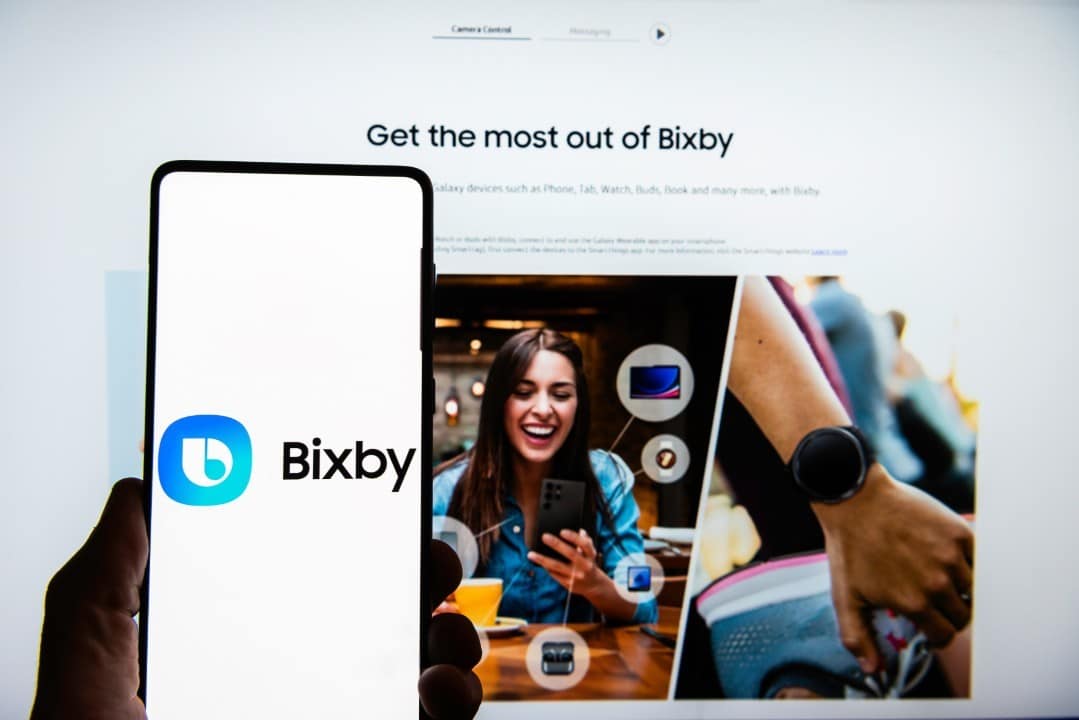
Samsung announced a complete redesign of its virtual assistant, the Bixby, which now operates as an intelligent agent integrated into the hardware and operating system of Galaxy devices. The main new feature, revealed on January 20, 2026, is the incorporation of the Perplexity’s artificial intelligence engine, allowing the assistant to process complex commands in natural language and make in-depth adjustments to the device.
This update represents the biggest evolution of Bixby since its launch, focusing on transforming the way users interact with their smartphones. Instead of relying on rigid phrases and commands, the assistant now understands the intent behind everyday requests, automating tasks that would previously have required manual navigation through multiple configuration menus.
The new functionality will be introduced with the One UI 8.5. A beta version is now being made available to owners of Galaxy S25 devices in select markets, while a stable, native launch will occur with the arrival of the Galaxy S26 series, scheduled for February.

How the new Bixby interprets everyday commands
The fundamental change in Bixby lies in its ability to interpret intentions declared by the user, a significant advance compared to the previous model based on specific commands. The assistant now uses advanced algorithms to analyze the context of a request and perform the corresponding action autonomously. For example, if a user says that the screen should not go off while reading a long article, the system identifies the need and activates the smart viewing mode without having to manually search for the function in the settings. Essa contextual approach not only simplifies the interaction but also educates the user about the device’s features in an organic way. The technology is also capable of diagnosing common issues in real time, such as when asked about unwanted screen activations in your pocket, analyzing data from proximity and light sensors to recommend activating accidental touch protection, solving a common problem with a single interaction.
Integration with Perplexity AI for real-time searches
The strategic partnership with Perplexity expands the capabilities of the Bixby beyond device control, enabling web queries directly from its interface, without interrupting ongoing activity. Quando the user requests external information, such as restaurant recommendations or the definition of a complex term, the assistant displays the results in floating widgets, keeping the main application visible and active. Essa functionality creates a more fluid user experience by eliminating the need to switch between apps to get quick, contextual information.
The system architecture is designed to clearly differentiate between internal and external tasks. Comandos related hardware, settings and native applications are processed locally by the Bixby engine, ensuring speed and privacy. On the other hand, questions that require up-to-date knowledge and internet data are delegated to the Perplexity engine. Samsung ensures that strict privacy protocols have been implemented, ensuring that sensitive device data remains under user control and is not used for training external models without explicit consent, maintaining a balance between functionality and security.
Availability and release schedule
The initial testing phase of the renewed Bixby has already begun, being made available to users enrolled in the One UI 8.5 beta program on devices in the Galaxy S25 line. Distribution at this stage is progressive and limited to selected regions.
The official, large-scale launch of the stable version is scheduled for February 2026. The new assistant will come pre-installed at the factory on all models of the long-awaited Galaxy S26 series.
Owners of previously compatible models will also receive the update. Samsung will follow its regular software distribution schedule via OTA (Over-the-Air), prioritizing the latest flagships before expanding to mid-range devices.
To ensure full functionality of the new features, you will need to have the latest version of the Bixby application installed. The company warns that older devices may have limited access to some of the more advanced features due to hardware restrictions.
Samsung’s AI strategy
With this update, Samsung solidifies its artificial intelligence strategy by establishing a clear division of responsibilities across its ecosystem. The Google Gemini, also present on the Galaxy devices, will continue to focus on generative AI tasks, such as text creation, content summarization and image editing.
Impact on user experience
The main advantage for the end user is the optimization of time and the reduction of friction in the daily use of the device. The ability to perform complex sequences of settings with a single verbal or textual instruction eliminates the need to navigate multiple menus.
Professionals who rely on their smartphones for tasks on the go benefit from the continuity offered by integrated searches, which provide relevant information without requiring constant switching between applications, increasing productivity and maintaining focus on the main task.
Practical examples of the new functionality
The assistant now resolves common scenarios with much greater accuracy. When receiving a report about accelerated battery consumption, the Bixby is able to analyze background processes, identify the most wasteful applications and suggest specific power restrictions for each of them.
Another practical use case involves privacy and focus management. A user can simply ask to “block notifications during my next meeting,” and the assistant will query the calendar, identify the event, and set “No Perturbe” mode automatically, allowing exceptions for important contacts.
The versatility extends to quick commands, such as “turn off automatic brightness only at night”, which results in immediate adjustment programming, or “explain why my call audio is low”, which leads to a check of volume and accessibility settings, automatically correcting the problem.
Technical evolution of the assistant
The transition to an intent processing model represents a technical leap for Bixby. Algorithms have been updated to interpret nuances of human language, including regional variations and specific cultural contexts, making interaction more natural and less robotic. The hybrid infrastructure combines local processing for fast, sensitive tasks with cloud access for complex queries, ensuring the assistant works efficiently even with variable network connectivity. The intelligent cache system stores answers to frequently asked questions, allowing offline access to important information and improving overall response speed.
Benefits for daily productivity
Users gain a powerful tool to optimize their routines, delegating repetitive tasks to the assistant. The multimodal approach, which accepts voice or text commands interchangeably, adapts to the user’s context, whether in a quiet environment or on the go. Para the corporate sector, which uses Samsung devices on a large scale, the new Bixby becomes a centralized point for management, allowing IT administrators to configure usage and security policies more efficiently, while employees gain an assistant capable of streamlining workflows and resolving basic technical issues autonomously.
Technical partnership details
The collaboration with Perplexity has been carefully structured to focus exclusively on advanced web search capabilities. Samsung maintains complete sovereignty over critical operating system and hardware operations, ensuring that device control is never transferred to an external service. Data transfer occurs only for explicit research tasks, following security and privacy protocols that prevent the use of personal information for unauthorized purposes. Essa integration is built on open standards, which will make it easier to add new features and partners in the future without the need for complete redesigns of the assistant architecture.
Future expansion prospects
The technological base implemented in One UI 8.5 paves the way for continuous evolution. Future plans for Samsung include expanding support for more languages and regions, making the experience accessible to a global audience. Além Furthermore, the company intends to release controlled APIs to third-party developers, allowing their applications to integrate with Bixby and delegate specific tasks, further enriching the Galaxy ecosystem. Continuous monitoring of usage patterns, anonymously and in aggregate, will help guide development priorities, ensuring that future updates meet users’ real needs.



