
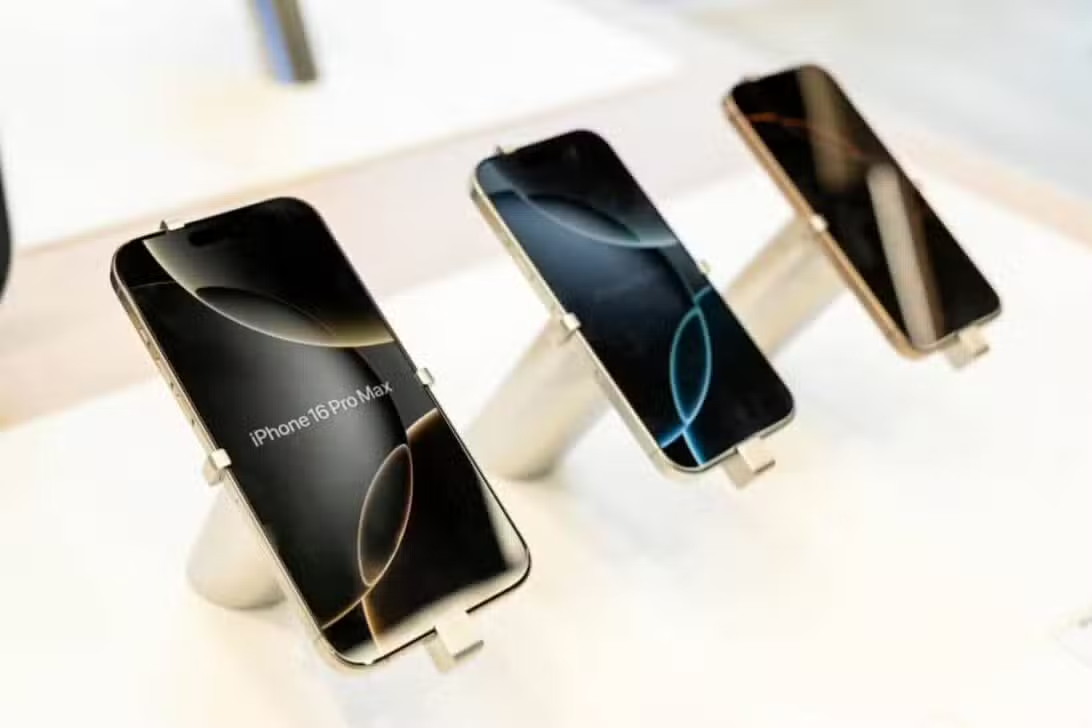
Recent rumors indicate that the iPhone 18, a model expected in early 2027, will feature a significantly brighter screen than previous generations. A leak originating from the Weibo platform points out that Apple has imposed unprecedented brightness requirements for the device’s OLED panels. Essa high requirement suggests a notable advancement in display quality, improving outdoor visibility and HDR content consumption.
Chinese supplier BOE is struggling to meet these stringent Apple specifications. Como result, the company has little chance of supplying panels for the iPhone 18, according to information circulated by a leaker known as Instant Digital. Essa situation reflects the company’s constant search for high-performance components in its flagship smartphones.
Production problems at BOE are already impacting current orders for OLED panels for recent models in the iPhone line. Relatos indicates that millions of units have been redirected to Samsung Display in recent months.
Evolution of brightness on Apple screens
Apple has progressively increased the brightness levels on its displays over the years. Modelos like the iPhone 13 and iPhone 14 offered 800 nits of maximum typical brightness and 1,200 nits peak in HDR. Essa configuration served most daily uses well, but had limitations in bright sunlight.
Starting with the iPhone 15, the company raised typical brightness to 1,000 nits and peak HDR to 1,600 nits. Versões newer ones have achieved up to 2,000 nits in outdoor conditions. Projeções for the iPhone 17 suggests an outdoor peak of 3,000 nits, setting the stage for even bigger leaps.
The advancement in brightness improves the experience in bright environments and enhances features such as Dolby Vision. Usuários gain more visual comfort without the need for constant adjustments.
Challenges in the panel supply chain
BOE has been trying to expand its share of supplying OLED screens to Apple for years. However, recurring problems with quality and production yield limit its contribution. Recent Ordens have been transferred to competitors like Samsung Display and LG Display.
These transfers occur due to failures in specific BOE manufacturing lines. The Chinese company seeks to diversify Apple’s supply chain, reducing dependence on South Korean suppliers. Apesar of its efforts, the American company’s high technical standards represent constant barriers.
- Current top iPhone OLED suppliers:
- Samsung Display (leader in volume and LTPO technology);
- LG Display (focus on Pro models);
- BOE (increasing participation, but limited by technical issues).
Concentration on a few suppliers affects production costs and deadlines. Apple closely monitors performance to ensure consistency across millions of units.
Other rumors about the iPhone 18
Additional specifications are circulating about the iPhone 18 beyond the display. The device must integrate the A20 chip, manufactured using a 2 nanometer process for gains in performance and energy efficiency. Esse component represents an important step in the evolution of A-series processors.
Another expected highlight is the C2 modem, developed internally by Apple. Ele promises faster 5G connectivity and reduced battery consumption compared to external solutions. The transition to proprietary modems reduces dependence on third parties such as Qualcomm.
Rumors also mention a simplified camera control in the design. Essas changes aim to refine the interface and general usability of the device.

Impact of advances in OLED displays
Brighter screens directly benefit everyday use in varying lighting conditions. Conteúdos video and photos gain greater color fidelity and contrast in outdoor environments. LTPO technology, already present in Pro models, combines with high levels of brightness to optimize autonomy.
Competitors like Samsung already offer peaks exceeding 2,600 nits on some flagships. Apple responds with gradual increments to maintain competitiveness in the premium segment. Investimentos in materials research contribute to these continuous improvements.
The focus on high brightness meets the demands of consumers who use smartphones in diverse scenarios. Recursos like Always-On Display also benefit from more efficient panels.
History of transitions on Apple screens
The migration from LCD to OLED began with the iPhone X in 2017. Essa change brought deep blacks and greater contrast compared to previous technologies. Initial Modelos prioritized Retina resolution and HDR support.
Introductions like ProMotion, with a refresh rate of 120 Hz, arrived on the iPhone 13 Pro. Elas improve fluidity in animations and games. Combinações high brightness and variable refresh optimize visual performance.
The Apple maintains rigorous standards in color calibration and panel durability. Extensive Testes ensure burn-in resistance and longevity under intense use.
Projections for launch in 2027
The iPhone 18 should hit stores in early 2027, following the annual cycle of Apple. Eventos of presentation traditionally takes place in September of the previous year. Initial Anúncios focus on hardware innovations such as display and processor.
The line is expected to include standard and Pro variants with differences in screen and cameras. The integration of your own modem marks greater independence in connectivity. Avanços in brightness consolidates position in the premium device market.
Consumers await official confirmations on final specifications. Initial Rumores guide expectations, but adjustments occur until mass production.
Practical benefits of brighter screens
Users in sunny regions gain superior visibility without excessive reflections. Navegação GPS and photo capture in bright light are significantly improved. Recursos of accessibility, such as enlarged text, becomes more readable.
The increase in peak HDR increases the quality of streaming and media editing. Plataformas like Netflix and Apple TV+ better explore the potential of displays. Eficiência energetic preserves battery even at maximum settings.
- Advantages observed in recent models:
- Reduction of reflections on Ceramic Shield surfaces;
- Expanded support for HDR10 and Dolby Vision formats;
- Automatic calibration via True Tone for environmental adaptation.
These elements combined elevate the multimedia experience on mobile devices.