
James Webb images reveal secrets of exoplanets and the universe’s first galaxies

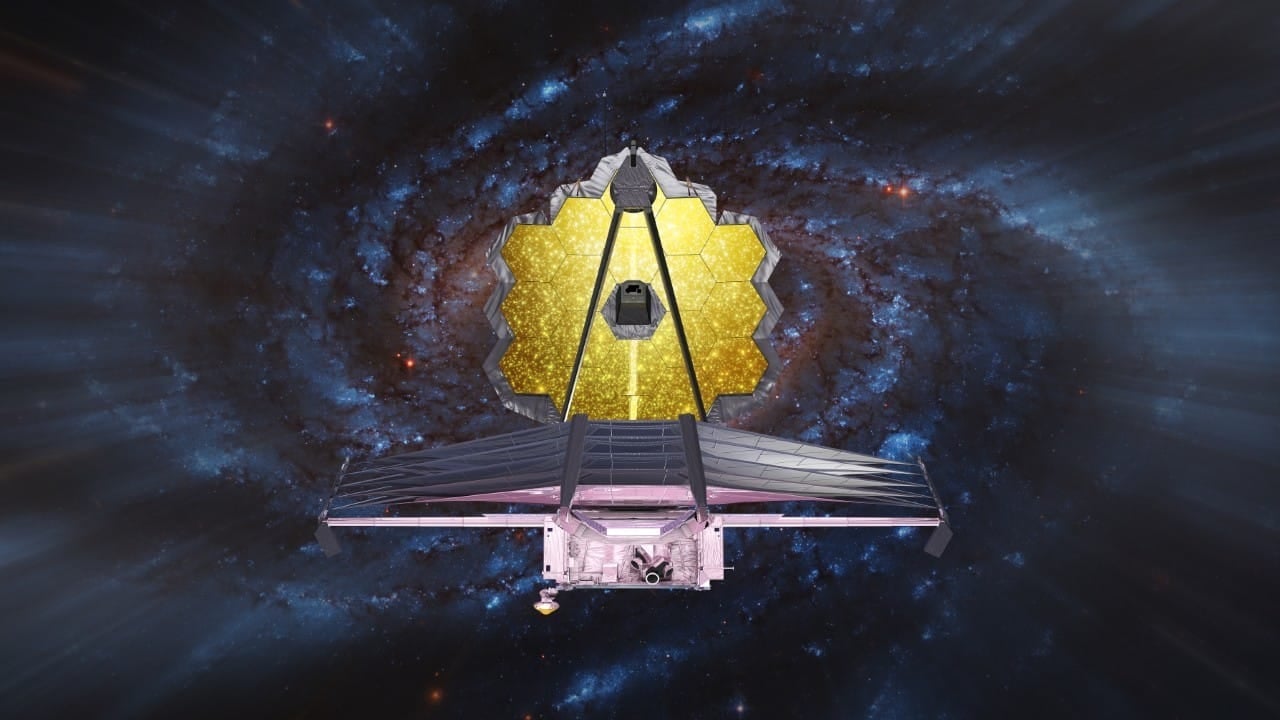
Telescópio Espacial James Webb (JWST) continues to redefine the limits of astronomy, providing data and images that transform human understanding of the origin and evolution of the cosmos. Lançado as a collaboration between NASA, Agência Espacial Europeia (ESA) and Agência Espacial Canadense (CSA), the space observatory has exceeded all expectations, revealing unprecedented details of the distant universe.
Sua’s ability to operate in the infrared spectrum allows it to see through dense clouds of cosmic dust, which previously obscured the view of optical telescopes like the Hubble. Essa technology is essential for observing the formation processes of stars and planets, in addition to capturing the light from the oldest galaxies, which traveled for billions of years to reach their detectors.
JWST investigations focus on four main areas: the light from the first stars and galaxies formed after Big Bang, the evolution of galaxies over cosmic time, the life cycle of stars, and the characterization of planets outside our Sistema Solar, known as exoplanets.
New revelations about exoplanetary atmospheres
One of the most promising aspects of the James Webb mission is the detailed analysis of exoplanetary atmospheres. Utilizando the transit spectroscopy technique, the telescope measures the light from a star passing through the atmosphere of an orbiting planet. Molecules present in this atmosphere absorb specific wavelengths of light, leaving a chemical signature that JWST can detect. Graças to this capacity, scientists have already confirmed the presence of water vapor, methane, carbon dioxide and other molecules on distant worlds. Essas discoveries are crucial for assessing the potential habitability of exoplanets and refining the search for biosignatures, which are chemical indicators that could suggest the presence of life. The precision of Webb’s instruments makes it possible to distinguish between different types of worlds, from hot gas giants to smaller rocky planets, bringing science closer to answering one of humanity’s oldest questions: are we alone in the universe?
Uncovering the primordial universe
The James Webb was designed as a time machine, capable of observing the universe as it was more than 13.5 billion years ago. The telescope’s deep-field images revealed galaxies that formed just a few hundred million years after Big Bang, much earlier than theoretical models predicted. Essas primordial galaxies appear to be brighter, more massive and more structured than previously imagined, challenging current understanding of cosmic evolution and the formation of the universe’s first structures.
Essas observations are providing crucial data for cosmologists, who are now working to fine-tune their models about the distribution of dark matter and dark energy in the early universe. Cada new image of a distant galaxy is a key piece in the puzzle of cosmic history, allowing astronomers to trace the timeline from the dawn of the universe to the formation of complex galaxies like our own.
The search for biosignatures intensifies
Webb’s ability to analyze the chemical composition of distant atmospheres has significantly boosted astrobiology. The search now is not just for planets in the “habitable zone” where liquid water might exist, but for concrete signs of biological activity.
Scientists look for specific combinations of gases, such as the coexistence of oxygen and methane in large quantities. Na Terra, this combination is maintained by biological processes and, if found on an exoplanet, would be strong evidence of life.
Essa investigation goes beyond worlds similar to Terra. The telescope also analyzes planets with very different conditions, expanding the concept of habitability and exploring the possibility of life forms that do not depend on the same biochemistry as ours.
The secrets of stellar nurseries
JWST’s infrared images have penetrated the dusty veil of nebulae and stellar nurseries, revealing the early stages of star formation with unprecedented clarity. Iconic Imagens, such as those in the “Pillars of Criação” in Nebulosa of Águia, showed details of newborn stars still wrapped in their cocoons of gas and dust.
Essas observations allow us to study the jets of matter expelled by protostars and the protoplanetary disks where new solar systems are forming. By analyzing the composition of these disks, astronomers can better understand how planets, including rocky ones like Terra, are assembled from grains of cosmic dust.
The technology behind the images
The success of the James Webb is the result of cutting-edge engineering, designed to operate in extreme conditions in deep space. Seu primary mirror, 6.5 meters in diameter and composed of 18 gold-plated hexagonal segments, is the largest ever launched into space.
Essa large light collection area, combined with its four highly sensitive scientific instruments, allows you to capture images of extremely faint and distant objects.
To maintain sensitivity to infrared, the telescope needs to operate at extremely low temperatures, close to absolute zero. Isso is reached by a gigantic five-layer solar shield, the size of a tennis court, which protects it from the heat and light of Sol, Terra, and Lua.
Sua orbit in the second Ponto of Lagrange (L2), approximately 1.5 million kilometers from
International collaboration and the future of mission
The James Webb mission is a successful example of international scientific collaboration. The union of efforts between NASA, ESA and CSA was fundamental for the development, launch and operation of the observatory, bringing together the best scientists and engineers from around the world.
Projetado for a lifespan of at least ten years, the telescope has the fuel to operate for perhaps two decades, promising a steady stream of discoveries that will continue to shape astronomy and inspire new generations of researchers and space enthusiasts.
Publicly accessible data
One of the pillars of the mission is the democratization of access to data. Todas James Webb observations are archived and made publicly available after a period of exclusivity for the proposing research team. Isso enables scientists around the world to analyze information, leading to new discoveries and maximizing the scientific return on this monumental investment in space exploration.



