
Mercedes presents innovative W17 for the sustainable era of Formula 1 in 2026 and faces engine debate

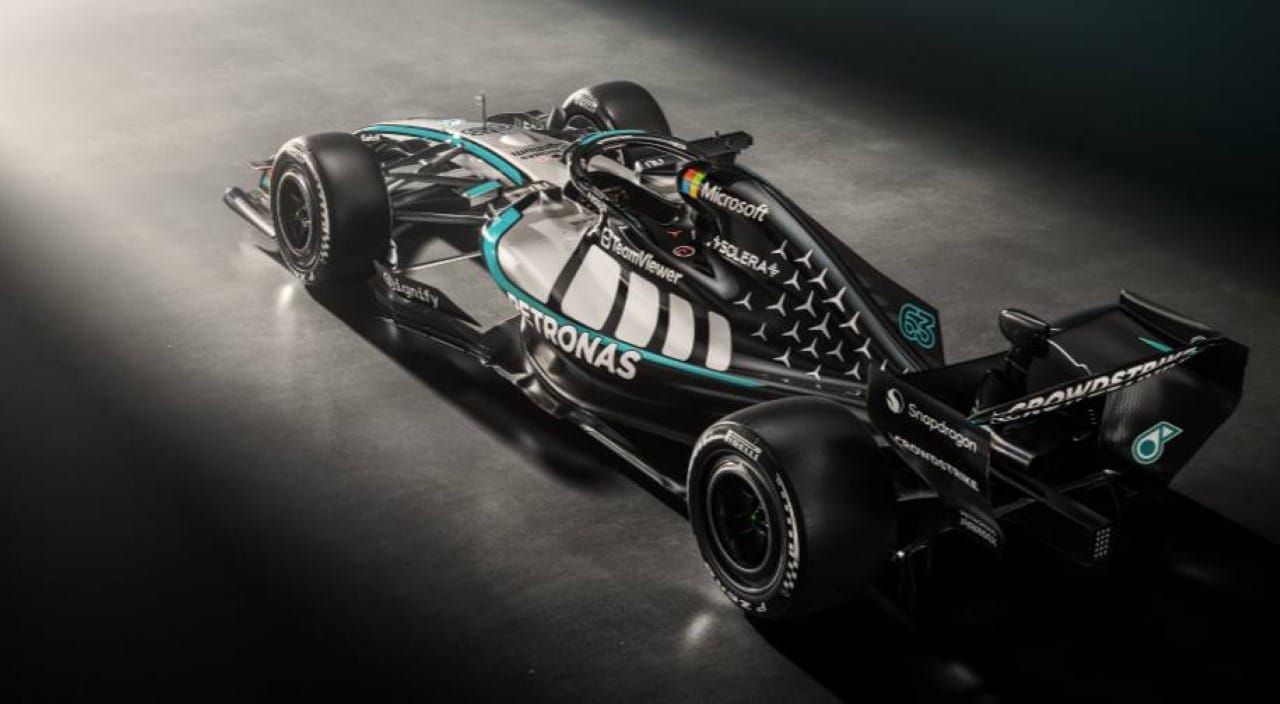
This Thursday, the Mercedes team released the first images of the W17, the car designed for the 2026 Fórmula 1 season. The model incorporates the profound regulatory changes that come into force next year, including new chassis, power units that are more balanced between combustion and electrical energy, as well as 100% sustainable fuel. The reveal took place digitally, without a large in-person event, and the car has already held an initial session at Silverstone, at Reino Unido.
The W17 features more compact dimensions, with a narrower and lighter design to meet the demands of aerodynamic efficiency and reduced minimum weight. The team highlighted that the project prioritizes the transition to the new era, considered the biggest technical change in the history of the category. Pilotos George Russell and Kimi Antonelli will command the model throughout the year.
The painting maintains the silver base characteristic of the Flechas of Prata, with black elements and touches of aqua green from the sponsor Petronas. The Essa combination reflects the recent visual identity of the Mercedes, adapted to the new aerodynamic layout.
W17 design and aerodynamic innovations
The W17 features more integrated sidepods and a rear wing optimized for active aerodynamics, a feature that returns in 2026. Essas solutions aim to improve efficiency on straights and curves, balancing downforce and drag. Mercedes invested in extensive simulations to validate the concept before physical testing.
The front of the car incorporates a sharper nose and simplified front wings, in line with regulations that reduce excessive ground effects. Engenheiros’s team worked closely with the power unit division to better integrate the hybrid components. The initial result indicates gains in sustainable performance.
Controversy involving the power unit
Rivals expressed concerns about possible interpretation favorable to Mercedes in the compression ratio of the internal combustion engine. The regulation sets the limit at 16:1 measured at room temperature, but thermal materials can increase the effective ratio during track operation. The FIA scheduled a meeting to clarify the issue and avoid undue advantages before the start of the season.
Ben Hodgkinson, head of engines at Red Bull, argued that engineers understand thermal expansion as a fundamental part of the design. Ele reinforced that any solution must respect the regulatory spirit. Outras manufacturers, such as Ferrari and Honda, follow the discussions closely.
Toto Wolff, head of Mercedes, stated that the team is prepared for the transition and focused on innovation in all areas. Ele highlighted the long-term development of the power unit and advanced fuels.
The controversy has gained momentum in recent weeks, with teams exchanging technical information via the FIA. Resoluções must take place before the collective pre-season tests in Barcelona.
Pilot preparation and initial testing
George Russell completed the first kilometers in W17 in Silverstone this Thursday. The session served for initial systems verification and basic data collection. The Briton, fourth in the previous season, takes technical leadership alongside newcomer Kimi Antonelli.
Antonelli, promoted from Fórmula 2, actively participates in the development program. Ele carried out sessions in the simulator to adapt to the new car. The duo represents renewal after the departure of experienced drivers in recent years.
Private testing continues next week at Circuit of Barcelona-Catalunya. Teams have a limit on the number of days they can shoot without the presence of independent media. Mercedes plans to use the period to fine-tune correlations between factory and track.
Main regulatory changes for 2026
The new rules of Fórmula 1 in 2026 introduce broad changes in several areas. Elas seek greater sustainability and competitive balance.
- Power units with an approximate 50/50 split between electric motor and internal combustion.
- 100% sustainable fuel derived from non-fossil sources.
- Lighter cars, with a minimum weight reduced by around 30 kilos.
- Active aerodynamics on front and rear wings for energy management.
- Tires supplied by Pirelli with compounds adapted to the new profile.
These modifications require heavy investments from all teams. The Mercedes is positioned as one of the favorites due to its experience in hybrids since 2014.
Expectations and announced partnership
Mercedes announced a strategic partnership with Microsoft for data and artificial intelligence tools in development. The collaboration aims to optimize performance analysis and simulations. The agreement reinforces the technical budget for the 2026-2030 cycle.
Analysts point to the German team as a candidate to return to regular victories after a period of reconstruction. The W17 represents the first concrete step in this direction. Rivais like Red Bull and McLaren are also moving forward with similar projects.
The 2026 season starts in March, with an expanded calendar and new entries like Cadillac. Mercedes will supply engines to additional customers, expanding technical influence.
Historical context of Mercedes in the category
Mercedes dominated the initial hybrid era between 2014 and 2021, winning eight consecutive constructors’ titles. The period included seven drivers’ championships. As of 2022, the team has faced challenges with ground effect rules.
W17 appears as an opportunity for a competitive reset. Engenheiros have prioritized innovative concepts since the announcement of the regulations. The factory at Brackley coordinated efforts with the engine division at Brixworth.
Early disclosure demonstrates confidence in the initial package. Outras teams plan releases in the coming weeks.
The car has already accumulated valuable kilometers on a private track. Dados collected guide updates ahead of official preseason.
Highlighted technical details
The rear layout of the W17 draws attention to its unconventional solutions in the engine cover. Elas optimize hot air flow and cooling. The rear pull-rod suspension returns for better aerodynamic control.
The team tested components in a wind tunnel under current restrictions. Limites hours will be reset for the new cycle. Isso balances development between large and small teams.
Russell reported positive sensations in the first spins. Ele emphasized the importance of correlation with the simulator.
Antonelli gradually gains experience before official races. The 19-year-old Italian is seen as a long-term bet.
Mercedes maintains a stable structure under the command of Toto Wolff. Mudanças recent efforts aim to speed up the new regulation.





