
With a range of 543 km, Toyota launches the Urban Cruiser Evera compact electric SUV in India

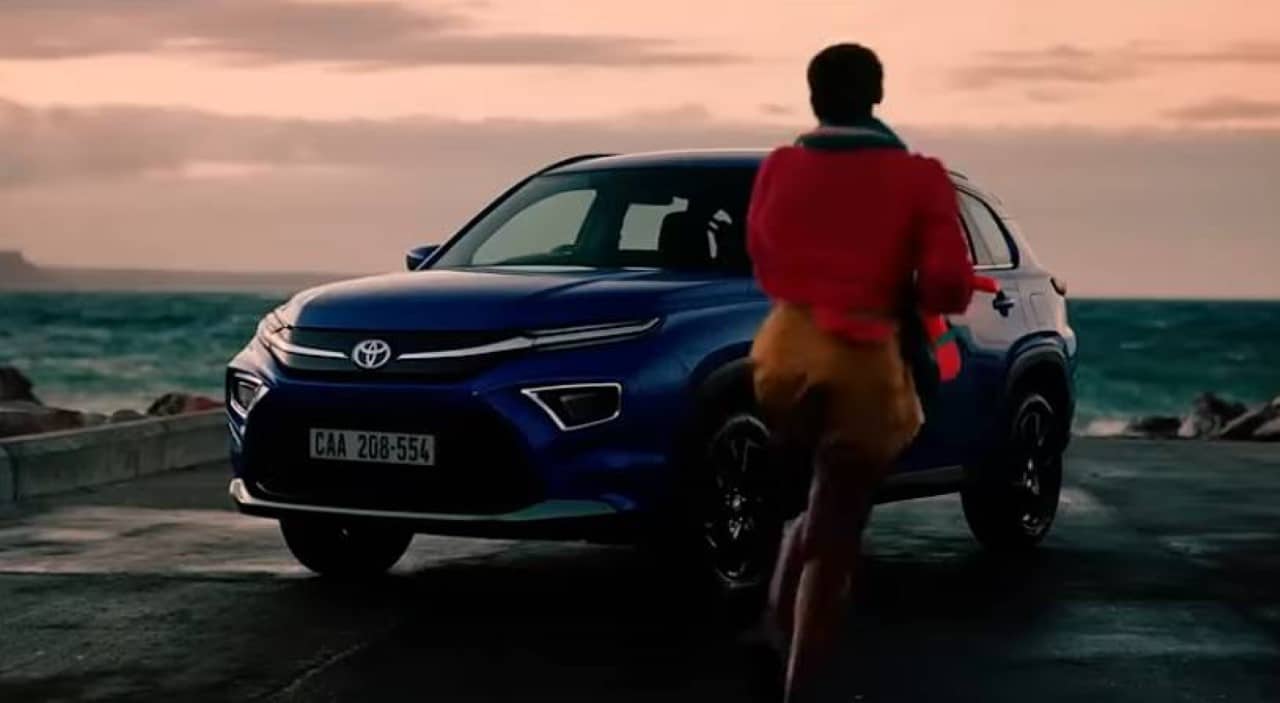
Toyota officially entered one of the most competitive segments of the Indian automotive market with the announcement of the Urban Cruiser Evera, a fully electric SUV. The model, developed in a strategic partnership with Suzuki, aims to meet the growing demand for zero-emission vehicles in urban centers, combining technology and functional design for the local consumer.
This launch represents a fundamental step in the Japanese automaker’s electrification strategy in emerging markets. Production will be concentrated at Índia, which allows the brand to optimize costs and offer a product at a competitive price, a decisive factor for the mass adoption of electric vehicles in the region. Bookings for the new SUV are scheduled to begin on January 20, 2026.
The Urban Cruiser Evera shares its platform and several components with the Suzuki e-Vitara, the first 100% electric vehicle from Suzuki. Essa collaboration allows both companies to accelerate development and production, sharing the high costs associated with creating new architectures for electric cars. The model is positioned as an intermediate option, with dimensions that place it between the Yaris Cross and the Harrier in the Toyota global portfolio.
Key specs and performance
The Toyota Urban Cruiser Evera is designed with efficiency in mind for everyday use, adopting a front-wheel drive configuration with a front-mounted electric motor. Consumers will have two engine options available to suit different driving profiles. The entry-level version offers a power of 106 kW, which is equivalent to 144 horsepower, while the most powerful configuration delivers 128 kW, or 174 horsepower. Ambas versions share a maximum torque of 189 Nm, ensuring agility in urban traffic and adequate responses on highways. Para power the system, the electric SUV has two lithium-ion battery options, with capacities of 49 kWh and 61 kWh. The most efficient combination, using the highest capacity battery, provides an estimated range of up to 543 kilometers on a single charge, a competitive number that positions it as a viable solution for longer trips, in addition to daily commutes. The Toyota also confirmed that the model will be compatible with the fast charging standards available on the Índia, reducing waiting times at stations.
Design and dimensions of the new SUV
Visually, the Urban Cruiser Evera adopts Toyota’s “Urban Tech” design philosophy, characterized by modern lines and a strong visual presence. The front stands out for the design known as “hammerhead”, a stylistic element that has been incorporated into the brand’s most recent launches, providing a clear and robust visual identity. While the main body structure of the Embora maintains similarities with its platform brother, the Suzuki e-Vitara, the Toyota has applied exclusive elements to differentiate its product. The vehicle measures 4,285 mm in length, 1,800 mm in width and 1,640 mm in height, with a generous wheelbase of 2,700 mm, dimensions that guarantee good internal space and a balanced stance on the road. The color palette was designed for the local market, offering nine options, including five monochromatic tones such as Prata Enticing and Vermelho Sporting, as well as four two-tone combinations, such as Verde Land Breeze with a black roof.
Inside, the cabin was designed to be functional and technologically advanced, with the capacity to comfortably accommodate five occupants. The dashboard is dominated by two digital screens: a 10.25-inch instrument cluster for the driver and a 10.1-inch touch-sensitive multimedia center positioned in the center. The environment combines good quality materials with an intuitive layout, seeking to create a pleasant and connected driving experience. Internal space is optimized by the platform dedicated to electric vehicles, which allows for a flat floor and more legroom for rear seat passengers. Detalhes of finishing and the simplicity of the controls reinforce the proposal of a practical vehicle for everyday life, but without giving up the comfort and technology expected in a modern launch.
The strategic alliance between Toyota and Suzuki
The collaboration between Toyota and Suzuki on the development of electric vehicles is a clear example of how automakers are coming together to face the challenges of the energy transition. The Urban Cruiser Evera is a direct result of this partnership, being essentially a restyled version of the Suzuki e-Vitara, which allowed a significant reduction in development time and costs.
This platform-sharing strategy, known as “badge engineering,” allows both brands to quickly expand their electric vehicle portfolios in key markets. By dividing investments in research and development, companies are able to launch competitive products more quickly.
The alliance is not limited to this model. Toyota and Suzuki already collaborate on several other projects, including hybrid and internal combustion vehicles in various parts of the world, especially at Ásia and África. Essa synergy strengthens the position of both companies in an increasingly complex and competitive global automotive landscape.
Positioning in the growing Indian market
The electric vehicle market in Índia is experiencing exponential growth, driven by a combination of government incentives, increased environmental awareness and the expansion of charging infrastructure. The arrival of the Urban Cruiser Evera occurs at a strategic moment for the Toyota, which seeks to gain an important share of this segment.
The Indian government has implemented ambitious policies to accelerate the electrification of the national fleet, with clear targets for the adoption of electric vehicles by 2030. Programas of subsidies and tax benefits make the purchase of models like the Evera more attractive for the average consumer.
Compact SUVs are particularly popular among urban consumers in Índia, who value the higher driving position, versatility and dimensions suitable for heavy traffic. The Urban Cruiser Evera directly addresses these preferences, offering an economical and sustainable alternative.
To ensure the success of the launch, Toyota plans to use its vast and consolidated dealer network across the country. Essa capillarity will be fundamental to offering a quality sales and after-sales service, transmitting confidence to buyers who are migrating to electric technology for the first time.
Embedded technology and connectivity
The 10.25-inch digital instrument cluster provides clear, customizable driving information, including range, energy consumption and navigation data. The 10.1-inch multimedia center, in turn, serves as the command center for entertainment and vehicle settings.
Connectivity is a strong point of the model, with support for the main smartphone mirroring systems. Recursos such as voice commands and access to streaming and navigation applications are essential for the young and urban audience for which the SUV is aimed, making the onboard experience more complete and interactive.
Battery options and energy efficiency
The choice between two battery capacities, 49 kWh and 61 kWh, allows the buyer to align the vehicle with their usage needs. The smaller battery is ideal for those who use the car predominantly on short urban journeys, while the larger one suits those who need more autonomy for trips.
In addition to capability, the Toyota focused on powertrain energy efficiency and vehicle aerodynamics to maximize range. Battery thermal management and regenerative braking systems contribute to optimizing energy consumption and reducing operating costs compared to combustion vehicles.
Booking and launch details
Sales of the Toyota Urban Cruiser Evera will begin exclusively in the Indian market, with the opening of the reservation period scheduled for January 20, 2026. The automaker has not yet released the official price list, but the expectation is that the price will be competitive to face local and international rivals already established in the segment.
Built on the Suzuki e-Vitara platform
The Urban Cruiser Evera uses the same modular architecture jointly developed by Toyota and Suzuki for electric vehicles. The Essa base, shared with the Suzuki e-Vitara, was designed to be flexible, safe and optimized for battery positioning, ensuring a low center of gravity and good drivability.
Despite the common base, Toyota worked to imprint its own design identity on the model. Modificações on the front grille, bumpers and optical assembly differentiate the Evera from its Suzuki counterpart, a common strategy to serve different customer profiles within the same automotive group.



