
With a range of 810 km, the new electric Volvo EX60 innovates with adaptive seat belts

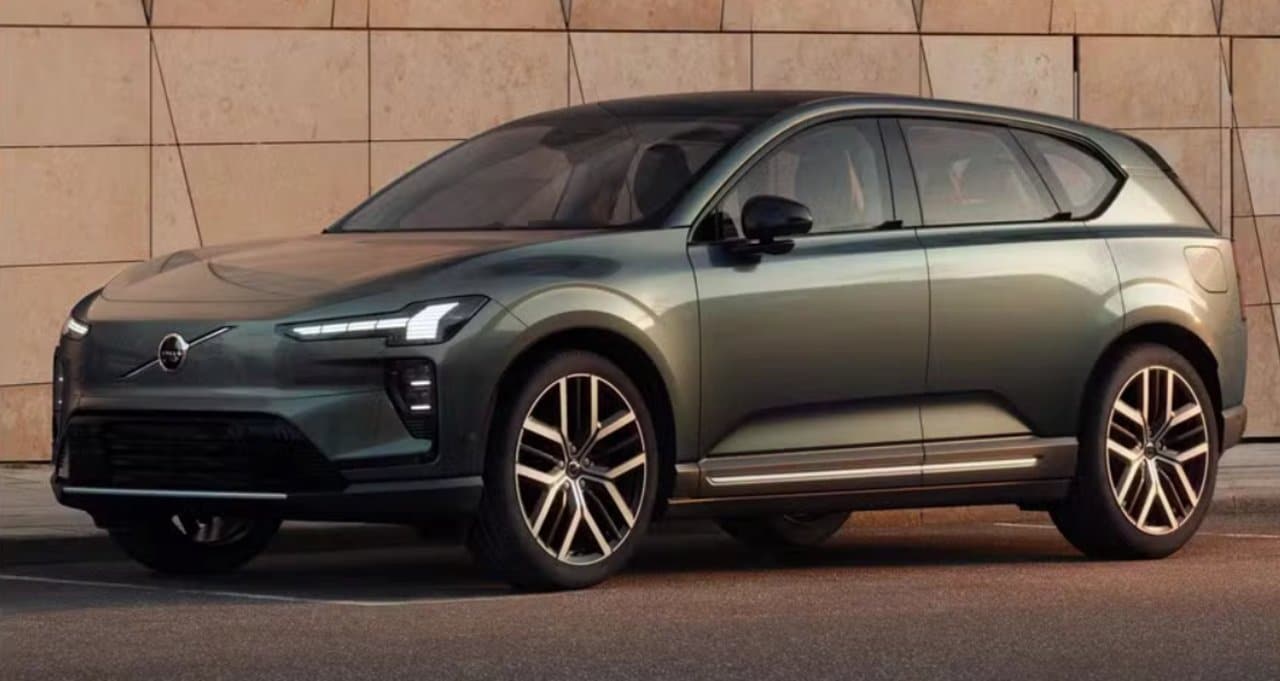
Volvo officially announced the arrival of the EX60, its newest fully electric medium SUV, which is strategically positioned between the EX40 and EX90 models. The vehicle promises to redefine the standards of the segment with a declared range of up to 810 kilometers in the European WLTP cycle, in addition to introducing an unprecedented safety technology, the multi-adaptive belt.
The global launch took place on January 21, with the first units scheduled to be delivered to the European market during the northern hemisphere summer. The Swedish automaker confirmed the model’s arrival at Brasil for the end of 2026, reinforcing its offensive in the premium electric vehicle market in the country.
Built on the new SPA3 platform, exclusive to electric vehicles, the EX60 enters into direct competition with established competitors, such as the BMW iX3. The Volvo will keep the XC60 with a combustion engine in line for a while longer, offering a gradual transition for the brand’s consumers.
A new architecture for the electric age
The EX60 is the first vehicle to use the SPA3 architecture, a next-generation platform that represents a technological leap for the Volvo. Sua main innovation is the integration of battery cells directly into the car’s floor structure, a technique known as “cell-to-body”. Essa approach eliminates traditional modules, increasing energy density by approximately 20%, which results in more autonomy without the need for physically larger batteries. Além Furthermore, the technique contributes to reducing the vehicle’s total weight and optimizes internal space, providing more comfort for the occupants.
Another significant advancement in the manufacturing of the EX60 is the use of mega-casting, a process that creates large single pieces of aluminum for the car’s rear structure. Essa technique replaces hundreds of smaller components that would need to be welded or glued, resulting in a more rigid, lighter body with greater dimensional accuracy. Improved torsional rigidity not only improves driving dynamics, but also raises safety levels in the event of a collision, a key pillar for the Swedish brand.
Performance and energy efficiency
The range of 810 km, measured in the WLTP cycle, is one of the main attractions of the EX60, positioning it as one of the leaders in range in its segment. In conditions of use that are closer to reality, such as those of the North American EPA standard, the estimate is that the range will be around 640 km.
The recharging system was designed for high performance, supporting powers of up to 400 kW in ultrafast direct current chargers. Under Nessas conditions, it is possible to add around 340 kilometers of autonomy in just 10 minutes.
The model’s energy efficiency is enhanced by a carefully crafted aerodynamic design, which has resulted in a drag coefficient (Cx) of just 0.26. Esse number is excellent for an SUV and directly contributes to maximizing battery range.
The superior versions of the EX60 will be equipped with two engines, configuring an all-wheel drive system (AWD) that guarantees not only safety on low-grip surfaces, but also vigorous acceleration, compatible with the expectations of the premium segment.
The cutting edge of automotive safety
Reaffirming its historic leadership in safety, the Volvo debuts on the EX60 the world’s first multi-adaptive seat belt. Diferente than conventional systems, this technology uses a network of internal and external sensors to adjust belt tension in real time, in a predictive and reactive manner. The system analyzes multiple factors, such as the occupant’s physical size, their position in the seat, surrounding traffic conditions and the imminence of a collision, to apply the ideal restraint force in milliseconds. Essa Continuous adaptability maximizes protection and minimizes the risk of injury. The technology can receive remote updates (over-the-air), ensuring that the system evolves and improves throughout the life of the vehicle, a philosophy that the brand, which invented the three-point belt in 1959, continues to improve. The SUV is also equipped with the Pilot Assist Plus system, which offers semi-autonomous driving on highways at up to 130 km/h, including the ability to automatically change lanes, although it always requires the driver’s attention.
The EX60’s digital brain
The EX60’s processing power is managed by a central supercomputer capable of performing more than 250 trillion operations per second. Essa capability is supported by cutting-edge platforms such as the Snapdragon Cockpit and Nvidia Drive.
This centralized computing architecture allows the vehicle to seamlessly manage everything from driver assistance systems to on-board entertainment. One of the big new features is the native integration of Google Gemini, the artificial intelligence of Google.
The driver interface is dominated by a large, high-resolution curved OLED screen, which centralizes almost all of the vehicle’s functions, offering quick responses and an intuitive user experience. The voice assistant has been improved to understand commands more naturally and contextually.
Scandinavian style and functionality
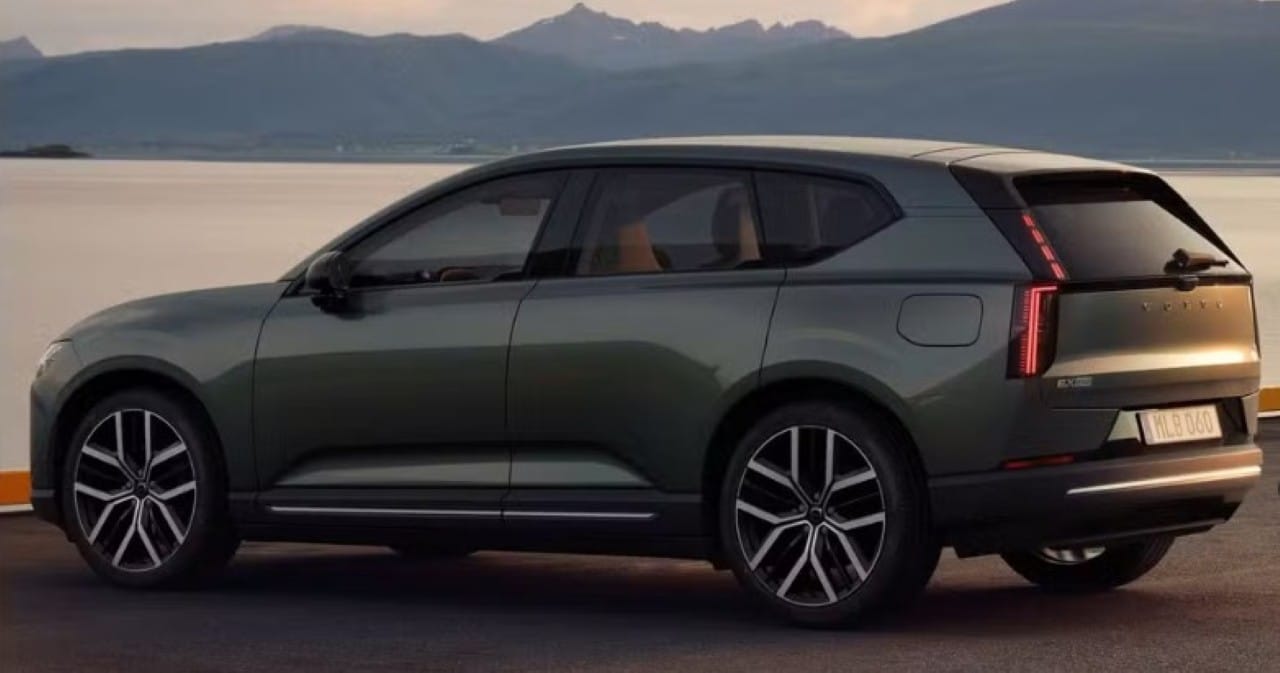
The EX60’s design follows the minimalist and modern visual identity of the Volvo, with clean lines and a closed front, which eliminates the traditional cooling grille of combustion cars. The handles are retractable, using a system of mechanical handles that project outwards, a solution that meets strict safety regulations for rescue teams.
The interior was designed to maximize comfort, with a generous wheelbase that ensures excellent leg and head room, especially for rear seat passengers. An Cross Country version, with raised suspension and off-road-inspired visual details, is also planned.
Details about battery settings
The EX60 lineup will be offered with different powertrain and battery options to meet diverse needs. The entry-level version, P6, will come with an 80 kWh battery and a single rear motor, with an estimated range of between 470 and 500 km. Já configurations P10 (91 kWh) and P12 (112 kWh) will offer more performance and range, with the latter being responsible for the number of 810 km in the WLTP cycle. The most powerful versions can reach 670 hp.
For the North American market, and potentially others, the EX60 will come with a native NACS charging port, ensuring direct compatibility with the Tesla’s extensive network of Superchargers. Volvo estimates that, under ideal conditions, recharging the battery from 10% to 80% can be completed in just 19 minutes, an extremely competitive time in the current market.
Strategy for the Brazilian market
The confirmation of the EX60 for the Brasil by the end of 2026 demonstrates the importance of the national market for the Volvo electrification strategy. The model will join the electric portfolio already made up of the EX30, EX40 and the top-of-the-line EX90 models, offering consumers a complete range of zero-emission SUVs. Detalhes about prices, versions and equipment packages specific to the country will be announced at a date closer to the official launch.
Positioning in the premium segment
The EX60 arrives to compete in one of the hottest segments of the electric car market, facing strong rivals. Seu main competitive differentiator lies in the combination of superior autonomy, which helps mitigate so-called “range anxiety”, with state-of-the-art security and data processing technologies.
By surpassing direct competitors in certified autonomy, the model positions itself as an ideal choice for those looking for a family electric SUV capable of undertaking long journeys with ease. The SPA3 platform, in turn, ensures that this is just the beginning, paving the way for future launches that will consolidate Volvo’s transition to a 100% electric brand.



