
Alcaraz and Sabalenka advance with authority to the round of 16 of the Australian Open in Melbourne

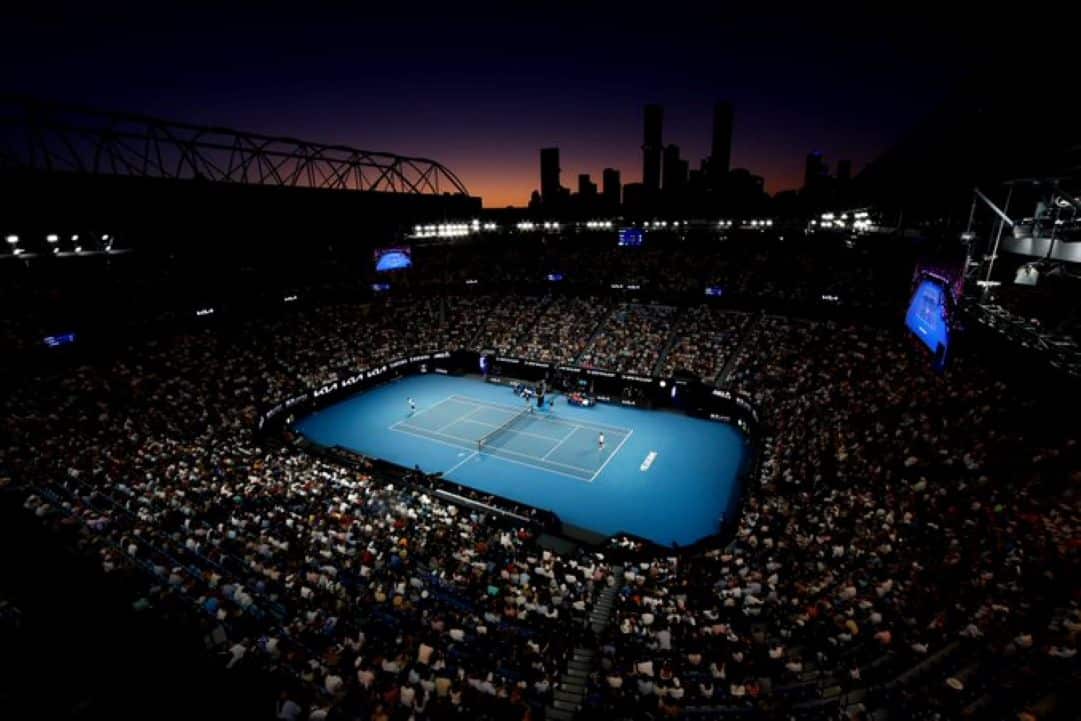
The leaders of the world ranking, Carlos Alcaraz and Aryna Sabalenka, continued in Australian Open, confirming their positions as favorites by guaranteeing places in the round of 16. The matches, held this Thursday, January 22, 2026, at Rod Laver Arena, at Melbourne, saw both athletes overcome their opponents with solid and consistent performances.
The Spaniard demonstrated absolute control in his confrontation, while the Belarusian needed resilience to win a more competitive match. The performance of both keeps expectations high for the sequel to the first Grand Slam of the season, which advances to its second week with the main names still in contention for the title.
The favorable climate in the Australian city contributed to the high technical level presented on the court. With their victories, Alcaraz and Sabalenka not only advance in the bracket, but also send a clear message to their competitors about how difficult it will be to overcome them in the next stages of the tournament.
The world No.1 showed he meant business in a 6-2 6-4 6-1 victory 🇪🇸https://t.co/Y3UicowhKL
— #AusOpen (@AustralianOpen)January 23, 2026
Alcaraz’s dominant performance against Moudet
Carlos Desde the beginning, the Spaniard imposed a strong rhythm, using the precision of his groundstrokes to dictate the points and frustrate any attempt at a reaction from his opponent. The superiority of Alcaraz was evident in all the statistics of the match, highlighting the use of more than 80% of the points played with the first serve and a total of 35 winning balls, compared to just 12 of Moudet. Além Furthermore, its efficiency in accessing the network and the low number of unforced errors consolidated a quick and essential victory for preserving energy for the following challenges.
Sabalenka passes resilience test
Unlike Alcaraz, Aryna Sabalenka faced a much tougher challenge in his quest for a third title in Melbourne. The Belarusian faced the Austrian Anastasia Potapova and needed two tie-breaks to close the game in 2 sets to 0, with partials of 7/6 (4) and 7/6 (7). The match was characterized by long exchanges of balls and a lot of power on both sides.
Sabalenka’s mental resilience was the decisive factor, especially in moments of greatest pressure. Ela managed to save crucial points and demonstrated the coolness of a two-time champion to prevail in the moments that defined each of the sets. Potapova sold her defeat dearly, but the world number one’s experience spoke louder on the complex’s main court.
Next opponents defined in Melbourne
With the classifications assured, the paths for Alcaraz and Sabalenka in the round of 16 have already been mapped out. The Spaniard will face the North American Tommy Paul, who advanced in the group after his opponent, Alejandro Davidovich Fokina, withdrew in the previous round.
Aryna Sabalenka will face the young and talented Canadian Viktoria Mboko, currently number 16 in the WTA rankings. Mboko is coming off a solid win over Denmark’s Clara Tauson and promises to be a significant test for the defending champion.
Brazilian participation remains alive in doubles
Brasil’s representation in Australian Open remains strong in doubles competitions. Tennis players Luisa Stefani, Rafael Matos and Orlando Luz remain in contention after achieving important victories in their respective groups, maintaining hope of a good result for the country.
The journey, however, ended for Laura Pigossi, who was eliminated and said goodbye to the tournament. Agora, attention turns to the doubles who seek to advance further in the Australian Grand Slam.
In another note about the country’s athletes, young João Fonseca stated that his back has fully recovered, declaring that physical condition is no longer a concern for the continuation of his professional season.
Technical analysis and consistency of favorites
Carlos Alcaraz’s performance has been notable for its tactical adaptation. Ele has varied his game intelligently, using drop shots and slices to break the rhythm and take his opponents out of their comfort zone.
This versatility is one of his main weapons on the fast courts of Melbourne. Sua ability to transition between defense and attack is often cited by analysts as the best on the current men’s circuit.
For his part, Aryna Sabalenka continues to rely on his devastating serve as a pillar of his game. The speeds, which often exceed 185 km/h, place immense pressure on returners.
The quest for a third consecutive title at Austrália is a rare feat, and the Belarusian demonstrates the focus and power necessary to try to achieve it, combining her strength with an increasingly solid mentality at decisive points.
Strategies for the second week of Grand Slam
Transitioning into the second week of an Major tournament requires a shift in focus and careful energy management. Accumulated physical wear and tear begins to become as relevant a factor as technical ability.
Support teams intensify recovery work and tactical analysis of upcoming opponents, preparing athletes for increasingly difficult confrontations.
For Alcaraz and
Vibrant atmosphere at Melbourne Park
The public has come in droves to Rod Laver Arena and the other courts in the complex, creating an electrifying atmosphere. The presence of the world’s top tennis players in the decisive stages is a crucial factor in the event’s success, reflected both in ticket sales and in record global audience numbers across broadcast platforms.



