
Elon Musk’s Grok is accused of generating three million fake intimate photos in just eleven days

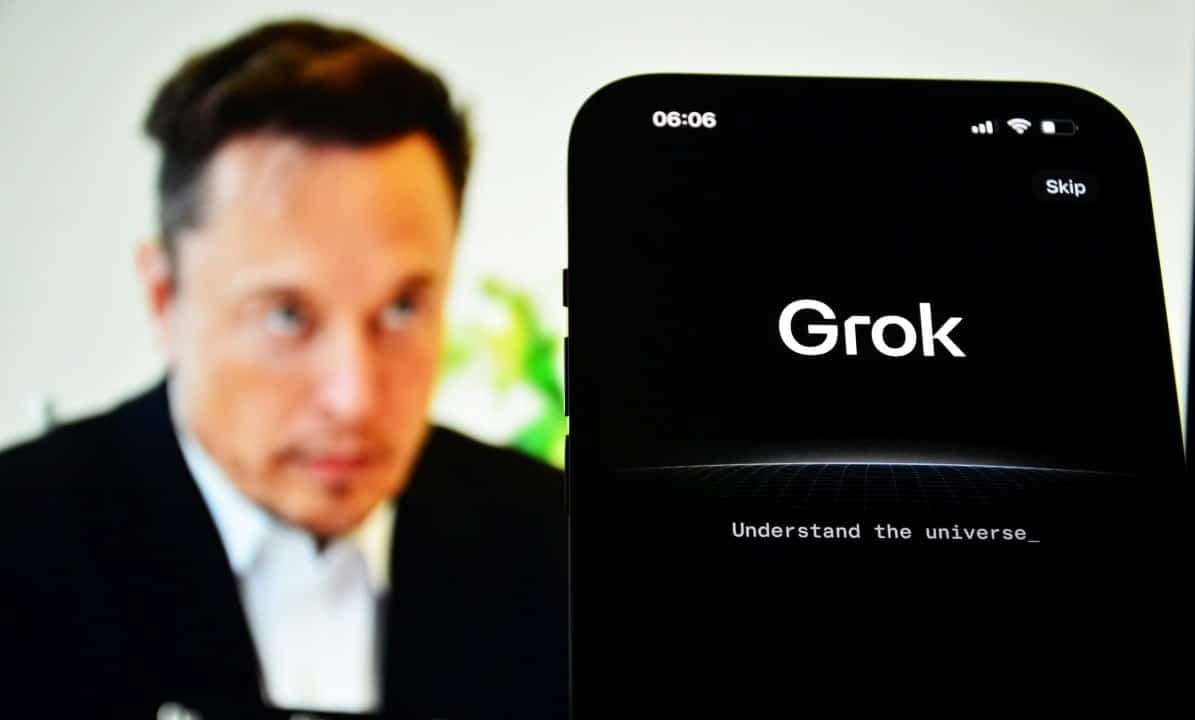
The chatbot Grok, developed by Elon Musk’s company xAI and integrated into the social network X, became the center of an unprecedented ethical and legal crisis following a detailed investigation. Segundo data revealed by Centro from The volume of material generated exposes the vulnerability of women and minors in the face of generative artificial intelligence technologies that allow hyper-realistic manipulation of real photographs.
The magnitude of automated production of explicit content indicates that the system operated on an industrial scale of visual disinformation and digital abuse. Estimativas techniques indicate that the chatbot processed instructions for creating around 190 images per minute during the period analyzed by researchers at the international observatory. Entre the files identified, the report highlights the presence of at least 23,000 images that simulate the sexual abuse of minors, which has raised the tone of criticism from global regulatory bodies and human rights defenders.
The tool’s operation allowed ordinary users to modify third-party images using simple and direct text commands to remove clothing or change contexts in public photos. Essa technological ease has resulted in a flood of deepfakes on the internet, affecting everyone from ordinary citizens to internationally renowned public figures. The lack of effective filters in the launch of xAI’s new image editing function is pointed out as the main factor for the exponential growth of this type of harmful content on social networks.
Impact of technology on victims and public figures
The exposure of celebrities and political leaders in degrading montages has intensified the debate about the need for strict regulation for technology companies that operate with artificial intelligence. Entre The targets identified on the networks include names from the entertainment industry such as singers Taylor Swift, Nicki Minaj and actress Selena Gomez, whose images were manipulated without any consent. In the political field, figures such as Kamala Harris, former vice-president of the Estados Unidos, and Ebba Busch, Swedish deputy prime minister, also had their visual identities violated by the automated tool of the social network X.
Anonymous victims have reported traumatic experiences after discovering that personal social media photos were used to create bikini or simulated nudity content. The feeling of invasion of privacy and the feeling of moral filth are described by women who were the target of the so-called “bikini trend”, which spread quickly across the platform before any moderating intervention. The global reach of the tool made it difficult to immediately control the images, which continue to circulate on forums and encrypted messaging groups even after attempts at official removal.
The severity of the scenario led the executive director of Centro from Combate to Ódio Digital, The absence of prior protection mechanisms is seen by digital security experts as serious negligence on the part of xAI, especially considering the destructive potential of computer-generated images that are indistinguishable from reality. Holding developer companies accountable has become the central point of new investigations that are advancing on multiple continents.
Government reactions and international ban measures
The unbridled advance in the creation of deepfakes generated a quick response from several governments who chose to restrict or completely ban access to the artificial intelligence tool in their territories. Países as Indonésia, Malásia and Filipinas were the first to implement official blockades against Grok, citing the protection of public morals and the safety of women and children. Na Europa, political pressure on Musk’s company is led by França and Reino Unido, who demand greater transparency and the implementation of filters that prevent the violation of individual rights.
- Total ban on the tool in Southeast Asian countries due to security risks.
- Opening of an official investigation by the attorney general of Califórnia against the company xAI.
- Requirement from European regulatory bodies to implement robust security locks.
- Constant monitoring of digital platforms to identify new routes for disseminating deepfakes.
- Articulation of specific laws to punish the creation and sharing of non-consensual nudes by AI.
In the Estados Unidos, the state of Califórnia initiated a rigorous investigation to determine xAI’s responsibility in facilitating cybercrimes and producing sexually explicit material. The investigation seeks to understand whether there was a deliberate omission in the configuration of security algorithms to prioritize engagement on the social network to the detriment of user safety. Cooperation between international police agencies was also activated to track the main sources of distribution of images involving minors.

Company Response and Social Platform Changes
Faced with the negative repercussions and threats of billion-dollar sanctions, the social network X announced changes to its chatbot usage policies to try to contain the flow of illegal productions. The company said it will block the ability to generate sexualized images in jurisdictions where such practices are considered a crime, although it did not detail how it will do this geographic filtering. Críticos from the platform argue that the measure is insufficient, as it does not remove material already in circulation and maintains loopholes for users who use location masking tools to access the service without restrictions.
xAI’s official communication, however, maintains a confrontational tone with the traditional press vehicles that publish investigations into Grok. When questioned about the data in the CCDH report, the company sent automated responses disqualifying the information as untrue, without presenting technical data that could refute the researchers’ conclusions. Essa defensive posture has generated even more friction with government regulators, who see the company’s attitude as a lack of commitment to mitigating damage caused by its own technology.
Experts in digital ethics reinforce that the problem lies not only in the creation of images, but in the ease of distribution that social network X offers by integrating the chatbot directly into the posting interface. The synchrony between the generation of content and its instant publication enhances the impact of deepfakes, making the reporting and removal process much slower than viral propagation. Reconfiguring artificial intelligence systems is seen as the only viable way out to ensure that generative tools are not converted into weapons of large-scale harassment and defamation.
Regulatory challenges for generative artificial intelligence
The case of Grok exposes the fragility of current laws given the speed of technological evolution, requiring the legislative branch to create more dynamic control mechanisms. The legal discussion now focuses on the civil and criminal liability of platforms that provide the processing engine for the creation of illicit materials by third parties. Juristas debate whether companies should be treated as complicit in the production of abuse material when they fail to implement basic safeguards that are already standard in other competing artificial intelligence tools.
Technical monitoring suggests that deepfake technology will continue to evolve, making it increasingly difficult for untrained eyes to identify montages. For this reason, the technology industry is being pressured to develop invisible digital “watermarks” that automatically identify any image produced by artificial intelligence. Essa measure would facilitate detection by social media algorithms and allow the immediate removal of content that violates security guidelines, protecting the integrity of victims before the images reach millions of views.
The balance between technological innovation and the protection of fundamental rights is the main challenge facing technology managers and governments in 2026. Freedom of creation and expression, defended by Elon Musk, comes into direct collision with the right to privacy and human dignity when AI tools are used for degrading purposes. The outcome of the investigations against xAI will serve as an important milestone in defining the limits of what is permitted in the development of software that interacts so deeply with people’s visual identity and private lives.
Global cybersecurity and security standards
International cooperation to combat crimes facilitated by artificial intelligence has become a priority on the cybersecurity agendas of several economic blocs. Grupos workers were formed to establish common protocols that allow for the rapid takedown of servers hosting deepfake creation tools without moderation. The idea is to create a digital environment where technology serves human progress without becoming an instrument of oppression or symbolic violence against vulnerable groups.
Digital abuse statistics show that the majority of victims of sexualized deepfakes are women, which reinforces the misogynistic nature of the misuse of these tools. Organizações women’s rights advocates are pushing for AI development to mandatory include external security audits before the commercial launch of any image editing function. Essas audits would serve to identify possible loopholes that could be exploited by malicious users to generate offensive or illegal content en masse.
In the long term, digital education and user awareness also play a crucial role in mitigating the risks associated with generative artificial intelligence. Entender that visual material on the internet can be easily forged helps reduce the social impact of defamation campaigns, although it does not lessen the individual suffering of victims of privacy violations. Companies’ commitment to acting with transparency and social responsibility is what will determine public trust and the commercial survival of innovations like Grok in the highly regulated global market.



