
High-intensity solar storm detected by NASA puts GPS and global communication networks at risk

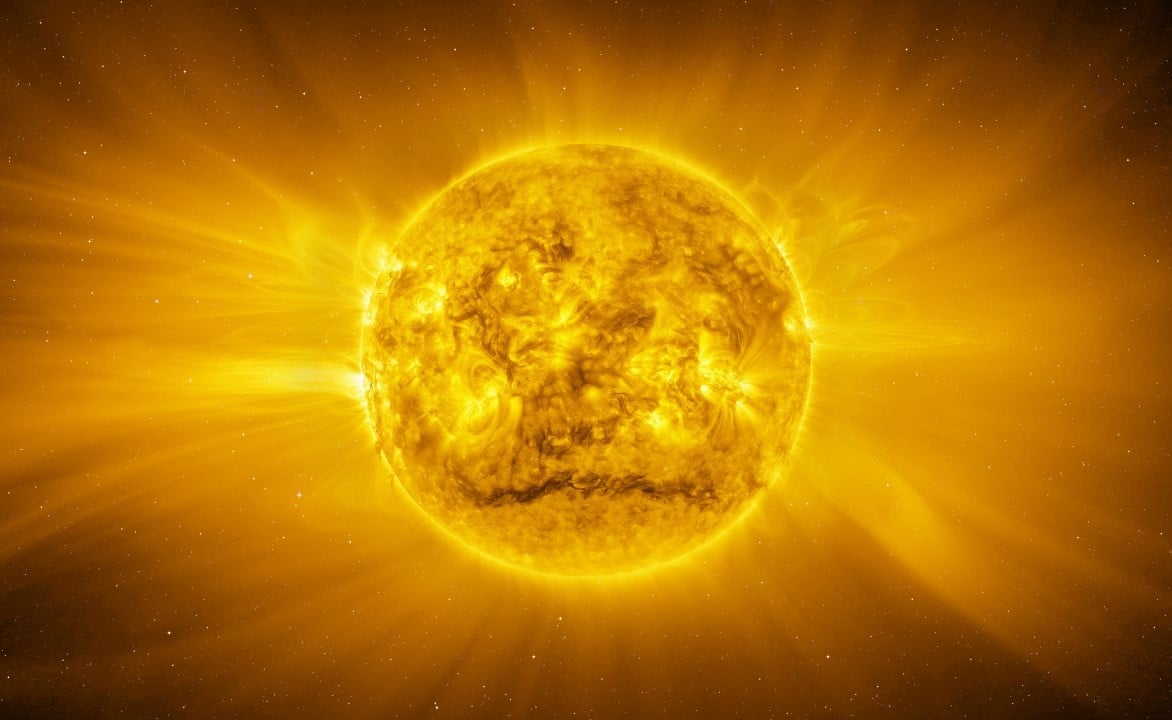
A large magnitude eruption on the surface of Sol, detected on January 18, generated a global alert issued by Administração Oceânica and Atmosférica Nacional of Estados Unidos (NOAA). The phenomenon has been classified as a coronal mass ejection (CME) and is being rigorously monitored by space agencies around the world due to its potential for direct impact on Terra.
The cloud of energized particles and plasma travels through space and, according to predictions from Centro, Previsão, and Clima Espacial, should reach our planet’s magnetic field within the next few hours. The interaction of these particles with the magnetosphere can trigger a geomagnetic storm of strong intensity, representing a real threat to several technological infrastructures on which modern society depends.
Images of the event were captured in high resolution by Observatório of Dinâmica Solar (SDO) of Nasa, which continuously follows the star’s activity. The data collected is essential for scientists to model the storm’s trajectory and intensity, providing crucial information so that satellite operators, airlines and energy companies can take preventative action.
Attention ‼️
A category S4 severe solar radiation storm is underway – the largest solar radiation storm in more than 20 years. The last time S4 levels were observed was in October 2003. Potential effects are mainly limited to releases…pic.twitter.com/kLSBy3AKx9
— JAMES WEBB (@jameswebb_nasa)January 19, 2026
The invisible threat to modern technology
Geomagnetic storms pose a significant, yet invisible, risk to the stability of global technological systems. Quando the cloud of solar particles collides with the Earth’s magnetosphere, generating intense fluctuations in the magnetic field, inducing electrical currents in the ionosphere and in the ground. Esse phenomenon is the same one that creates the spectacular polar auroras, but it is also capable of seriously destabilizing communication and navigation networks. The main concern lies with global positioning systems (GPS), which are vital not only for mapping apps on smartphones but also for the precise navigation of ships and aircraft.
The vulnerability of these systems arises from disturbance in the ionosphere, the layer of the atmosphere through which satellite signals must pass. Durante a solar storm, this layer becomes turbulent, which can delay, divert or degrade radio signals, resulting in positioning calculation errors that can range from a few meters to tens of kilometers. Além of GPS, high-frequency radio communications, used by commercial aviation and emergency services, can also suffer severe interruptions, compromising safety in critical operations, especially on routes that cross the polar regions.
What is the solar dynamics observatory
The Observatório of Dinâmica Solar (SDO) of the Nasa is one of humanity’s most important tools for studying the Sol and predicting space weather. Lançado in 2010, this satellite operates in a geosynchronous orbit that allows it to maintain an uninterrupted view of the star, transmitting a massive volume of data and very high quality images to Terra. Sua mission is to investigate how the solar magnetic field is generated and structured, and how this magnetic energy is converted and released in the heliosphere in the form of solar wind, flares and coronal mass ejections. Equipado With a suite of advanced instruments, SDO can observe Sol in multiple wavelengths of light, revealing details of the solar atmosphere, such as the corona, chromosphere and photosphere, that would be invisible to the naked eye. Essa capability allows scientists to identify active regions, such as complex sunspots, that are the precursors to large eruptions. The data collected by the observatory is essential to feed forecast models that calculate the speed, density and direction of CMEs, offering an advance warning time that can vary from hours to days before the impact on Terra.
How power grids can be affected
One of the most serious risks associated with intense geomagnetic storms is the potential for damage to large-scale electrical power distribution networks.
The phenomenon occurs because fluctuations in the Terra’s magnetic field induce low-frequency electrical currents in the ground, known as Correntes Geomagneticamente Induzidas (GICs).
These currents can find their way into transmission networks through grounding points, overloading high-voltage transformers, which are vital system components.
The flow of GICs can lead to overheating of transformer cores, causing permanent damage and, in extreme cases, leading to blackouts that can last from hours to weeks, depending on the extent of the damage and the availability of replacement equipment.
Safety protocols in aviation and space operations
To mitigate risks, government agencies and private companies adopt strict safety protocols as soon as a solar storm warning is issued.
Airlines, for example, receive constant bulletins and can divert flights from polar routes. Essa measure protects passengers and crew from high levels of radiation and avoids areas where radio communications could be completely disrupted.
In space, satellite operators can put their equipment into “safe mode”, turning off non-essential components to protect them from short circuits. Astronautas aboard Estação Espacial Internacional are instructed to remain in areas with greater shielding to minimize exposure to radiation.
The solar cycle and the frequency of extreme events
The activity of Sol is not constant, following a pattern known as the solar cycle, which lasts approximately eleven years. During this period, the star alternates between phases of low activity (solar minimum) and high activity (solar maximum), characterized by an increase in the number of sunspots, eruptions and CMEs.
Currently, Sol is approaching the peak of its current cycle, which means that events like the one recently monitored will become more frequent and potentially more intense in the coming years. Esse scenario reinforces the need for continued investment in monitoring technologies and increasingly accurate prediction models to protect global infrastructure.
Impact on low-orbit satellites
The thousands of satellites operating in low Terra orbit (LEO), including large internet constellations, face additional risk during solar storms. The energy deposited in the planet’s upper atmosphere causes it to heat and expand, increasing the density of residual air at that altitude.
This effect increases atmospheric drag on the satellites, causing them to lose altitude more quickly. Para compensate, operators need to perform orbit correction maneuvers more frequently, consuming precious fuel and potentially shortening equipment life. Increased drag also increases the risk of collisions with other satellites or space debris.
Resilience of global communications infrastructure
The growing dependence on an interconnected communications infrastructure makes global society more vulnerable to the vagaries of space weather. Além from satellites, even submarine fiber optic cables, which carry most of the world’s internet traffic, could be indirectly affected. Currents induced in the ground can damage shore power equipment that supplies power to signal repeaters along cables, causing significant disruptions to transcontinental data flow.




