
New generation of Toyota RAV4 is launched with a hammerhead look and more powerful hybrid engine


Toyota officially launched the sixth generation of the RAV4, one of the best-selling SUVs in the world, with the initial presentation at Japão in December 2025 and expected arrival in other global markets in the following months. The main novelty is the automaker’s decision to completely abandon gasoline-only versions, adopting a hybrid propulsion system as standard in all configurations, including the E-Four all-wheel drive variants. Esta new phase of the model is marked by a profound design update, which adopts the “hammerhead” visual identity, giving the vehicle a more modern, robust appearance and in line with the brand’s most recent launches, such as the Prius and the Corolla Cross. The strategic change reinforces the Toyota’s commitment to electrification and sustainability, without giving up the performance and practicality that have established the RAV4 globally. The improvements range from energy efficiency and power to connectivity, with on-board software that allows remote updates, keeping the vehicle always up to date.
With the new generation, the RAV4 seeks to maintain its leadership position in the competitive medium SUV segment, facing renewed rivals and a growing demand for more efficient vehicles. Initial sales in the Japanese market confirm the model’s premium positioning, with prices ranging between 4.5 million and 4.9 million yen, depending on the version and equipment chosen. The expectation for other markets, such as North America and Europe, is that the model will continue to be a sales pillar for the brand.
At Brasil, the arrival of the new RAV4 also generates great expectations. Test Unidades have been spotted on several occasions in the country since mid-2025, indicating that Toyota is making the necessary adaptations for the local market. The official launch is expected to take place in the first half of 2026, possibly with the introduction of flex hybrid technology, which allows the use of ethanol, further optimizing the SUV’s efficiency and ecological appeal.
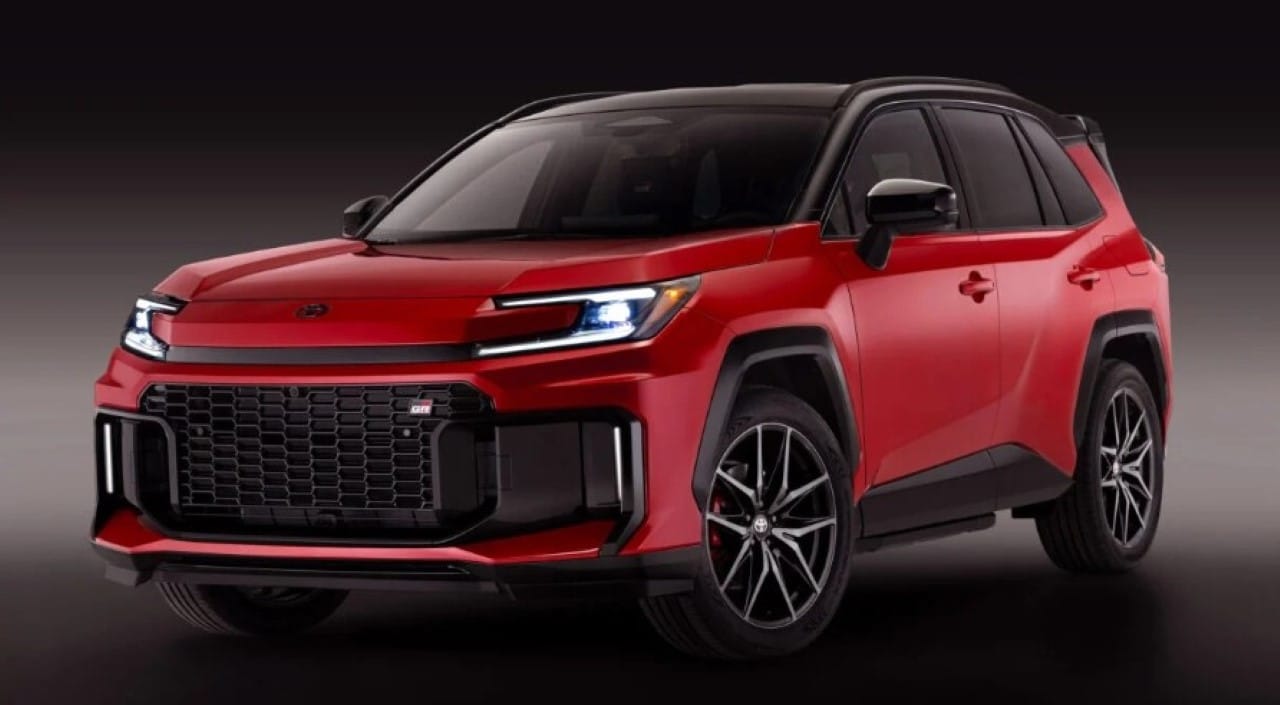
A completely renewed exterior design
The sixth generation of the Toyota RAV4 adopts the brand’s new design language, known as “hammerhead”. Essa visual identity is characterized by thinner and more tapered LED headlights, which are integrated into an upper bar, while the main grille is repositioned to the lower part of the bumper. Essa configuration replaces the more angular and traditional style of the previous generation, bringing more fluid and contemporary lines that improve aerodynamics. Apesar of the modernization, the automaker maintained elements that reinforce the robustness of an SUV, such as pronounced wheel arches and the possibility of larger diameter and high profile tires, ensuring that the model does not lose its imposing presence. The visual change is not just aesthetic; it directly contributes to reducing the drag coefficient, which is reflected in lower fuel consumption and less wind noise at high speeds.
The sides of the vehicle have also been redesigned, now with softer creases and protruding fenders that strengthen the SUV’s stance on the road. At the rear, the main change is in the headlights, which adopt a horizontal light signature and are connected by a bar that crosses the trunk lid, a common feature in the latest Toyota models. Essa solution not only modernizes the appearance, but also increases the vehicle’s perception of width and stability. Detalhes as well as the integrated roof spoiler and the redesigned rear bumper complete the package of updates, resulting in a harmonious and sophisticated package that promises to attract both the brand’s loyal customers and new consumers looking for a bold and current design.
Technological and more spacious interior
The interior of the 2026 RAV4 has been deeply modernized to deliver a more connected and comfortable user experience. The highlight is the new multimedia center, which can have screens up to 14 inches in the more expensive versions. The operating system has been updated and now allows “over-the-air” (OTA) updates, keeping navigation and entertainment features always current without the need for a dealership visit.
Despite the larger screen, the Toyota chose to maintain physical controls for essential functions, such as air conditioning and sound system volume, a decision that prioritizes ergonomics and safety while driving. The materials used in the finishing have received an upgrade, with more soft-touch surfaces and high-quality synthetic leather upholstery options, increasing the perception of refinement in the cabin.
The interior space has been slightly increased, mainly benefiting rear seat passengers, who now have more leg space. The trunk capacity also increased, reinforcing the SUV’s versatility for family trips. Para To top it off, the new RAV4 includes an induction cell phone charger and multiple USB-C ports as standard features on most versions.
Exclusively hybrid and more efficient engine
One of the most significant changes in the new generation is the exclusive adoption of the Toyota series-parallel hybrid system in all versions. The standard configuration combines a 2.5-liter combustion engine with electric units to deliver a total power of 226 horsepower, a notable increase over the previous model. Esse set provides more agile acceleration, with a reduction of approximately half a second in the time from 0 to 100 km/h. The E-Four transmission, an intelligent all-wheel drive system, distributes torque to the rear wheels through a dedicated electric motor, ensuring greater stability and traction capacity on low-grip terrain. In select markets, the Toyota will also offer a plug-in hybrid (PHEV) option with a higher capacity battery. Essa version stands out for offering a purely electric range of more than 100 kilometers, allowing most daily urban journeys to be made without emitting pollutants. Recharging can be carried out using common residential sockets or at fast stations, offering greater flexibility to the user. Average fuel consumption has been improved across all versions, reinforcing the RAV4’s commitment to energy efficiency.
Improved security with new assistance package
Safety is one of the pillars of the new generation of the RAV4, which arrives equipped with the latest version of the Toyota Safety Sense. Este suite of driver assistance technologies has been improved to offer even more complete and proactive protection. The automatic emergency braking system, for example, now has pedestrian and cyclist detection even in low light conditions, such as at night.
Adaptive cruise control (ACC) has been improved and now works in all speed ranges, including in and out of urban traffic jams, relieving driver stress in slow traffic. The lane keeping assistant has also been recalibrated to act more smoothly and precisely, helping to keep the vehicle centered in the lane.
To facilitate maneuvering in tight spaces, the new RAV4 offers a 360-degree camera system and ultrasonic parking sensors. Blind spot monitoring and rear cross traffic alert have become standard equipment on most versions, alerting the driver to vehicles approaching outside their field of vision.
The body structure uses a higher percentage of high-strength steel, which improves torsional rigidity and impact absorption capacity in the event of collisions. Occupant protection is complemented by a full suite of airbags, including curtain-style side bags and a central airbag between the front seats.
Versions and equipment for different markets
In the Japão, the RAV4 2026 was launched in two main classes: Ambas, however, share the hybrid system and advanced connectivity and security features.
In other markets, such as the Estados Unidos, the range of versions is even wider, including finishes such as the Woodland Edition, which is aimed at more adventurous use and features a specifically calibrated suspension and mixed-use tires. Starting prices in the North American market are around $31,900 for the entry-level configuration, with optional packages that add items such as a panoramic sunroof and a JBL premium sound system.
Expectations for arrival on the Brazilian market
Sights of units of the new RAV4 running in tests on the Brasil since mid-2025 confirm that the Toyota is in an advanced stage of adapting the model for the national market. The main expectation is that the SUV will arrive with flex hybrid technology, which already equips the Corolla and Corolla Cross models manufactured in the country. Essa configuration optimizes efficiency by allowing the use of ethanol, a renewable fuel, making the vehicle even more attractive from an environmental and economic point of view. Official arrival is expected in the first half of 2026, positioning the RAV4 to compete directly with rivals such as the Honda CR-V and the GWM Haval H6.
Evolution of an icon in the SUV segment
The Toyota RAV4 began its journey in 1994 as one of the pioneers in the compact SUV segment, revolutionizing the market with its proposal for a versatile vehicle that drives similar to a car. The fifth generation, launched globally in 2018, was a milestone in introducing the TNGA modular platform and popularizing hybrid options in the model. Agora, the sixth generation builds on this solid foundation, prioritizing total electrification and consolidating the brand’s transition to a more sustainable future.
Compared to its predecessor, the new version not only offers superior acceleration, but also up to 15% lower fuel consumption in urban cycles. The “hammerhead” design visually aligns the RAV4 with the latest Toyota identity, creating aesthetic cohesion with other global products. The complete elimination of purely combustion engines reflects the automaker’s global strategy towards carbon neutrality, a trend that should be followed by other models in the range in the coming years.



