
Researchers advance electrostatic attraction to drag inactive satellites from space

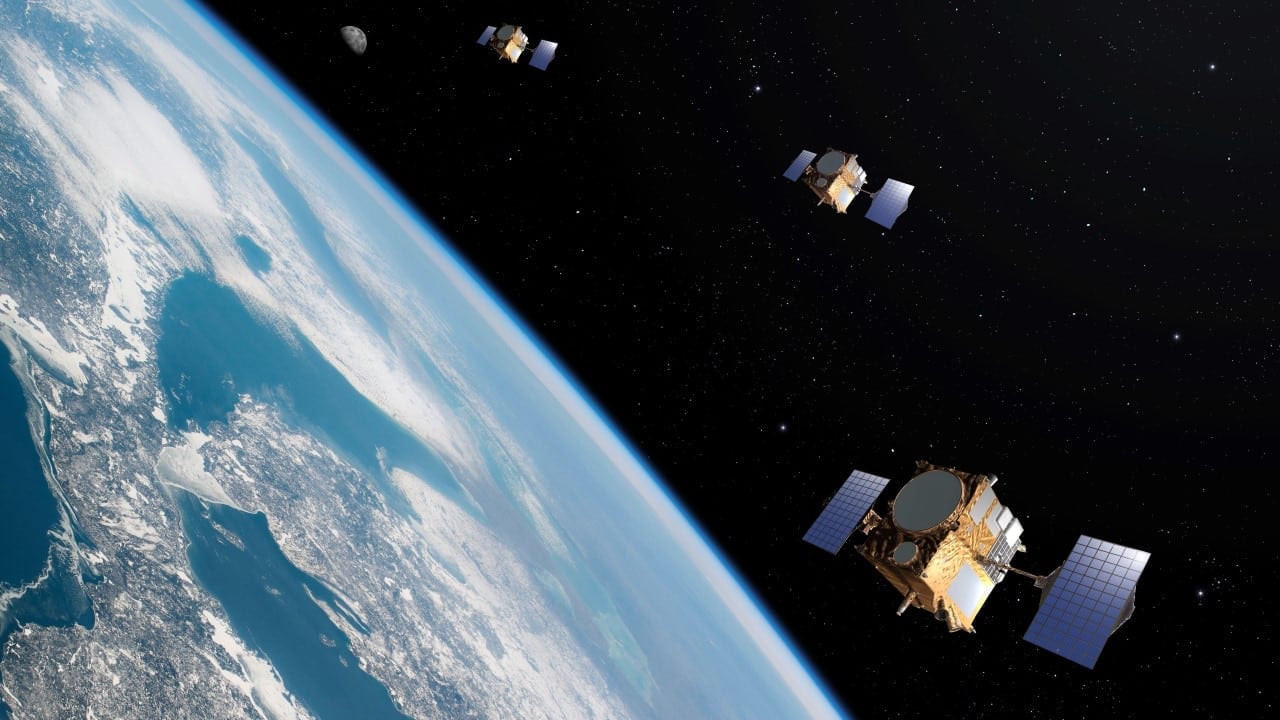
Universidade researchers from Colorado Boulder have developed a technology based on electrostatic attraction capable of removing space debris from Earth’s orbit without physical contact. The method, known as an electrostatic tractor, uses a service vehicle that emits electrons to create attractive forces between equipment and inactive objects. Essa approach aims to reduce the risks of collisions in congested orbits, especially in the geostationary region.
The technique maintains a safe distance of 20 to 30 meters between the vehicle and the debris throughout the process. The movement occurs gradually, allowing the object to move to a higher cemetery orbit. Especialistas highlight that the system avoids the generation of new fragments, a common problem in methods that involve direct capture.
The development has gained attention due to the steady increase in decommissioned satellites and debris in orbit. The proposal represents a transition from science fiction-inspired concepts to practical applications in orbital space management.

How the electrostatic tractor works
The service vehicle positions itself close to the target debris and activates an electronic cannon. Esse equipment emits beams of electrons that negatively charge the inactive satellite.
At the same time, the vehicle maintains a positive charge, generating enough electrostatic attraction to control movement. The forces act remotely, allowing precise adjustments without risk of impact.
The process requires slow movements to maintain stability. In laboratory tests, simulations in vacuum chambers confirmed the viability of the interaction between opposite charges in the space environment.
Advantages of the contactless approach
The absence of physical contact significantly reduces the risk of further fragmentation. Métodos Traditional tools, such as nets or harpoons, can break fragile objects and generate more debris.
The electrostatic tractor operates invisibly and gradually, prioritizing safety. A single displacement can last weeks or months, depending on the mass of the object.
This feature makes the system suitable for large satellites in geostationary orbit. Nessa region, objects remain fixed in relation to the Terra, facilitating operations planning.
- Preserves debris integrity during removal
- Minimizes generation of new fragments
- Allows operation at safe distances
- Compatible with high-altitude orbits
Technical and operational challenges
The technology still faces limitations in scale. Experimentos occur only in terrestrial laboratories, with no confirmed space missions.
Electrostatic forces are relatively weak, requiring prolonged time for each operation. A single vehicle would not be able to handle the total amount of accumulated debris.
High development and launch costs represent another obstacle. Estimativas indicate investments of tens of millions of dollars per complete mission.
Researchers seek additional funding for in-orbit tests. The maturation of the technique depends on partnerships with international space agencies.
Current status of debris in orbit
More than 36,000 objects larger than 10 centimeters orbit Terra currently. Milhares of disabled satellites contribute to congestion, especially at high altitudes.
Past collisions, such as the 2009 one between satellites Iridium and Kosmos, generated thousands of traceable fragments. Esses events increase the risk of chain reactions known as Kessler syndrome.
Space agencies continuously monitor potentially dangerous objects. Estações ground personnel carry out regular evasion maneuvers to protect operational assets.
Geostationary orbit houses hundreds of inactive satellites. Essa strategic region requires specific solutions for releasing orbital slots.
Other technologies in development
Parallel projects explore robotic arms for direct debris capture. Empresas like Astroscale and ClearSpace test autonomous systems scheduled for launch in the coming years.
Magnetic techniques gain space in recent Japanese missions. Ímãs powerful attract ferrous materials present in many space components.
Bidirectional plasma thrusters allow you to push objects for atmospheric re-entry. Esses ion engines provide precise control in deorbiting operations.
European startups develop robots inspired by gecko grip. Superfícies special elements facilitate temporary fixation on debris of different compositions.
- Robotic arms for mechanical capture
- Magnetic systems for selective attraction
- Ion thrusters for controlled deorbitation
- Bioinspired adhesive surfaces
Perspectives for future operations
Combining different methods can speed up orbital cleaning. Veículos hybrids capable of switching between techniques increase efficiency in multiple missions.
Agencies like ESA and NASA prioritize active debris removal in strategic plans. Acordos internationals discuss shared responsibilities in space management.
In-orbit tests scheduled for 2026 and 2027 will validate several approaches. Resultados will determine commercial viability of removal services.
The advancement of the electrostatic tractor complements existing initiatives. Sua application on large satellites paves the way for larger-scale operations.
Importance of geostationary orbit
Satellites at this altitude provide essential communications and meteorological services. The fixed position relative to Terra makes the region valuable for global applications.
Accumulation of inactive objects limits new launches. Operadores need to reposition active satellites to avoid potential collisions.
Selective removal frees up precious slots for future missions. Manutenção from geostationary orbit ensures continuity of critical services.
Recent laboratory advances
Vacuum chamber simulations accurately reproduce spatial conditions. Pesquisadores adjust load parameters to optimize attraction forces.
Experiments demonstrate stability at varying distances. Dados collected guide improvements in electronic cannon design.
Academic collaborations accelerate development. Instituições Americans lead initial tests with support from government agencies.
Applications beyond cleaning
Electrostatic technology can assist in maintenance missions. Veículos services would precisely position components on operational satellites.
Orbital refueling without physical docking gains feasibility. Controlled Forças facilitate propellant transfer at a safe distance.
Remote inspections benefit from tracking capabilities. Sensores embarked vehicles collect detailed data during controlled approaches.



