
Discovery on Europa, Jupiter’s moon, reveals ice system that nourishes habitable ocean

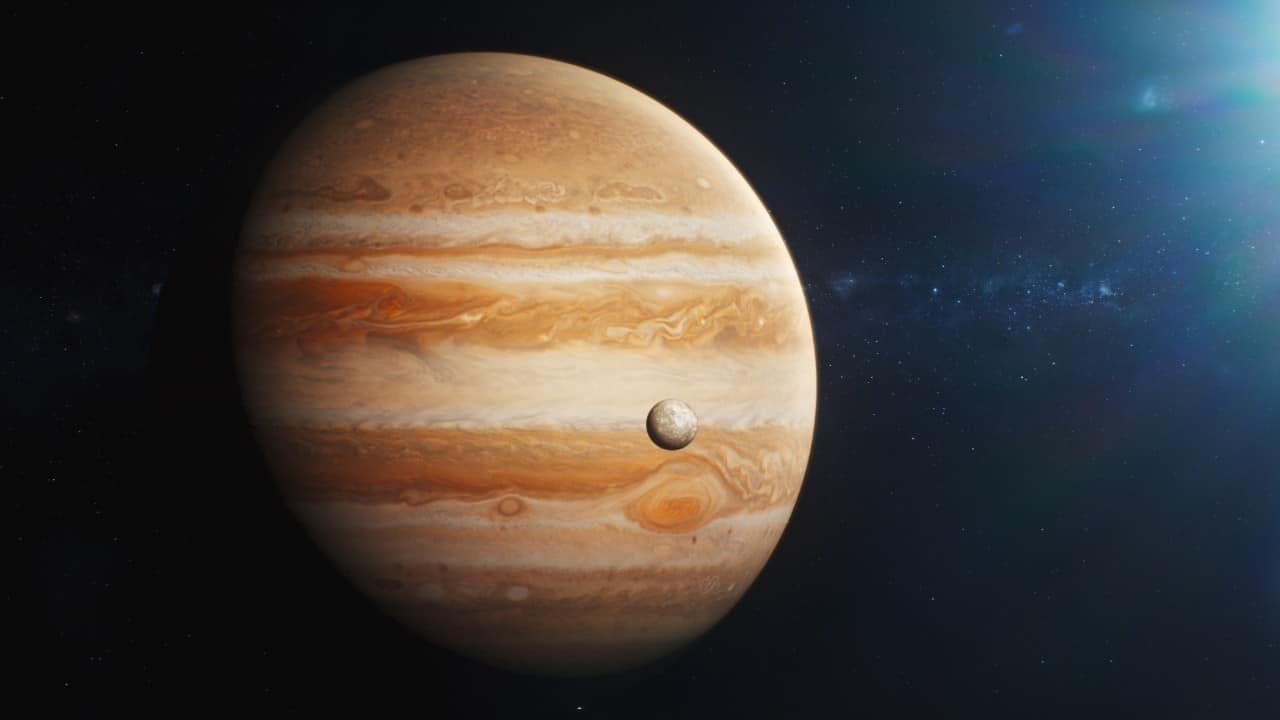
Scientists have identified a peculiar mechanism on the surface of Europa, one of Júpiter’s largest moons, that may be crucial to supporting life in its vast subsurface ocean. Recent research points to a slow “drip” process of salty ice, which transports vital elements from the irradiated surface to the liquid waters beneath the thick glacial crust.
This phenomenon offers an explanation for how oxygen, produced by the constant radiation reaching the moon’s surface, manages to penetrate the immense layer of ice. The discovery, published in *The Planetary Science Journal*, significantly increases the likelihood that the ocean of
Salty Ice: The Path to Life

Researchers from Universidade Estadual of Washington have detailed how surface ice, enriched with salt, acquires a higher density than the surrounding ice. Esse Increased weight causes dense blocks of ice to gradually sink, creating a kind of natural conveyor belt that connects the inhospitable surface to the underlying water environment. Este process is essential for the renewal and nutrition of the ocean.
Salt not only intensifies the density of the ice, but also gives it a more malleable consistency, making it easier to submerge. Along this journey, the ice carries oxygen and other nutrients that are continually generated by the interaction of the surface of Europa with the powerful radiation emanating from Júpiter. Sem this transport route, the ocean would remain isolated and would face considerable challenges in supporting any form of life.
A slow but vital cycle
Computer models developed in the study estimate that the transport of this vital material through the ice crust of Europa could take approximately three million years. Este is a slow but continuous geological process that sustains the exchange of matter between the surface and the ocean. Pure, low-salt ice remains rigid and acts as a support structure, keeping the “drip” areas stable.
Such a system allows extensive portions of the surface, spanning tens of kilometers, to move and sink, contributing to the constant renewal of the moon’s interior. The relevance of this research lies in its ability to explain not only the dynamics of Europa’s crustal renewal, but also how a potential biosphere could be nurtured beneath the ice, solving one of the greatest enigmas in astrobiology.
Implications for space exploration
Understanding how this cycle works is a fundamental step for upcoming space missions, such as NASA’s Europa Clipper and Agência Espacial Europeia’s JUICE (JUpiter ICy moons Explorer). Estas missions are designed to investigate Europa in detail, looking for evidence of habitability and, potentially, life. The new model offers precise guidelines on where and how to look for biological signatures.
The data provided by this research will help scientists refine sample collection strategies and interpret readings from instruments onboard spacecraft. The ability to predict where nutrients would be concentrated could optimize exploration, directing efforts to the most promising regions of the icy moon.
Extreme environments in the search for life
The existence of subsurface oceans on icy moons, such as Europa, Ganimedes and Encélado, has redefined the scientific community’s understanding of the conditions necessary for life. Longe of solar energy, life in these environments would need chemosynthetic or geothermal sources, and the transport of oxidizing material from the surface to the ocean is a critical component in this scenario.
Júpiter radiation, which is harmful to life on the surface, becomes an indirect source of energy for the ocean, by producing chemical substances that can be used by organisms. Essa complex interaction between geology, chemistry and cosmic radiation creates a potential ecosystem that challenges traditional conceptions of habitable zones, expanding the search for life beyond Terra.
Future observations and the search for biological signatures
Confirming this ice transport mechanism in Europa will be a crucial focus for future observations. Space missions aim to perform close flybys and, in some cases, even penetrate the ice crust to directly sample the ocean. Identifying areas where this “drip” is most active can be a priority for selecting landing or sampling sites.
With each new discovery, Europa consolidates itself as one of the most fascinating and important targets in the search for extraterrestrial life. Understanding how nutrients and energy can be exchanged between the surface and the subsurface ocean is a decisive step towards unraveling whether this icy moon truly harbors an ecosystem in its watery depths.



