
Djokovic’s solid performance guarantees a place in the next stage of the Australian Open after overcoming the Dutchman

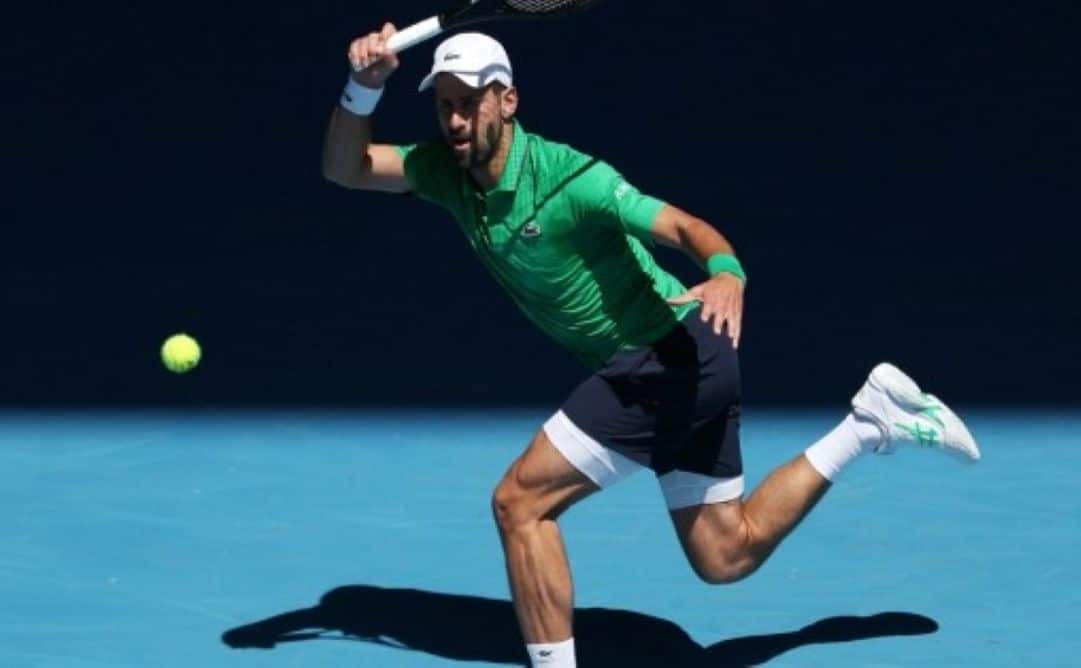
Serbian tennis player Novak Djokovic continues his journey at Australian Open, ensuring his qualification for the fourth round of the tournament. In a match that demonstrated his consistency and ability to adapt, he overcame Dutchman Botic van de Zandschulp in straight sets, further cementing his status as a top title contender in Melbourne.
The score of 6-3, 6-4 and 7-6 reflects the Serb’s majority control, but does not reveal the challenges posed by the opponent, especially in the final set. The victory not only propels Djokovic into the competition, but also serves as a demonstration of strength and resilience on one of the most important stages in world tennis.
The match required the experienced athlete to use a combination of precise strategy and physical preparation to overcome moments of greatest pressure. With the advancement, Djokovic keeps alive the objective of winning another title from Grand Slam for his successful career.
Dominance on the court and the Serbian strategy
From the beginning of the match, Novak Djokovic imposed his pace of play, using the power and precision of his serve to build a solid advantage. The first set was controlled with authority, breaking Van’s serve from Zandschulp and dictating most of the points. The consistency of his groundstrokes left few openings for the Dutchman, who struggled to find a way to destabilize his opponent.
In the second set, the balance increased, with the Dutch tennis player raising his level and offering greater resistance. Djokovic admitted in a post-match interview that there was a brief moment of relaxation on his part, noticing a drop in his opponent’s serve speed, which led him to adjust his tactical approach. Sua’s ability to react quickly and close the partial was essential to maintain the pressure and prevent Van from Zandschulp from gaining confidence for a possible comeback.
A scare and physical condition management
During the match, a moment of apprehension occurred when Djokovic suffered a sprained ankle. The incident, which he described as potentially serious, fortunately did not result in a serious injury, in part due to the way the athlete managed to cushion his fall. The episode served as a warning about the physical risks inherent in high-intensity competition.
Another tense moment involved a ball that passed too close to a ball catcher, bringing to mind the Serbian’s disqualification in the US Open of 2020. The move, although without consequences, highlighted the concentration necessary to avoid incidents that could change the course of a tournament.
After the game, Djokovic said he felt good physically, but highlighted the importance of a cautious approach. Ele mentioned having learned from past experiences, in which excessive excitement in the early stages of an Grand Slam led to physical problems in the decisive rounds, showing a maturity focused on the longevity of his performance.
The historic mark of 400 victories
In addition to guaranteeing his place in the next phase, the victory over Botic van de Zandschulp represented an extraordinary milestone in Novak Djokovic’s career. The Serb achieved his 400th victory in Grand Slam matches, a feat that places him in a select group of sporting legends. Essa’s impressive mark is a testament to his longevity, consistency and dominance in the circuit’s four biggest tournaments over nearly two decades. The achievement reinforces his legacy as one of the greatest tennis players of all time, demonstrating a rare ability to maintain a level of excellence for such an extended period. Figuras, like Roger Federer and
Analysis of the confrontation by experts
Experts who followed the match, such as the former champion of Wimbledon Pat Cash, classified the duel as close and competitive. In his analysis, Cash highlighted that although the technical level was not perfect on both sides, Djokovic’s ability to win in straight sets against a tough opponent was remarkable.
Van de Zandschulp has been described as a player capable of producing unexpected winning shots, but also susceptible to unforced errors, especially with his forehand. Houve moments in which the Dutchman found his rhythm and caused significant problems for the Serb, forcing him to adjust tactically to regain control and seal the victory.
The tournament scenario in Melbourne
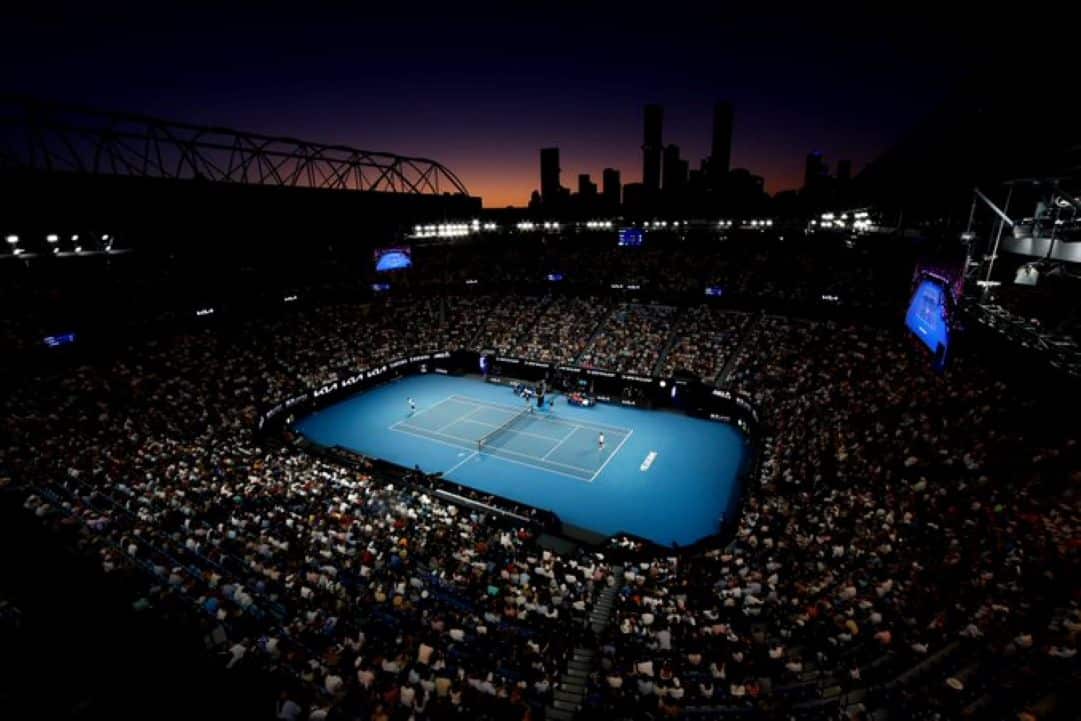
The round in Melbourne was impacted by several factors beyond the individual performance of the athletes. The weather conditions, with temperatures approaching 40°C, represented an additional challenge, forcing the organizers to close the roofs of the main courts and delay the start of games on the outdoor courts by up to five hours.
This extreme heat required even greater energy management on the part of the players, who had to deal with intense physical exhaustion. The competition also saw other important results, such as the victory of second seed Iga Swiatek in a three-set match against Anna Kalinskaya.
The tournament also felt the impact of two-time champion Naomi Osaka’s withdrawal before her third round match, changing the dynamics of the women’s draw. In another match, the 2014 champion, Stan Wawrinka, was eliminated by the ninth seed, Taylor Fritz.
Furthermore, young talent Jannik Sinner showed signs of physical difficulties during his victory, raising questions about his ability to recover for the following stages of the competition, which promise to be even more demanding.
Respect for the new generation and focus on the future
When projecting the future of the sport, Novak Djokovic was full of praise for emerging talents like Carlos Alcaraz and Jannik Sinner, recognizing that both are performing at a very high level. Ele highlighted them as the leading names in the new generation that are shaping the present and future of men’s tennis.
However, the Serb made a point of reaffirming his own ambition and determination. With the statement that he remains “firm and strong”, he sent a clear message that, despite the rise of new competitors, his presence at the top of the sport remains solid and that he does not intend to give up his position without fighting for every point.
Next steps in the competition
With qualification for the fourth round, Novak Djokovic approaches the second week of Australian Open, a phase in which the opponents’ difficulty level tends to increase significantly. The expectation is that the Serbian will continue to improve his game for the challenges that lie ahead in his quest for another big title.



