
Toyota is preparing the global launch of the sixth generation of the RAV4, one of its most successful SUVs worldwide. The model, scheduled to reach the Japanese market at the end of 2025 and in other countries thereafter, completely abandons combustion engines to focus exclusively on more powerful and efficient hybrid systems, consolidating the brand’s electrification strategy.
With a completely redesigned look, inspired by the automaker’s new design language, the SUV adopts a more robust and technological stance. The changes extend to the interior, which receives a more spacious cabin equipped with larger screens and cutting-edge connectivity features, promising to raise the standard in the segment.
The arrival of the new Toyota RAV4 to the Brasil is expected in the first half of 2026. Unidades of the model have already been spotted testing in the country, indicating that the manufacturer is adapting the vehicle to local conditions, which may include the introduction of flex hybrid technology, already present in other cars of the brand in the national market.
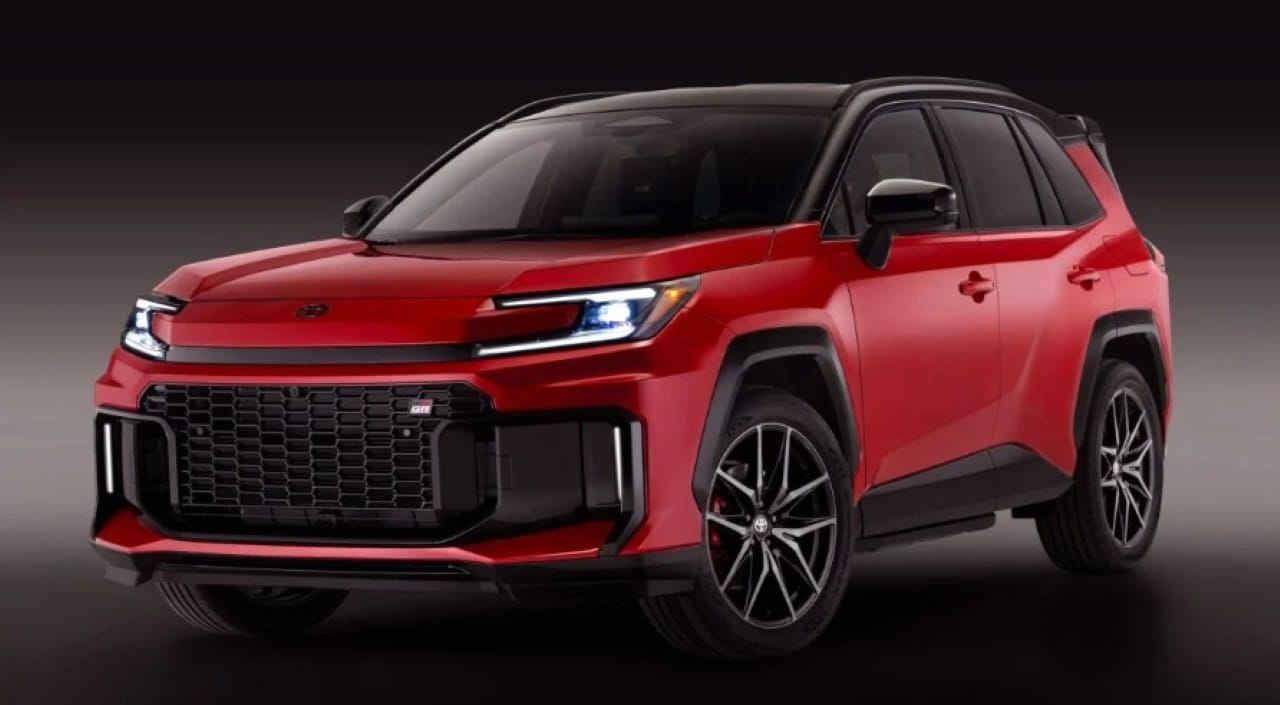
The renewed design of the sixth generation
The main visual change of the new RAV4 is at the front, which adopts the style known as “hammerhead”. The Essa identity, already seen in recent models such as the Prius and Corolla Cross, is characterized by tapered LED headlights and a front grille integrated into the bumper, giving a cleaner and more aggressive appearance. The new configuration replaces the more angular look of the previous generation, bringing more fluid and contemporary lines that also contribute to better aerodynamics and, consequently, reduced fuel consumption. The Toyota maintained elements that reinforce the SUV character, such as higher profile tires and pronounced wheel arches.
On the sides, the model features softer creases and more defined fenders, which reinforce the feeling of strength and presence on the road. The rear has also been modernized, with taillights connected by a horizontal light bar, a common trend in the automotive industry’s most recent releases. Essas changes are not just aesthetic; they were designed to optimize airflow around the vehicle, improving stability at high speeds and reducing wind noise in the cabin. The combination of these elements results in an SUV with a sophisticated look and ready to compete with more modern competitors.
Exclusively hybrid engine
The sixth generation of the Toyota RAV4 marks the end of versions powered solely by combustion engines. Todas configurations will be equipped with the latest evolution of the Toyota hybrid system, which combines a 2.5-liter gasoline engine with electric powertrains. In the standard version, the combined power reaches 226 horsepower, providing more agile acceleration compared to the previous model. The continuously variable transmission (CVT) has been recalibrated to offer more direct responses and simulate gear changes, making driving more engaging.
The E-Four all-wheel drive system has also been improved. Ele uses a dedicated electric motor to move the rear wheels, eliminating the need for a physical cardan. Essa configuration allows for a more precise and instantaneous distribution of torque between the axles, improving grip on low-grip surfaces and stability in curves. Acceleration from 0 to 100 km/h has been reduced by approximately half a second, a notable gain that reflects the greater efficiency of the powertrain.
For the Brazilian market, the expectation is that Toyota will implement its flex hybrid technology, capable of running on gasoline or ethanol. Essa adaptation, already present in the Corolla and Corolla Cross models manufactured in the Brasil, optimizes energy efficiency and reduces pollutant emissions, aligning the RAV4 with the particularities of national fuel and reinforcing the brand’s commitment to sustainability in the region.
Technological interior with more space
The interior of the 2026 RAV4 has been completely redesigned to offer a more technological and comfortable experience. The big highlight is the new multimedia center, which can have screens up to 14 inches in top-of-the-line versions. The operating system has been updated to be faster and more intuitive, allowing over-the-air updates, which keep software features and security up to date without the need to visit a dealership. The Toyota maintained physical controls for essential functions, such as air conditioning and audio volume, a decision that prioritizes ergonomics and driving safety. The instrument panel is now fully digital and customizable, displaying navigation and driving assistant information clearly. The cabin also gained a more refined finish, with the use of premium materials and soft-touch surfaces. Upholstery options include high-quality synthetic leather, which elevates the perception of luxury. Graças Due to a slight increase in the dimensions of the platform, the internal space was expanded, mainly benefiting rear seat passengers, who have more leg area. The trunk capacity also increased, reinforcing the SUV’s versatility for family trips. The list of standard equipment includes an induction cell phone charger and multiple USB-C ports for all occupants.
Plug-in version and improved efficiency
In selected markets, the new RAV4 will feature a plug-in hybrid (PHEV) version that offers a range in pure electric mode of more than 100 kilometers. Essa configuration is ideal for daily urban use, allowing the driver to travel without emitting pollutants or consuming fuel, using only the energy stored in the larger capacity battery. Recharging can be done at common residential sockets or at fast charging stations.
Even in conventional hybrid versions, energy efficiency has been significantly improved. Toyota estimates a reduction in fuel consumption of up to 15% in urban cycles, thanks to optimizations in the combustion engine, electronic management and vehicle aerodynamics. Esses advances position the new RAV4 as one of the most economical SUVs in its category, offering an excellent balance between performance and low operating costs.
Enhanced security with the new Toyota Safety Sense
The Toyota Safety Sense active safety package reaches its newest generation, incorporating improved functionalities and new features. The pre-collision system now has more accurate pedestrian and cyclist detection capabilities, working effectively even at night. Sensores and higher resolution cameras enable faster response from the autonomous emergency braking system, helping to avoid or mitigate collisions.
Adaptive cruise control (ACC) has been improved to operate in all speed ranges, including heavy traffic situations. The system can stop the vehicle completely and resume acceleration smoothly, following the flow of cars ahead. Isso reduces driver stress in traffic jams and increases comfort on long journeys.
The lane keeping assistant has also evolved. Agora, the system acts more proactively to center the vehicle on the track, with more subtle and precise steering corrections. Ele is able to recognize the edges of the road even when the markings on the asphalt are not perfectly visible.
In addition, the new RAV4 offers features such as 360-degree cameras, which facilitate maneuvering in tight spaces, and blind spot monitoring with rear cross-traffic alert. The body structure uses ultra-high-strength steel, increasing torsional rigidity and protecting occupants in the event of an impact.
Launch strategy and arrival at Brasil
The Toyota will follow a phased launch schedule for the sixth generation RAV4. The debut will take place on the Japão at the end of 2025, with the arrival on the markets of the América, the Norte and the Europa scheduled for the following months. No Brasil, the SUV is expected to arrive at dealerships during the first half of 2026, imported from the Japão.
Market positioning and competition
In the Brasil, the Toyota RAV4 has established itself as a reference in the medium SUV segment, competing for consumer preference with models such as the Honda CR-V, Volkswagen Tiguan and several models from Chinese brands. The new generation arrives with the aim of reinforcing this leadership, investing in an impactful design, superior onboard technology and, mainly, the efficiency of the hybrid set, an important differentiator in a market increasingly aware of environmental issues and fuel costs.
Prices for the Brazilian market have not yet been defined, but an adjustment in relation to current values is expected. The increase should reflect technological innovations, more refined finishing and new security systems. The brand’s dealership network is already preparing to receive the model, which will undergo specific training for sales and after-sales teams.
Availability and versions
Initially, the new RAV4 will be offered in two main versions in the Japão: Adventure, with a more light off-road appeal, and Z, with a focus on sophistication and urban use. Nos Estados Unidos, the range of versions is wider, including options such as the Woodland, which comes with raised suspension and mixed-use tires. The configuration for the Brasil has yet to be confirmed, but it is likely that the Toyota will choose to bring well-equipped versions to compete in the segment’s premium range, including the E-Four all-wheel drive version. Towing capacity remains competitive, making the SUV a viable option for those who need to transport light trailers or recreational equipment.
