
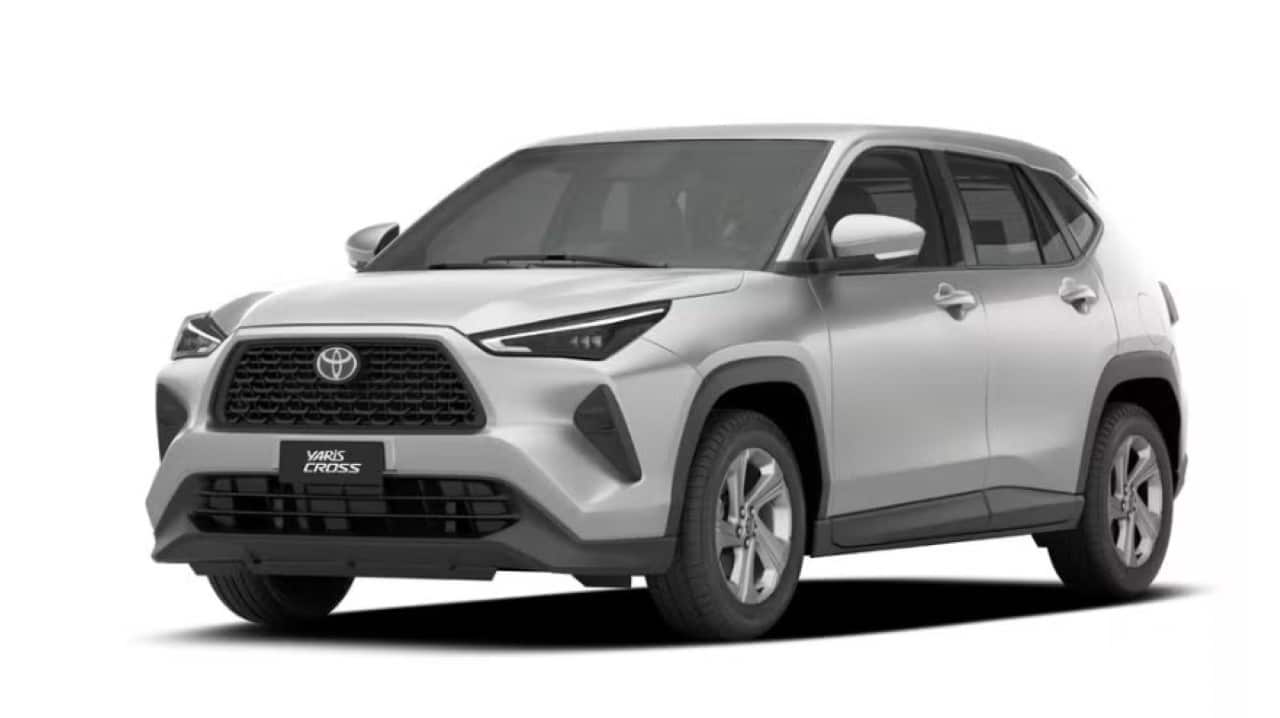
New Toyota Yaris Cross XR intensifies competition in the SUV segment against Honda WR-V and Nissan Kicks


The Toyota officially announced the entry of a new major competitor into the fierce compact SUV market. The launch of the Yaris Cross XR version establishes a new level of rivalry, taking direct aim at consolidated models such as the Honda WR-V and the Nissan Kicks, with an aggressive pricing strategy and a complete equipment package to attract the consumer.
The new model arrives to fill a strategic gap in the Japanese automaker’s portfolio, positioning itself as a robust and modern option for a public that seeks urban versatility and technology. The arrival of the Yaris Cross XR promises to redefine the options available in the price range in which it operates, forcing competitors to reevaluate their own market strategies.
With a proposal that balances design, performance and competitive cost, Toyota is betting on the strength of the brand and reputation for reliability to gain a significant share of this segment. The dispute now becomes even more interesting, with three giants of the automobile industry vying for drivers’ preference with products that are very equivalent in terms of proposal and value.
Analysis of mechanical assemblies
At the heart of the vehicles, the mechanical dispute reveals different strategies. The Toyota Yaris Cross XR is equipped with a 1.5 flex aspirated engine, which delivers 122 horsepower and a torque of 15.3 kgfm. Este set is managed by a CVT automatic transmission that simulates seven speeds, a configuration that favors comfort and efficiency in fuel consumption, characteristics valued by urban consumers. In turn, the Honda WR-V uses a 1.5 engine that stands out for the highest power in the category, with 126 horsepower, and a torque of 18.5 kgfm, also coupled to a CVT transmission. Essa combination offers more vigorous responses, making it a differentiator for those looking for superior performance. Já o Nissan Kicks, in its Advance Plus version, uses a 1.6 flex engine with 113 horsepower and 15.3 kgfm of torque, also combined with a CVT transmission. Embora presents slightly lower power figures, the Kicks compensates with a well-adjusted package, which provides a smooth and balanced drive, focused on comfort for daily use and travel.
Price details and versions in the new clash
Competition in the compact SUV segment is largely defined by pricing strategy. The Toyota Yaris Cross XR enters the market with a value of R$149,990, positioning itself in an extremely competitive way to directly challenge its main rivals. Essa price range puts it in direct confrontation with already established models and a loyal customer base.
The Honda WR-V, for example, is offered in two main versions in this range: the EX, priced at R$147,100, and the EXL, which rises to R$152,100. The Nissan Kicks, in its Advance Plus configuration, has a suggested price of R$149,890, practically identical to that of the new Yaris Cross. Essa parity of values demonstrates the intensity of the dispute, where every detail in the equipment package and performance can be decisive in the final consumer’s choice.
Dimensions and internal space in dispute
Interior space and cargo capacity are crucial factors for SUV consumers. The Honda WR-V stands out as the most spacious among the three, measuring 4.32 meters long, 1.79 meters wide and with a wheelbase of 2.65 meters. Seu trunk holds a generous 458 liters.
The Toyota Yaris Cross XR measures slightly more restrained, measuring 4.31 meters long, 1.77 meters wide and with a wheelbase of 2.62 meters. Its trunk capacity is 400 liters, a volume suitable for family use and short trips.
The Nissan Kicks, in turn, is 4.30 meters long and has the same wheelbase as the Yaris Cross, at 2.62 meters. However, its trunk offers an intermediate capacity of 432 liters, proving to be a well-balanced option for those who need more luggage space.
The choice between them will depend on the buyer’s priority: the WR-V for those who need maximum space, the Kicks as a versatile middle ground and the Yaris Cross for those looking for a compact and agile SUV for the urban environment without giving up a good trunk.
Fuel efficiency under the magnifying glass
According to data from the Inmetro, the Toyota Yaris Cross XR appears to be quite efficient. With gasoline, the model records a consumption of 12.6 km/l in the city and 14.3 km/l on the highway. Quando fueled with ethanol, the figures are 8.8 km/l in the urban cycle and 10.2 km/l on the highway.
The Honda WR-V has close numbers. Utilizando gasoline, consumption is 12 km/l in the city and 12.8 km/l on the highway. With ethanol, the averages are 8.2 km/l on urban routes and 8.9 km/l on highways, indicating a greater focus on performance at the expense of economy.
The Nissan Kicks Advance Plus, in turn, records 11.3 km/l on gasoline in the city and 13.7 km/l on the highway. With ethanol, consumption is 7.8 km/l and 9.4 km/l, respectively. Analysis shows that the Yaris Cross has a slight advantage in terms of economy, an important factor for long-term maintenance cost.
Standard equipment and embedded technology
In terms of technology, the three SUVs are well equipped to meet connectivity demands. Todos offer multimedia centers compatible with Android Auto and Apple CarPlay. The Yaris Cross XR and WR-V have 10-inch screens, while the Kicks uses a 9-inch screen. A notable advantage of the Yaris Cross XR is the presence of the electronic parking brake, a convenience and modern feature that is not available in its direct competitors.
The Nissan Kicks stands out for offering a high-quality sound system and an intuitive interface. Enquanto that, the Honda WR-V focuses on a balanced package of technology and comfort. The choice will depend on what the consumer values most: the modernity of the Yaris Cross’s features, the quality of the Kicks’s audio system or the WR-V’s balanced set, making the decision a matter of personal preference and daily use.
Security as a fundamental pillar
All three models place safety as a priority, offering a robust package of standard features. Eles are equipped with six airbags, ABS brakes and traction and stability controls. The Yaris Cross XR, however, adds advanced driving assistants like collision warning and automatic emergency braking, which puts it a step ahead in active safety.
The Honda WR-V also includes assistance technologies, such as the LaneWatch system, which displays the image of the right blind spot on the multimedia center screen. The Nissan Kicks Advance Plus, in turn, has collision warning with intelligent braking assistant and a 360° vision system, which facilitates maneuvering in tight spaces, offering an extra layer of convenience and protection.
The strategic positioning of Toyota
The arrival of the Yaris Cross XR demonstrates a calculated move by Toyota to strengthen its presence in the compact SUV segment, one of the hottest and most profitable on the market. By positioning the model with a highly competitive price and a modern equipment package, the brand seeks not only to compete, but to lead, attracting both customers from other brands and consumers looking for their first SUV.



