
Severe solar phenomenon hits Earth with S4 radiation, the strongest in two decades


A solar radiation event classified as S4, considered severe, hit the vicinity of Terra on January 19, marking the most intense storm recorded in the last 20 years. The phenomenon was detected and confirmed by international space agencies, including NOAA’s Laboratório of Astronomia Solar of Rússia and Centro of
The origin of the event was a powerful solar flare of class X1.95, which occurred on January 18th. Essa explosion released a coronal mass ejection (CME), a cloud of plasma and magnetic fields that traveled at high speed through space, accelerating a massive flow of protons toward our planet. The peak of energetic particles significantly surpassed all records from the current solar cycle.
Although Terra’s atmosphere and magnetic field protect life on the surface, the effects of this radiation are significant for orbiting infrastructure and high-altitude activities. Safety protocols were immediately activated to mitigate the risks associated with an event of such magnitude, which had not been observed since the previous solar cycle.
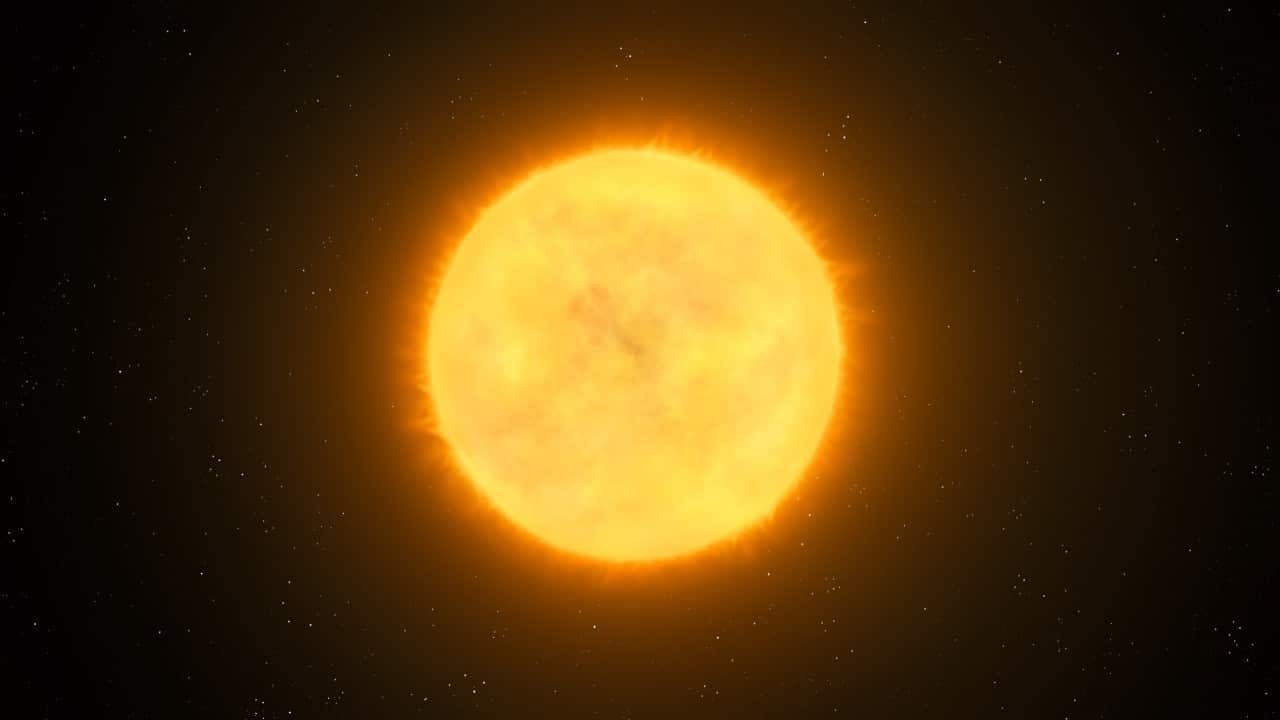
The Science Behind Solar Fury
Solar radiation storms are one of the main components of what is known as space weather. Elas happen when explosive events on the surface of Sol, such as solar flares, project charged particles, mainly protons, at speeds approaching the speed of light. Dependendo from the location of the eruption on the face of Sol facing us, these particles can reach Terra in a period that varies from a few minutes to a few hours. The scale used by NOAA to measure the intensity of these events ranges from S1 (minor) to S5 (extreme). An S4 level event, like the current one, is characterized by a flow of protons with energy greater than 10 MeV that exceeds 10,000 particle flux units (pfu). The peak recorded in this storm reached almost 37,000 pfu, a value that illustrates the severity and rarity of the phenomenon, putting the entire community that depends on space technology on alert. Level S5, the highest on the scale, has never been recorded in the modern era of space observation, which makes the current event one of the most important for studying and analyzing its technological impacts.
Technological vulnerability in orbit and on Terra
Humanity’s increasing dependence on space-based technology makes modern society particularly vulnerable to severe solar storms. Satélites in orbit are the first to feel the effects. High-energy protons can cause physical damage to solar panels, degrading their ability to generate power and shortening the life of the equipment. Além Furthermore, they can penetrate satellite shielding and cause failures in sensitive electronic components, known as single-effect events (SEUs), which can corrupt data or even lead to loss of control of the satellite. Operadores of large constellations, like Starlink, constantly monitor the health of their fleet and can put equipment into safe mode to minimize damage during the peak of the storm.
At Terra, impacts are mainly concentrated at high latitudes. High-frequency (HF) radio communications, used by aviation and maritime operations in polar regions, are experiencing widespread disruptions known as “blackouts.” Global navigation satellite systems, such as GPS, can also have greater than normal positioning errors, affecting operations that require high precision. Outra concern is the induction of abnormal electrical currents in power grids and long pipelines, a phenomenon that, in extreme cases, can overload transformers and cause blackouts. Embora the risk to the electrical grid is greater during geomagnetic storms, solar radiation is a precursor that puts operators on high alert.
Details of the eruption that triggered the event
The source of this radiation storm was a particularly active sunspot that produced the first X-class flare of 2026.
The event released a colossal amount of energy in a short period of time, equivalent to billions of atomic bombs.
This explosion released the cloud of particles that, when interacting with the interplanetary magnetic field, were accelerated towards Terra.
Solar cycle 25, which is approaching its peak of activity, has proven to be more intense than initial predictions, increasing the likelihood of extreme events like this.
Invisible threat to flights and astronauts
For humans in space, an S4 radiation storm poses a significant and unavoidable risk.
Astronauts aboard Estação Espacial Internacional (ISS) were instructed to remain in the most protected areas of the orbital complex to minimize exposure.
Extravehicular activities (spacewalks) are immediately canceled or postponed, as outside the protection of the station, the radiation dose could cause serious health problems.
In commercial aviation, passengers and crew on flights that cross polar regions are also exposed to higher doses of radiation than normal, leading airlines to divert their routes to lower latitudes as a precautionary measure.
Effects on aviation and polar communications
Airlines operating flights between América over Norte, Europa and Ásia over Ártico received alerts to adjust their trajectories.
This preventive measure aims to ensure that radiation exposure to passengers and crew remains within the safety limits established by civil aviation authorities.
Comparison with historical events of the 21st century
The last solar radiation event that reached the S4 level occurred in 2003, during a period of intense activity in solar cycle 23.
On that occasion, the storm caused anomalies in multiple satellites and forced the change of air routes, similar to what is observed now.
Although an extremely powerful eruption occurred in 2012, it was not aimed at Terra and was considered a “near miss” that, if it had hit us, could have caused catastrophic damage to global infrastructure.
The increasing sophistication and dependence on satellite systems make the impacts of an S4 event today potentially more disruptive than two decades ago.
Possible additional consequences of the event
The arrival of the coronal mass ejection associated with the initial eruption generated the forecast of a strong geomagnetic storm, at level G4, for January 20th.
This second phenomenon intensifies the occurrence of northern lights and southern lights, making them visible at much lower latitudes than usual, with reports of sightings in the north of Estados Unidos and Europa Central.
While the auroras provide a visual spectacle, the underlying geomagnetic storm poses a real risk to high-latitude power grids, which remain on alert for possible current fluctuations.
Global monitoring of solar activity
Continuous monitoring of Sol is performed by a global network of ground-based observatories and satellites, such as NOAA’s GOES fleet.
International collaboration between space agencies allows space weather warnings and forecasts to be issued a few hours or days in advance.
This information is crucial so that sectors such as aviation, energy, telecommunications and space operations can take measures to protect their assets and ensure the safety of operations.




