The Brazilian automotive market has seen a significant transformation, driven by rising fuel costs and the search for more sustainable alternatives. Nesse scenario, plug-in hybrid vehicles (PHEV) emerge as an effective solution, combining the flexibility of combustion engines with the efficiency of electric propulsion.
Contrary to the perception that electrified cars are high-luxury products, new 0km options become more accessible. Há models that can now be purchased from R$169,000, offering a promising combination of electric autonomy, robust performance and considerable savings in daily use.
This category of vehicles is especially advantageous for drivers who make short urban journeys and have the infrastructure to recharge the battery at home. The ability to run exclusively in electric mode for part of the route minimizes gasoline consumption and can even eliminate expenses in some scenarios.
The rise of plug-in hybrid vehicles in the national market
The growing demand for sustainable mobility and concerns about operating costs have driven the electrification of the Brazilian fleet. Plug-in hybrid models stand out for their versatility, allowing consumers to experience the benefits of electric driving without the worry of limited range on longer trips.
This technology offers a smooth transition to full electrification, familiarizing drivers with charging and driving in zero-emissions mode. Para many, it represents an ideal balance between innovation and practicality, aligning with the needs of everyday urban life and the demands of longer journeys.
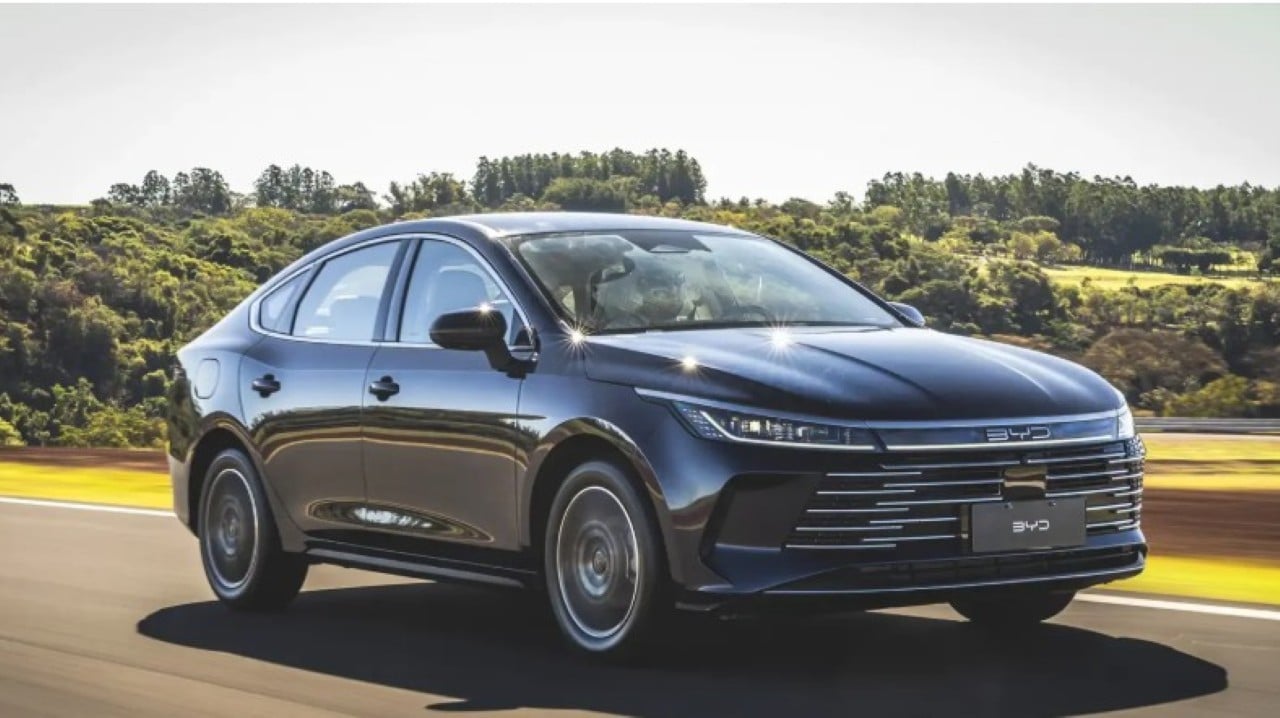
BYD King GL 2026: efficiency from R$ 169,990
The BYD King GL 2026 is positioned as one of the most competitive and affordable plug-in hybrids in the country. Seu modern design complements a mechanical package designed to offer both performance and remarkable fuel efficiency.
The vehicle is equipped with a 1.5 naturally aspirated engine that delivers 110 horsepower, working in conjunction with a 179 horsepower electric motor. Essa combined configuration generates a total power of 209 horsepower and a torque of 32.2 kgfm, resulting in agile responses, especially in urban traffic.
The BYD King GL’s 8.3 kWh battery provides an electric range of 35 km, as measured by the Inmetro. Embora is more compact, this capacity is quite functional for daily use in the city, allowing many drivers to complete their journeys without consuming fuel. In hybrid mode, the model achieves excellent consumption figures, with 16.3 km/l in the urban cycle and 14.3 km/l in the highway cycle, reinforcing its vocation for economy.
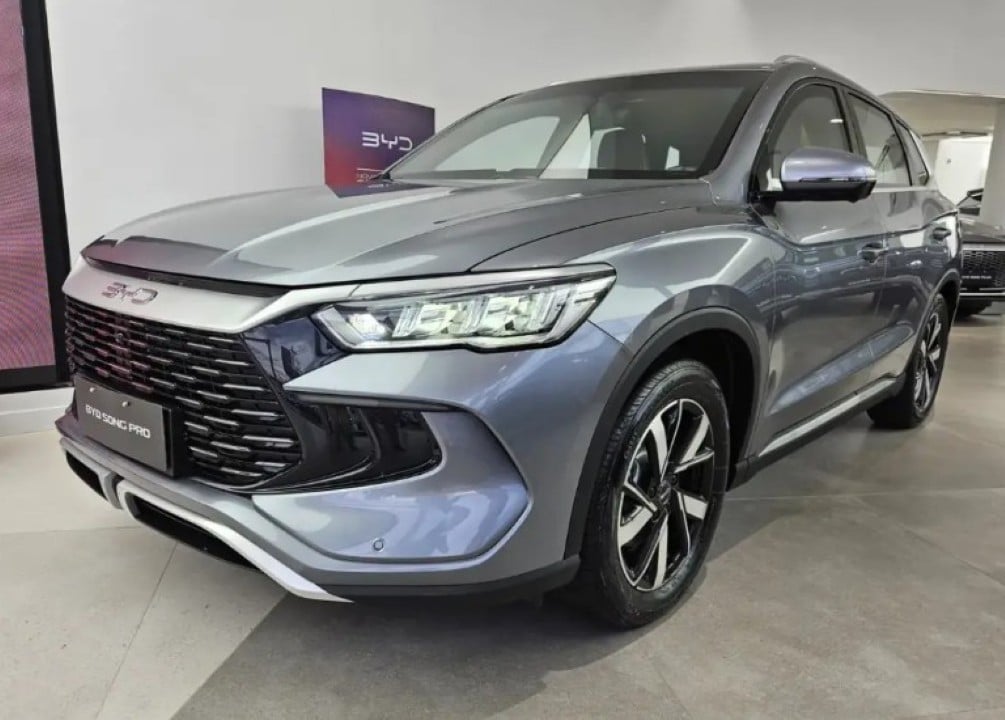
BYD Song Pro GL 2026: electrified SUV with more autonomy
For those looking for the versatility of an SUV combined with the benefits of electrification, the BYD Song Pro GL 2026 appears as a robust and complete alternative. Este model establishes itself as one of the most attractive plug-in options in the sports utility vehicle segment, with a price below R$200,000, without compromising on space or technology. Sua engineering combines a 98 horsepower 1.5 aspirated engine with a powerful 197 horsepower electric motor, which together achieve a combined power of 223 horsepower and a torque of 40.8 kgfm. Tal configuration ensures vigorous performance and dynamic driving, ideal for different types of roads and for facing the challenge of traffic in large cities.
CAOA Chery Tiggo 7 Pro PHEV 2026: robust performance and greater range
Raising the level of performance and autonomy, the CAOA Chery Tiggo 7 Este SUV was developed for drivers who do not compromise on power and seek a more electrified driving experience.
The vehicle integrates a 147 horsepower 1.5 turbo combustion engine with two electric motors. The Essa combination results in an impressive total power of 317 horsepower and a torque of 56.6 kgfm, placing the Tiggo 7 Pro in a superior segment in terms of performance.
In addition to the power, its 19.3 kWh battery is the largest among the highlighted models, offering an electric range of 60 km. Essa feature makes it the ideal SUV for those who want to maximize driving time in 100% electric mode, covering considerable urban distances without using gasoline.
Regarding consumption, the Tiggo 7 Pro records averages of 12.3 km/l in the city and 11.9 km/l on the highway. Despite being slightly less economical than BYD models in hybrid mode, the high performance package and extended electric range make up for it, offering an excellent balance for the intended use profile.
Advantages of plug-in technology for everyday life
Plug-in hybrid technology offers a number of practical benefits that directly impact the cost of living and driving experience. The ability to operate purely in electric mode for tens of kilometers is a differentiator that attracts many consumers.
For those who have access to charging points at home or at work, fuel savings can be drastic. The routine of charging the vehicle overnight, for example, allows you to start the day with a full battery, optimizing the use of electric mode.
The automotive electrification scenario in Brasil
Brasil has followed the global trend of automotive electrification, with a constant increase in supply and demand for hybrid and electric vehicles. Este movement is driven by both environmental awareness and the search for efficiency and innovation in transport. The expansion of charging infrastructure, although still under development, is promising and fundamental for the popularization of these vehicles.
Large automakers are increasingly investing in PHEV models, demonstrating the potential of this segment to meet the diverse needs of Brazilian consumers. The variety of options, ranging from sedans to SUVs, indicates a maturing market, which now offers solutions for different profiles and budgets.
Cost-benefit analysis for different driver profiles
The decision to purchase a plug-in hybrid vehicle must be considered based on the driver’s usage profile. Para For those who carry out most of their journeys in urban environments and have easy access to charging points, PHEVs present a highly favorable cost-benefit ratio.
The ability to switch between the electric and combustion engines provides unparalleled flexibility, especially for those traveling through areas with restricted circulation or seeking to reduce their carbon footprint. The savings generated by less dependence on fossil fuels translate into a return on investment over time.
However, for drivers who predominantly travel long distances on highways and have few charging opportunities, the advantage of electric mode may be less exploited. In Nesses cases, the efficiency of the combustion engine and hybrid consumption are still important, but the maximum potential of plug-in technology is subject to the availability of infrastructure.
It is crucial to consider that, in addition to fuel savings, plug-in hybrids offer a smoother and quieter driving experience in electric mode, as well as superior performance due to the delivery of instant torque. Esses attributes add value to vehicle ownership, justifying the initial investment for many consumers.
Future trends for hybrid cars in the country
The perspective for the hybrid car segment in the Brasil is one of continuous expansion and technological improvement. The expectation is that more models will be launched, with even greater electric ranges and increasingly competitive prices. The evolution of batteries and propulsion systems promises even more efficient cars adapted to the particularities of the national market.
