
James Webb maps dark matter with unprecedented precision and reveals secrets of the universe

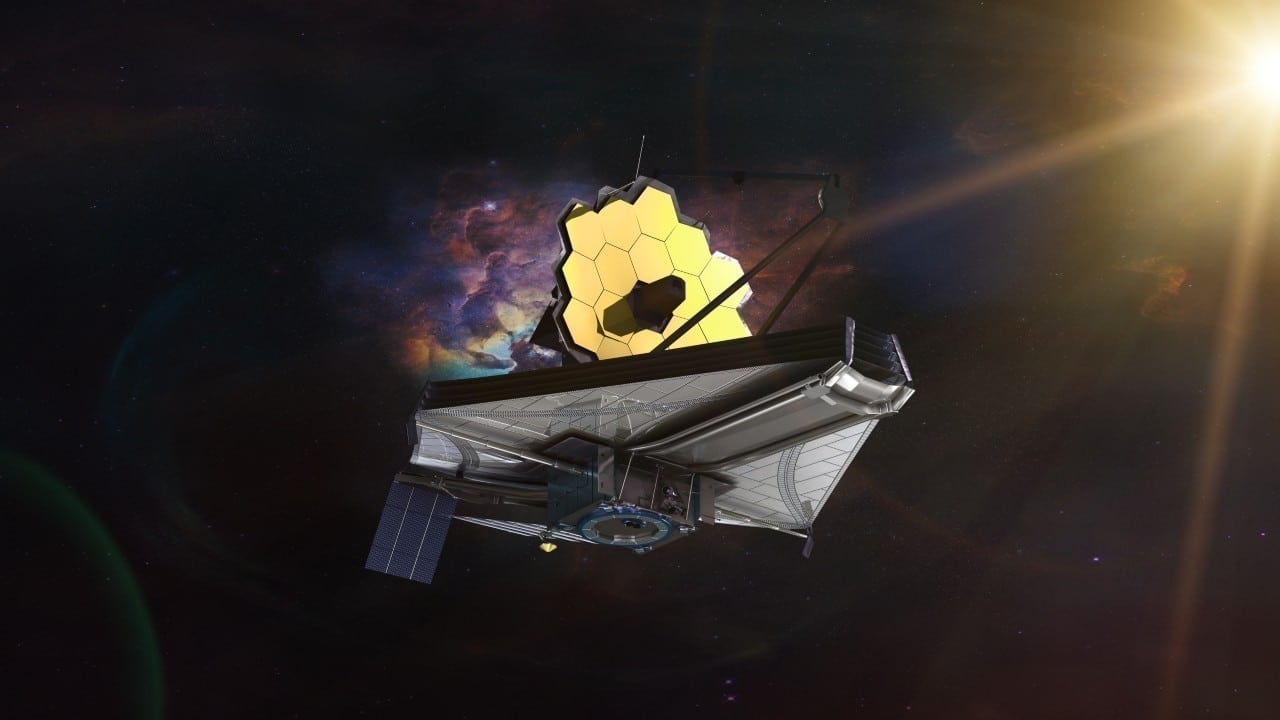
Telescópio Espacial James Webb marked a milestone in astronomy by producing the most detailed mapping ever recorded of the distribution of dark matter in Universo. The research, recently published in the scientific journal Nature, details how this invisible substance organizes itself into colossal structures that serve as support for galaxies and clusters. With visual clarity unprecedented in the history of space exploration, the data reveals the hidden architecture of the cosmos.
Dark matter makes up approximately 85% of all mass in space, although it remains undetectable by conventional light observation methods. Como does not emit, reflect or absorb light, its presence can only be confirmed through the gravitational influence exerted on visible matter and the trajectory of light. Este new record allows astronomers to better understand the evolution of large cosmic structures over billions of years.
The project utilized the Webb’s advanced infrared technology to overcome limitations faced by previous equipment. The analysis focused on the Cosmos field, a region of the sky that has been widely studied, but which had never been observed with such depth and resolution. Este international effort involved experts from Jet Propulsion Laboratory and Caltech, coordinating a global astronomical data processing network.
Gravitational lens technology allows visualization of the invisible
To detect what is naturally invisible, researchers applied the weak gravitational lensing technique during observations. Este phenomenon occurs when the gravity of large concentrations of mass distorts the light coming from galaxies located in the background of the observer. By measuring these minute distortions with extreme precision, the team was able to calculate the exact location and density of dark matter in the analyzed region.
The telescope’s near-infrared camera has demonstrated significantly greater operational capability than past missions. The equipment was able to record the shapes of 129 galaxies per square arc minute, almost twice the performance of Telescópio Espacial Hubble. Essa agility in data collection reduced statistical noise and allowed the creation of a three-dimensional model that was much more faithful to the physical reality of the space.

Identification of the cosmic web and hidden filaments
The detailed mapping made it possible to identify all 15 known galaxy clusters in the Cosmos field area with absolute fidelity. Mais than just confirming known structures, Webb revealed filaments of dark matter that connect these clusters, forming the so-called cosmic web. Essas connections function as gravitational bridges that guide the flow of gas and the formation of new stars on a universal scale.
In addition to the connected structures, massive concentrations of matter were detected that do not show any visible light or X-ray emission. Tais regions appear to be dominated exclusively by dark matter, defying previous models that predicted the presence of heated gases in these locations. The discovery of these luminous voids filled with invisible mass opens new avenues of investigation into the fundamental composition of our universe.
- Location of elongated filaments that connect distant clusters.
- Mass confirmation in areas where there is no detectable starlight.
- Mapping of light distortions in background galaxies with high resolution.
- Identification of invisible skeletons that guide galactic evolution.
Time advancement and superior resolution of the space telescope
James Webb’s ability to observe infrared allows it to see through cosmic dust and reach very remote times. The new map reaches periods when Universo was at the height of its star formation rate, offering a glimpse into the past. Previous Telescópios faced technical difficulties in maintaining sharpness when observing objects so distant and ancient in the chronological time of space.
The detected signals underwent rigorous validation tests to rule out instrumental errors or failures in the digital processing of the images. The team led by researcher Diana Scognamiglio assured that the recorded mass fluctuations are real and represent the physical structure of the cosmos. Esse level of verification ensures that the data can be used as a basis for future computational simulations on the expansion of the space fabric.
Dynamics of invisible structures in galaxy formation
Dark matter acts like a gravitational mold, attracting ordinary matter to form the stars and planetary systems we know. Sem the presence of this invisible network, galaxies would not have enough mass to remain cohesive as currently observed. The study details how the distribution of this substance influences the rotation speed of galactic spirals and the stability of large groups of galaxies.
The data collected shows that the distribution of dark matter is not uniform, presenting density peaks at strategic points in the cosmic web. Essas concentrations function as deep gravity wells, where baryonic matter accumulates to give rise to complex astrophysical events. Understanding these mechanics is essential to validating or refuting current theories about the cosmological constant and dark energy.
Comparison between the capabilities of the Webb and the Hubble
While Hubble was fundamental to the first mass maps, James Webb represents a generational leap in infrared light collection. Enquanto’s predecessor operated mainly in the visible and ultraviolet spectrum, the Webb captures wavelengths that travel longer distances without suffering dispersion. Isso allows the new telescope to identify much fainter galaxies, which serve as measuring tools for gravitational lensing.
The precision of the new maps is such that it allows us to discern small variations in the density of dark matter within a single cluster. Essa resolution was unattainable a decade ago, when models were based on mathematical approximations and low-fidelity observations. With Webb, astronomy enters an era where the invisible can be quantified with the same rigor applied to bright objects in the night sky.
The role of invisible matter in the expansion of the universe
The research also sheds light on how dark matter interacts with dark energy, the force responsible for accelerating the expansion of the universe. By mapping the distribution of mass over time, scientists can observe the tug of war between gravity, which attracts, and dark energy, which pushes away. The current map provides crucial data for understanding which of these forces dominated at different stages of cosmic chronology after Big Bang.
This interaction defines the ultimate fate of the cosmos, determining whether expansion will continue indefinitely or whether gravity can slow down the process. Observations of the Cosmos field serve as a representative sample of how the rest of the universe may be behaving on even larger scales. The filaments now revealed confirm that the organization of matter follows complex geometric patterns predicted by general relativity of Einstein.
Scientific validation and impact on current cosmological models
The publication of the results in Nature highlights the importance of the finding for the international scientific community and for future physics books. The methodological rigor used in creating mass maps sets a new standard for observational cosmology studies. Pesquisadores from several institutions now use this data to adjust parameters on supercomputers that simulate the birth of the solar system and stellar neighborhoods.
Confirming that the signals are real and not lens artifacts or electronic noise provides security for the advancement of new theories. Science now has a tool capable of testing the existence of hypothetical particles that could make up dark matter, such as axions or WIMPs. Cada new image processed by Webb brings humanity closer to the answer to what the universe is really made of for the most part.



