
Monster Hunter Wilds graphical optimization on Switch 2 is revealed in alleged Capcom data leak


A significant information leak, allegedly originating from internal Capcom documents, has brought to light the first technical details about how the long-awaited game next generation of the Nintendo. Esta would be a strategic decision, considering the enormous success of the franchise on the company’s previous platforms, and the details of the document focus precisely on advanced graphic optimization methods that would be developed within the versatile RE Engine, the developer’s graphics engine.
The documents indicate a dedicated effort to ensure the game delivers a visually rich and, above all, fluid experience. Essa approach aims to close the inevitable performance gap between high-end consoles and the potentially hybrid architecture of the Switch successor by combining processing power with portability.
Among the key technical aspects highlighted in the alleged leak are several strategies designed to manage system resources efficiently. Isso includes the implementation of a “FastLoadMode” to drastically reduce loading screens, the use of Nível of Detalhe dynamic systems (LOD), and the application of advanced “Occlusion
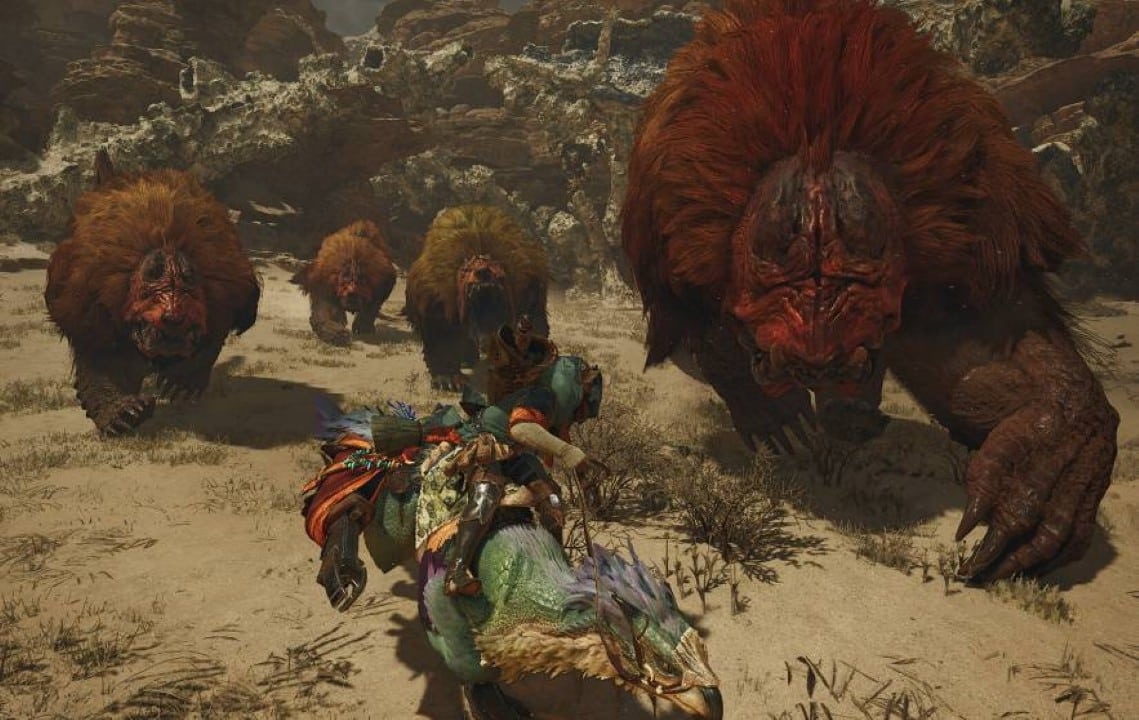
Technical details of the adaptation for the new console
The mention of “FastLoadMode” suggests a smart asset loading system. In an open-world game like Wilds promises to be, this technology would be key to preloading map data seamlessly, allowing players to move across vast areas without abrupt interruptions while maintaining immersion.
The system of Nível of Detalhe, or LOD, is another crucial technique for optimization. Ele works by intelligently reducing the geometric complexity and texture quality of objects that are far from the player’s field of vision. Dessa way, the console saves precious processing resources without there being a noticeable loss of visual quality in the immediate scene.
Complementing LOD, “Occlusion Culling” is an even more sophisticated method. Ele prevents the graphics engine from processing and rendering any objects that are completely hidden by other elements in the scene, such as a monster behind a mountain or items inside a cave. Applying this technique significantly alleviates the load on the graphics processing unit (GPU).
Combined, these strategies form a multifaceted approach to ensuring a stable frames per second (FPS) rate, an essential factor for the precise and responsive gameplay that is a hallmark of Monster Hunter. The objective is clear: preserve visual fidelity in the most important elements, such as hunters and monsters, while optimizing the surrounding environment.
The fundamental role of RE Engine of Capcom
The feasibility of such an ambitious version for Switch 2 lies in the remarkable scalability of RE Engine. Este’s graphics engine has already demonstrated its flexibility in a wide range of titles, from the claustrophobic corridors of Resident Evil to the open maps of Monster Hunter Rise. The engine’s architecture is designed to be highly adaptable to different hardware specifications, making it the ideal tool for a release that spans multiple platforms with different capabilities. The efficiency of RE Engine was successfully proven in the original Nintendo Switch, especially with Monster Hunter Rise, which delivered stunning visuals and solid performance on the console’s limited hardware.
The leak suggests that RE Engine’s internal tools are being fully utilized to create a specific performance profile for the Switch 2 hardware. Isso involves fine-tuning lighting systems, shadow rendering, particle effects, and physics management. The goal would be to strike a balance between visual quality and consistent performance, probably aiming for a dynamic resolution that adjusts according to the complexity of the scene to keep the frame rate stable, a common practice for major releases on hybrid consoles.
Performance comparisons and visual expectations
One of the most revealing points of the leak is the direct performance comparison. The documents indicate that the Switch 2 version aims for visual quality that would be equivalent to the “Low” and “Medium” settings of the PC version. Para players, this translates into an experience that must maintain the high fidelity of the character models and stunning monster designs that are the heart of the series’ visual identity. However, to achieve this goal, sacrifices would be made in other areas, such as simplifying textures of scene elements, less complex shadow quality, and reducing post-processing effects such as ambient occlusion and advanced reflections. Essa is a strategic and widely used trade in the industry to ensure that gameplay, the most crucial aspect of the franchise, remains intact and responsive. The focus would not be on competing in raw graphical power with other platforms, but rather on offering an optimized and polished version that takes advantage of the console’s unique features, such as portability, without compromising the essence of the hunt.
Capcom’s strategy for the Nintendo fanbase
Capcom is fully aware of the gigantic market that the Monster Hunter franchise has conquered on Nintendo platforms. Títulos like Monster Hunter Rise and Monster Hunter Generations Ultimate sold millions of units in Switch, consolidating an extremely loyal and engaged fan base.
In this context, launching Monster Hunter Wilds on the successor of Switch is not just a possibility, but an almost mandatory business decision. Ignorar this massive audience would represent a loss of revenue and relevance in one of the largest gaming markets in the world.
The existence of these detailed optimization plans, if the leak is authentic, demonstrates that a release for Switch 2 is not being treated as a side project or a late port. Pelo on the contrary, indicates that the platform is integrated into the game’s central development and launch planning from its initial phases.
What the leak doesn’t reveal
Despite providing a fascinating glimpse behind the technical scenes, it is important to note that the leak does not confirm a release date for this supposed version, nor does it even make official the existence of the Switch 2 console itself.
The veracity of the information and the company’s silence
Leaks of this nature are common in the gaming industry and should be treated with caution. However, the level of technical detail present in the documents confers a degree of credibility to the information, which may reflect feasibility studies or early stages of development.
So far, both Capcom and Nintendo have remained silent about the rumors, following standard protocol for this type of situation. The gaming community is now waiting for official confirmation, which could appear in a future Nintendo Direct event or in a presentation dedicated to Monster Hunter.
Official launch and confirmed platforms
While speculation about the version of Switch 2 continues, it is essential to reinforce the information already officially confirmed by Capcom. Monster Hunter Wilds is scheduled to be released globally sometime in 2025.
The platforms that will definitely receive the game are the PlayStation 5, the Xbox Series X and Xbox Series S consoles, and the PC via the Steam platform. Qualquer information beyond that remains, for now, in the territory of rumors.



