
Storm in Barcelona exposes serious structural flaws in the billion-dollar renovation of the Camp Nou stadium

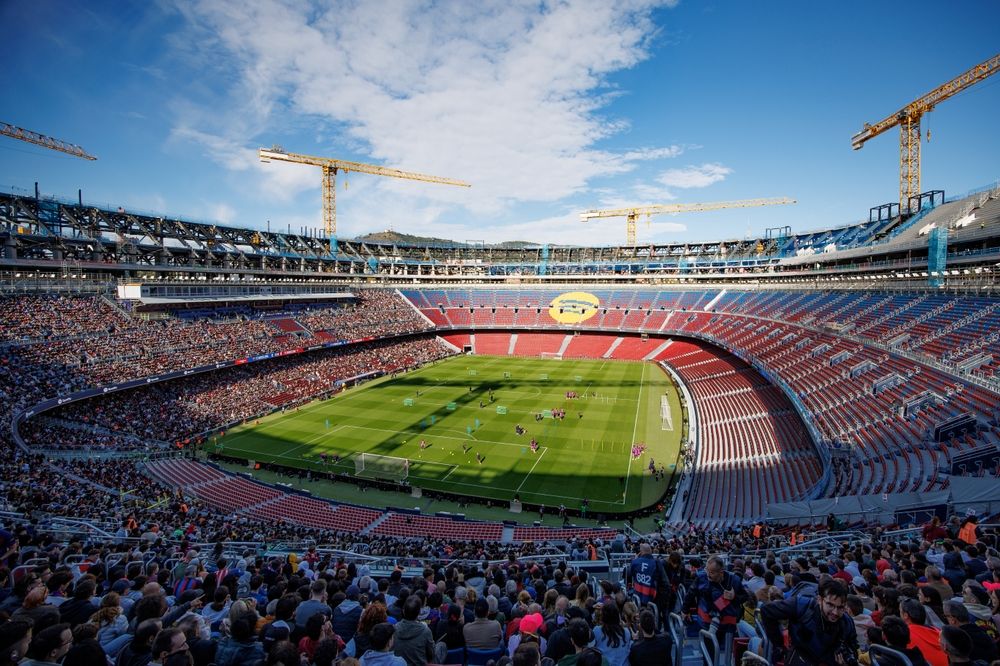
An important 3-0 victory for Barcelona over Oviedo, in a LaLiga match, was overshadowed by serious infrastructure problems at the recently renovated Camp Nou. On Sunday night, a strong hail storm hit the capital of Catalunha, exposing significant vulnerabilities in the stadium’s €1.5 billion modernization project. The water invaded several areas, including corridors, press areas and sections of the stands, creating scenes of waterfalls and floods that quickly circulated on the internet.
The incident generated immediate perplexity and criticism from fans and the European media, who questioned the quality of the work’s execution. Vídeos recorded by those present at the stadium showed water gushing from the ceiling and employees using buckets to try to contain the leaks, images that contrast strongly with the magnitude of the investment made. The situation occurred while the stadium operates at reduced capacity, precisely to allow work to continue in the upper sectors.
The management of the Catalan club, which was celebrating the good result on the field, has not yet issued a detailed official statement on the causes of the infiltrations or the measures that will be taken. The main concern is the safety and comfort of the public and professionals working at the venue, especially with the proximity of other important games on the season calendar.
There are still some adjustments missing on the node Camp Nou 😅😅😅pic.twitter.com/5S8RId3juE
—Tribuneru (@tribuneru_cule)January 25, 2026
An unexpected cascade in the billion-dollar project
What was supposed to be a night of sporting celebration turned into a stress test for the new Camp Nou structure. The storm intensified in the final part of the game, revealing that the sealing and water drainage system in several recently completed areas were insufficient. The water was not limited to isolated drips; At several points, real waterfalls formed, flooding passages and putting high-value transmission equipment at risk. Infiltration was more severe in the press boxes and access corridors, which had recently undergone modernization. Torcedores reported that water fell directly onto the seats, making it impossible to stay in some places, while hospitality areas, intended for guests and sponsors, were also partially flooded. The scene of professionals trying to protect their computers and cameras with makeshift tarps as water ran down the walls exposed a primary flaw in a cutting-edge project.
The international repercussion and the club’s image
The news about the floods in Camp Nou quickly crossed borders, with the main Europa media outlets highlighting what had happened. Jornais sports cars at Espanha, Portugal and The negative repercussion directly affects the image of a club that seeks to recover financially, largely through the revenue generated by the new stadium.
The project, called Espai Barça, is the board’s main commitment to ensuring the sustainability of Barcelona in the coming decades. Falhas like this can undermine the confidence of investors and sponsors, who associate their brands with excellence and modernity. Nas social networks, the episode became a source of irony on the part of rival fans, who compared the stadium to an Olympic swimming pool, expanding the reach of institutional embarrassment.
Technical details and possible causes of failure
Civil engineering experts point out that the failures may be related to the rushed execution of certain stages of the work to meet the partial reopening schedule. Inadequate installation of waterproofing membranes or undersized drainage systems are likely hypotheses.
Another factor to consider is the complexity of renovating an old structure while it is in use. The integration between the new and old parts of the stadium is a technical challenge that requires rigorous testing, which may not have been carried out satisfactorily.
The construction company responsible for the work must conduct an in-depth investigation to identify the exact origin of the leaks. The pressure is now on for fixes to be made quickly, before new weather events cause even greater damage.
The ambitious project Espai Barça in check
The renovation of Camp Nou is just the centerpiece of Espai Barça, a project that aims to transform the entire surrounding area into a modern entertainment and sports complex. The total investment exceeds 9 billion reais in the current conversion and was made possible through complex financing with groups of international investors.
This capital requires a return that directly depends on the full functionality of the stadium, including the sale of tickets to VIP areas, corporate boxes and the commercial exploitation of new spaces. The perception that the infrastructure is fragile can alienate this public with high purchasing power.
The incident forces the board to reevaluate quality control and work supervision. The delivery of a project of this magnitude does not allow for basic sealing failures, regardless of the logistical challenges.
The credibility of the entire project is now under scrutiny, and the club’s response in the coming days will be crucial in calming tempers and reaffirming its commitment to the promised excellence.
Schedule and challenges of partial reopening
The stadium has remained completely closed for games since May 2023, forcing the team to play at Estádio Olímpico of Montjuïc for an entire season. The partial reopening, which took place at the end of 2025, was a measure to bring the team back home, even with capacity limited to around 45 thousand people.
This hybrid operation, with games taking place simultaneously with works on the upper rings and on the roof, presents enormous security and logistical challenges. The rain incident demonstrates that coexistence between the construction site and the public requires even more rigorous planning to mitigate risks.
The lawn resists amid structural chaos
Interestingly, while the concrete and finishing areas failed, the playing field demonstrated high performance. The lawn’s drainage system worked perfectly, draining the large volume of water and allowing the match against Oviedo to take place without interruptions or puddles of water that could compromise the athletes’ safety.
This efficiency in the field contrasts with the problems in the areas dedicated to the public and the press, suggesting that different teams or priorities were applied in the different phases of the project. The quality of the pitch is an isolated positive point on a night that raised serious doubts about the overall execution of the renovation.
Next steps for stadium management
The administration of Barcelona has an obligation to provide immediate responses and solutions. The next home game will serve as a new test, and the expectation is that emergency corrective measures have already been implemented. The board should demand a detailed technical report from the construction consortium and possibly trigger contractual clauses relating to failures in execution. The safety of spectators and professionals is non-negotiable, and the reputation of one of the biggest clubs in the world is at stake.



