
Switch 2 will have graphics optimization and quick load mode, reveals Monster Hunter Wilds leak


Unofficial information about the highly anticipated Monster Hunter Wilds indicates that the game is being developed with specific optimizations for the successor to Nintendo Switch. A recent leak, circulating on specialized forums, details the implementation of a fast loading mode and graphical adjustments designed for the new Nintendo hardware, which has not yet been officially announced.
The details suggest that Capcom is actively working to adapt its graphics engine, RE Engine, to the capabilities of the new console. The goal would be to offer a visually rich experience with stable performance, bringing the version of Switch 2 closer to the editions planned for PlayStation 5, Xbox Series X|S and PC, which are confirmed for release in 2025.
The existence of a version for the next Nintendo console is still treated as speculation, as Capcom did not include the platform in its announcements. Contudo, the leak reinforces the possibility of the title being one of the main games in the launch window of the new device, replicating the success of the partnership seen with Monster Hunter Rise in the original Switch.
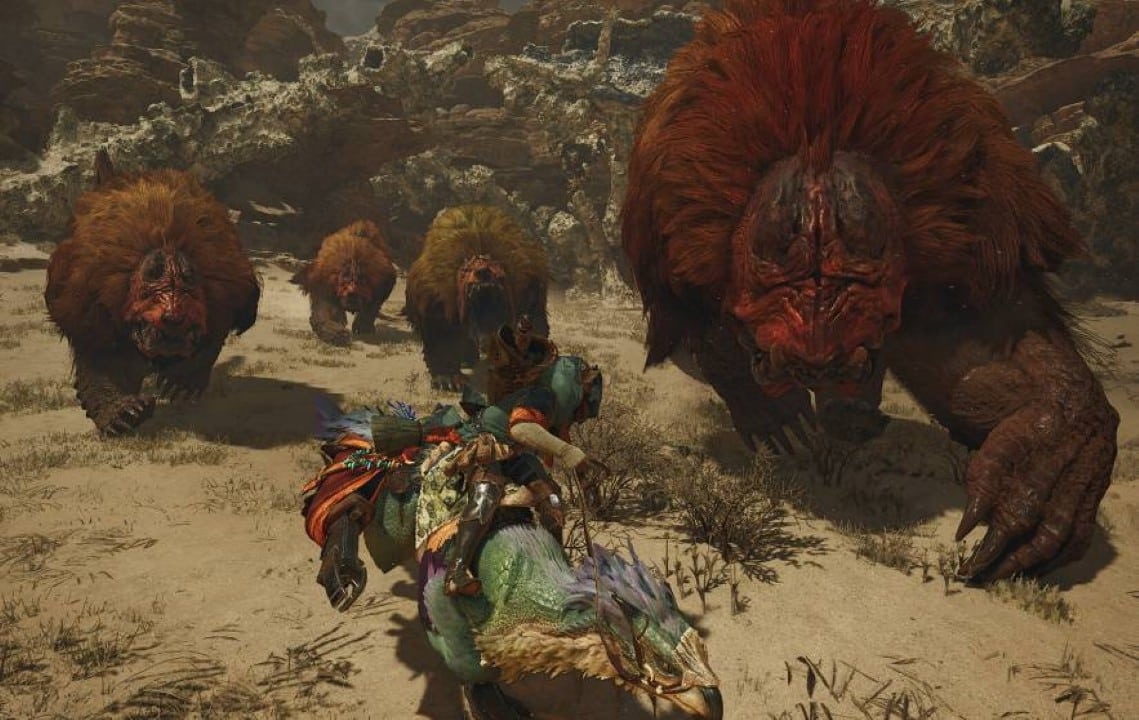
What to expect from console performance
According to the leaked information, optimization for Switch 2 focuses on two main fronts: memory management and graphics processing. Capcom would be using advanced rendering techniques to ensure that the game’s vast open world runs smoothly. One of these techniques is “Occlusion Culling”, a method that prevents the processing of objects that are not in the player’s field of vision, relieving the load on the processor and video card. Essa approach is crucial for maintaining a stable frame rate in complex, detail-rich environments.
Another central point of optimization is the Nível of Detalhe (LOD) system, which dynamically adjusts the quality of 3D models based on their distance from the player. Distant Objetos are rendered with fewer polygons and lower resolution textures, saving precious hardware resources without the loss of quality being noticeable during gameplay. The combination of these technologies allows RE Engine to adapt scalably, delivering stunning visuals on cutting-edge hardware while delivering solid performance on a hybrid console.
‘FastLoadMode’ and the gaming experience
One of the highlights of the leak is the mention of a “FastLoadMode” designed specifically for Switch 2. Monster Hunter Wilds promises a fully integrated world without abrupt transitions, where players can move through vast, interconnected ecosystems seamlessly. On traditional consoles, this is made possible through ultra-fast SSDs that load new data in real time. Para the console version of Nintendo, Capcom would be developing this fast loading mode to minimize or completely eliminate waiting screens, ensuring that the immersion is not broken. Technology would be essential for exploring the map and chasing monsters to occur fluidly, one of the pillars of the new direction the franchise is taking with this title. The technical solution to achieve this speed on a portable device represents a significant advancement and demonstrates the commitment to delivering a complete experience across all platforms.
The versatility of the RE Engine graphics engine
RE Engine, Capcom’s proprietary graphics engine, is known for its flexibility and efficiency. Ele was the basis for visually acclaimed games like the Resident Evil series and Dragon’s Dogma 2, demonstrating their ability to create detailed worlds and realistic characters.
Its scalable architecture has already proven to be effective on different platforms. The engine was able to run Monster Hunter Rise competently on the original Nintendo Switch, considerably less powerful hardware than its direct competitors.
This prior experience gives Capcom a significant technical advantage in adapting Monster Hunter Wilds to Switch 2. The development team already has the necessary knowledge to get the most out of the hardware, balancing visual quality with performance.
Credibility and official positioning
Although the information should be treated as a rumor, the source of the leak is considered reliable, with a history of success regarding announcements from the gaming industry. Detalhes such specific techniques rarely arise from unfounded speculation, which increases the credibility of the published data.
Officially, Capcom is silent on a release for the successor to Switch. Durante the initial announcement, the company confirmed the launch of Monster Hunter Wilds only for PlayStation 5, Xbox Series X|S and PC, scheduled for 2025.
Optimization details for new hardware
The leak also suggests using upscaling technologies such as AMD FidelityFX Super Resolution (FSR) or a similar solution. Essa technique allows the game to be rendered at a lower internal resolution and then rebuilt to a higher output resolution with the aid of intelligent algorithms.
Implementing FSR or equivalent technology is a common practice on modern consoles to achieve resolutions like 4K without sacrificing frame rate. In the case of the Switch 2, it would be an essential tool for delivering a clear image in both portable and TV mode.
Combining upscaling with a dynamic resolution system, which adjusts pixel count in real time during more intense scenes, would form the basis of the Capcom’s performance strategy.
The ultimate goal is clear: to offer a gaming experience that is visually appealing and, above all, responsive, while maintaining the agile gameplay that is the franchise’s trademark.
A strategic title for the new console
Having a game of the caliber of Monster Hunter Wilds available close to the release of Switch 2 would be a strategic move of great value for Nintendo. The franchise has a gigantic and loyal fan base on the company’s platforms, and the presence of the new title could significantly boost the console’s initial sales.
The expectations of the gaming community
On social media and forums, the news generated great enthusiasm among fans. The possibility of playing the next major evolution of Monster Hunter on a hybrid console, with graphical and performance improvements, is one of the most anticipated scenarios by the community.
Speculation now turns to how the game will take advantage of the new hardware’s unique features. Muitos hope that, in addition to technical improvements, Capcom will use the console’s unique features to create an even more immersive and innovative experience.



