
Thousands of cometary knots in the Helix Nebula are revealed in new image by James Webb
A new, ultra-high-resolution image captured by Telescópio Espacial James Webb offers an unprecedented view of Nebulosa and Hélice, one of the best-known and most studied celestial objects. Localizada About 650 light-years away in the constellation Aquário, the nebula is the remnant of an Sol-like star in its final stages of life, serving as a glimpse of what awaits our own star system in billions of years.
Recent observations, focused on a specific portion of the nebula, have brought to light details that were previously obscured by layers of cosmic dust. Webb’s ability to operate in the infrared spectrum allowed scientists to penetrate these clouds and clearly map the distribution of gas and dust expelled by the dying star at the center of the structure.
The main highlight of the image is the revelation of thousands of “cometary knots”, dense gas structures that resist strong stellar winds and intense radiation. Essas formations, which look like comets with bright heads and long tails, provide crucial clues about the complex dynamics that occur within planetary nebulae and how matter is recycled in the universe.
On the same topic: James Webb Observatory reveals unprecedented details of the Helix Nebula and end of stellar cycle
The infrared technology behind the discovery
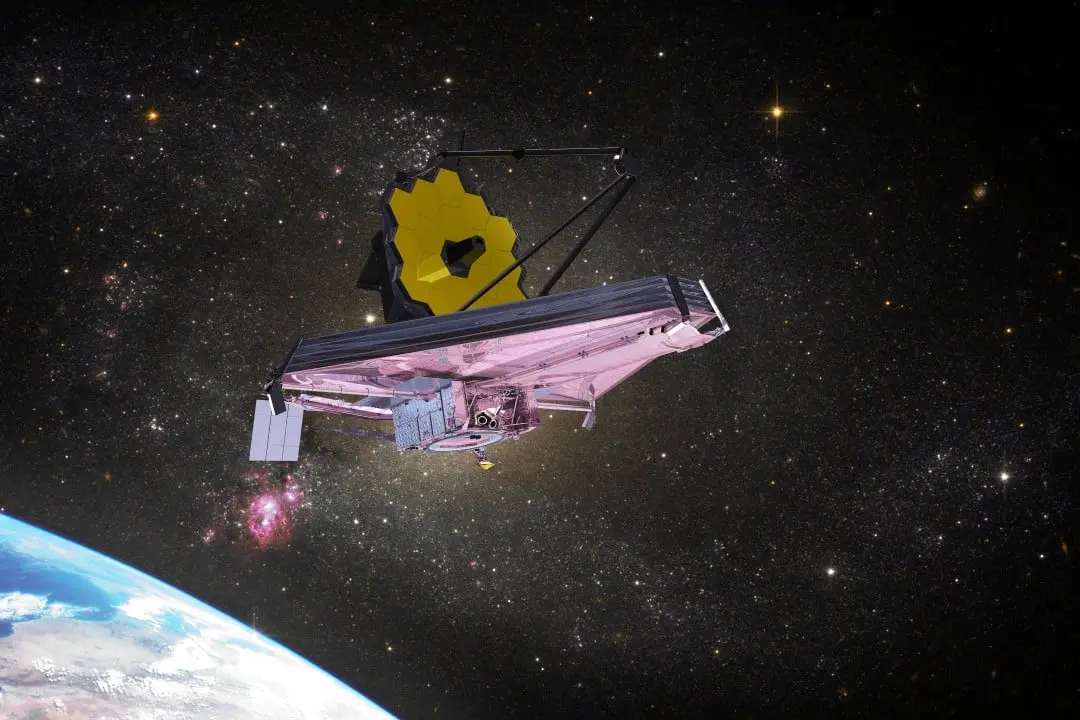
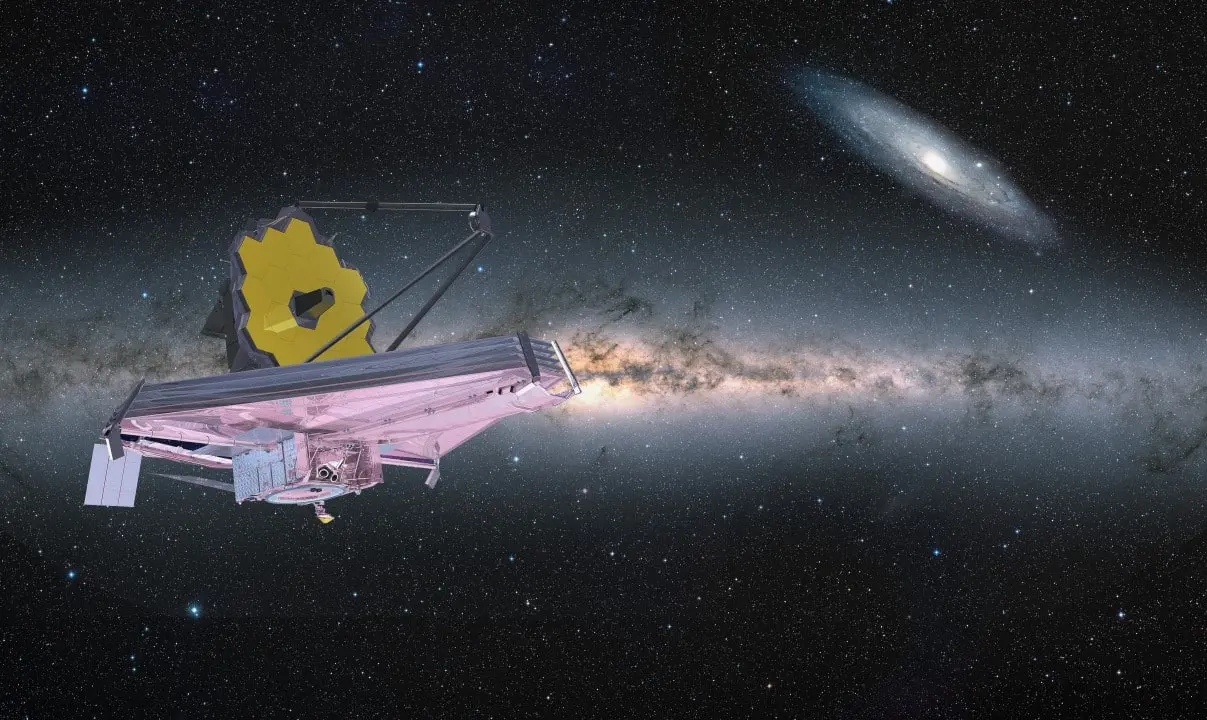
The superiority of Telescópio Espacial James Webb over previous observatories such as Hubble lies in its large 6.5-meter primary mirror and its instruments optimized for infrared light. The Essa capability is fundamental for studying objects like Nebulosa and Hélice, as it allows us to observe through dust clouds that are opaque to visible light, revealing the internal structures and processes of star and planetary formation.
The NIRCam camera (Near-Infrared Camera) was the instrument used to capture the new images, using specific filters that isolate the emission of different gas molecules and heated dust particles. The result is a detailed map that shows the abrupt transitions and complex patterns shaped by the interaction between the slowly ejected material and the high-speed stellar winds emitted by the central star.
What are cometary knots
Cometary knots are one of the most intriguing phenomena observed in Nebulosa and Hélice. Estima It is believed that there are more than 40 thousand of these structures spread throughout the nebula. Cada node is massive, with dimensions that can surpass the size of our Sistema Solar, extending beyond the orbit of Plutão.
These formations consist of clumps of dense molecular gas that can survive the intense ultraviolet radiation emitted by the white dwarf star at the center. The head of each node, facing the star, is ionized by this radiation, which makes it shine brightly. The “tail”, in turn, is formed by the material that is protected by the dense head and extends in the opposite direction, pushed by the stellar winds.
Studying these knots in detail helps astronomers understand how matter clumps together and resists scattering in turbulent cosmic environments. The proximity of Hélice allows analysis with a resolution not possible in more distant planetary nebulae, making it a perfect natural laboratory for testing theoretical models of stellar evolution.
The life cycle of a star like Sol
Nebulosa of Hélice represents a relatively short but spectacular phase in the life of an intermediate-mass star like our Sol. For billions of years, these stars maintain a stable equilibrium, fusing hydrogen into helium in their cores. Quando hydrogen runs out, this balance is disrupted, and the star begins to undergo drastic transformations.
Read also: Eye of God reveals unprecedented details of its internal structures in an image by James Webb
Initially, it expands to become a red giant, swallowing nearby planets. In the Nessa phase, the star begins to eject its outer layers into space through stellar winds. Esse expelled material forms an expanding envelope of gas and dust around the remaining stellar core.
The core, now exposed and extremely hot, emits strong ultraviolet radiation that ionizes the surrounding gas, making it glow brightly and creating the beautiful structure we call a planetary nebula. In the case of Hélice, it is estimated that this process began around 15 to 20 thousand years ago, with the structure visible today being approximately 10 to 12 thousand years old.
Eventually, the stellar core will cool and become a white dwarf, a dense, compact object that no longer generates energy through nuclear fusion. The nebula, in turn, will continue to expand and slowly dissipate into the interstellar medium over tens of thousands of years, enriching the galaxy with heavy elements that could be incorporated into new generations of stars and planets.
More on this story: James Webb Telescope captures complex structures in the God’s Eye Nebula with unprecedented precision
Comparing the views of Webb and Hubble
Nebulosa’s iconic images of Hélice taken by Telescópio Espacial Hubble over the years, captured in visible light, showed its characteristic circular shape, which earned it the nickname “Eye of Deus” or “Eye of Sauron”. Essas images highlighted the smooth gas rings and central disk, but many of the finer details remained hidden by dust. The view of Hubble revealed the grandeur of the outer structure and the overall distribution of ionized gas, providing the visual context that made the nebula famous.
James Webb, with its infrared vision, perfectly complements the Hubble observations. Ele does not replace, but deepens our understanding by revealing what lies behind the veil of dust. The new images highlight the complex filamentation and, most importantly, the cometary knots with a clarity never seen before. Combining data from both telescopes allows scientists to create a more complete and accurate three-dimensional model of the nebula, mapping the dynamics, temperature and chemical composition of the gas at different layers and depths.
The importance of Nebulosa and Hélice for science
Nebulosa of Hélice is not just an object of stunning beauty; it is a fundamental cosmic laboratory for astrophysics. Sua’s proximity to Terra makes it an ideal target for studying the physical processes that govern the final phase of stellar evolution. The detailed observations, now enhanced by James Webb, allow scientists to test and refine their models for how stars lose mass and how ejected material interacts with the interstellar medium. Além Furthermore, studying the chemical composition of gas and dust in the nebula reveals the presence of complex organic molecules, including polycyclic aromatic hydrocarbons, which are considered building blocks for life. Compreender How and where these molecules form and survive in hostile environments like a planetary nebula is crucial to astrobiology and the search for life elsewhere in the universe. Hélice, therefore, helps us connect the life cycle of stars with the origin of chemical elements essential for the formation of planets and, potentially, life itself.
Understand the case: Space telescopes map unprecedented structure of the Cat’s Eye Nebula with high precision
The future dissipation of the cosmic structure
Despite its majestic appearance, Nebulosa of Hélice is an ephemeral structure on cosmic timescales. In approximately 50,000 years, the gas that composes it will have expanded so much that it will become too rarefied to be visible, mixing completely with the interstellar medium and disappearing from view. The central star, already a white dwarf, will continue to cool for billions of years until it becomes a cool, dark black dwarf.
Details about NGC 7293
Officially cataloged as NGC 7293, Nebulosa of Hélice is one of the brightest planetary nebulae closest to our planet. Sua large apparent area in the sky, equivalent to about half the diameter of the full Lua, and its relative brightness make it a popular target for amateur astronomers equipped with modest telescopes, especially in places with little light pollution.
Located in the plane of Via Láctea, in a region rich in gas and stars, the nebula has been the object of study for decades through terrestrial and space observatories. Análises Previous spectroscopic tests had already mapped its composition, confirming the presence of hydrogen and helium, as well as heavier elements such as oxygen, carbon and nitrogen, all forged inside the progenitor star throughout its life.
More news in News (EN)
See more → Samsung releases new system update with new features for Galaxy Watch 4 users
 Digital retail reduces the value of the Galaxy S25 5G smartphone with bank bonuses and device exchange
 Amazon’s wireless CarPlay adapter has a 50% discount and high approval ratings from drivers
 Zach Cregger’s new Resident Evil ignores games and focuses on an unprecedented story with new characters
 Rumor suggests that Nintendo is preparing a special edition of the Switch 2 with a remake of Ocarina of Time
 Apple accelerates production of the iPhone 17e and develops new Air model with dual camera system
 Epic Games platform releases twelve high-budget games at no permanent cost for PC users
 PlayStation 5 Pro price drop accelerates digital retail sales and eliminates global stocks
 New Galaxy Watch 9 firmware appears on server and confirms progress in software development
 Apple’s commemorative project tests cell phone with 1.1 millimeter edge and curved screen for 2027
 New Apple system update optimizes urgent task management for iPhone users
 Leak details hardware of the new portable PlayStation with superior graphics to the Xbox Series S
More news on Mix Vale
- 1Colby Minifie confirms Ashley Barrett’s powers in The Boys season five
- 2Napoli x Milan in Serie A with confirmed lineups and where to watch live
- 3New battery test puts Galaxy S26 Ultra ahead of iPhone 17 Pro Max in global ranking
- 4Research reveals that parents are unaware of how their children use artificial intelligence
- 5Oppo officially launches the Find X9 Ultra worldwide with Hasselblad lenses and robust battery
- 6Tim Cook reveals new iPhone and iPod prototypes in celebration of Apple’s fiftieth anniversary
- 7New edition of foldable smartphone brings gold finish to Winter Games competitors
- 8Android system receives native Gemini Nano 4 integration for offline processing on smartphones
- 9Samsung updates QuickStar module and expands visual control of the panel in the One UI 8.5 interface
- 10Leak reveals Lords of the Fallen and Sword Art Online in April’s PS Plus Essential catalog