
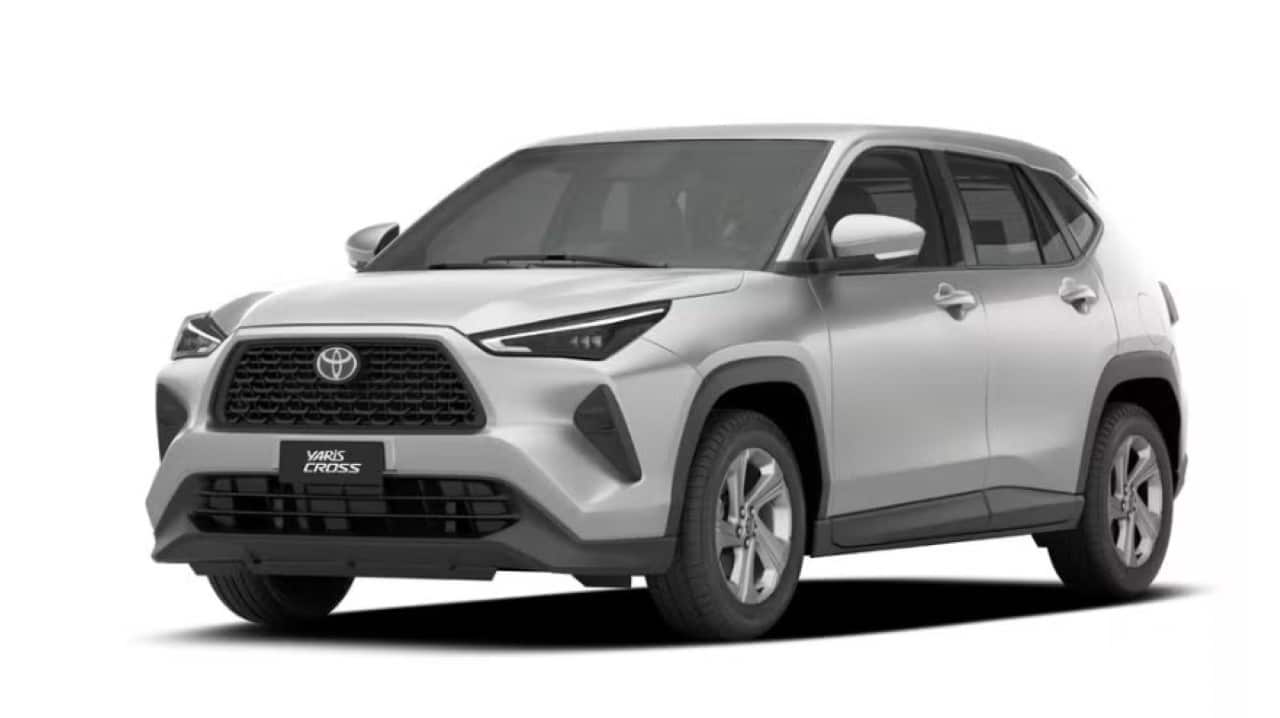
Toyota launches Yaris Cross XR for R$ 149 thousand to compete in the market with Honda WR-V and Nissan Kait


The compact SUV market in the Brasil, one of the hottest and most competitive in the automotive sector, has gained a new strong competitor. The Toyota officially announced the arrival of the XR version of the Yaris Cross, positioned as the entry-level model in the line, with an aggressive price to attract consumers looking for a robust and economical vehicle for daily use.
With a list price set at R$149,990, the Yaris Cross XR goes into direct confrontation with already established Japanese rivals. The automaker’s strategy aims to capture a market share currently contested mainly by the Honda WR-V and the Nissan Kait, both with versions in an extremely similar price range, intensifying the battle for consumer preference.
The new configuration will be available in dealerships from April, with an initial focus on direct sales, which includes the modality for Pessoas with Deficiência (PCD). The decision to equip the entry-level version with the 1.5 flex aspirated engine, instead of the hybrid option, was fundamental to achieving a more affordable and competitive price.
Prices and market positioning
Setting the price of the Toyota Yaris Cross XR at R$149,990 was not random, but rather a strategic move to position itself exactly in the center of the dispute. Este value places the Toyota SUV in a direct comparison situation with its main opponents. The Honda WR-V, for example, is offered in two versions, the EX for R$147,100 and the EXL for R$152,100, making the Yaris fit perfectly between them. The Já or the Nissan Kait, in its Advance Plus version, has a price of R$ 149,890, practically identical to the launch of the Toyota, which makes the consumer’s choice even more based on technical and equipment details.
This parity of values demonstrates how fierce the competition is in the compact SUV segment. Manufacturers adjust their tables meticulously to attract an audience that values not only design and internal space, but also technology, fuel efficiency and, above all, cost-benefit ratio. The R$150,000 range has become a battlefield where every dollar and every serial item can be decisive in closing a sale. The arrival of the Yaris Cross XR adds yet another high-quality option, forcing competitors to move to maintain their relevance and attractiveness to consumers.
Engine and performance
Under the hood, the Yaris Cross XR is equipped with a 1.5 aspirated flex engine, capable of generating up to 122 horsepower and 15.3 kgfm of torque. Este engine works together with a CVT automatic transmission that simulates seven gears, a combination that prioritizes comfort and smooth shifting, ideal for urban traffic.
The Honda WR-V, in turn, uses a 1.5 aspirated flex engine that delivers a little more power and torque, with 126 horsepower and 18.5 kgfm. Sua transmission is also a CVT with seven-speed simulation, providing slightly more agile responses in acceleration situations.
The Nissan Kait is powered by a 1.6 aspirated flex engine, which produces up to 113 horsepower and 15.3 kgfm of torque. This model’s CVT transmission simulates six gears, ensuring smooth operation, although with lower power figures than its direct rivals.
The three vehicles demonstrate a clear preference for a balance between performance suitable for everyday use and fuel economy. Configurations with naturally aspirated thermal engines cater to a driver profile that seeks simpler maintenance and a predictable cost of ownership, without giving up safe and comfortable driving.
Fuel consumption
According to official data from the Inmetro, the Toyota Yaris Cross XR presents very competitive consumption figures. Utilizando gasoline, the model records 12.6 km/l in the urban cycle and 14.3 km/l on the highway cycle. Quando fueled with ethanol, the averages are 8.8 km/l in the city and 10.2 km/l on the highway.
The Honda WR-V also shows good efficiency, with averages of 12 km/l in the city and 12.8 km/l on the highway, with gasoline. With ethanol in the tank, the SUV achieves 8.2 km/l on urban routes and 8.9 km/l on highways, remaining close to its competitor in mixed use conditions.
The Nissan Kait Advance Plus, in turn, records 11.3 km/l in the city and 13.7 km/l on the highway with gasoline. With ethanol, the numbers are 7.8 km/l and 9.4 km/l, respectively, falling slightly behind rivals, especially in urban consumption.
Dimensions and internal space
When it comes to space, the Honda WR-V stands out. At 4.32 meters long, 1.79 meters wide and with a wheelbase of 2.65 meters, it offers the largest internal space in the comparison. Seu trunk, with a capacity of 458 liters, is an important differentiator for families.
The Toyota Yaris Cross XR has slightly smaller dimensions, measuring 4.31 meters long, 1.77 meters wide and with a wheelbase of 2.62 meters. Its trunk capacity is 400 liters, a volume suitable for everyday use and short trips.
External equipment and finishing
In terms of design and external equipment, the three SUVs present a modern package in line with the expectations of the segment. Todos os modelos comparados vêm de fábrica com faróis e lanternas em LED, tecnologia que garante maior eficiência na iluminação e confere um visual mais sofisticado. 17-inch alloy wheels are also standard on all three vehicles, complementing the robust appearance. Detalhes door handles and mirrors painted in body color are present on the Yaris Cross XR and WR-V, while the Nissan Kait adopts a darkened finish on the mirrors, seeking a more sporty appeal. Internamente, the finish varies, with the Yaris Cross XR and Kait Advance Plus prioritizing high-quality fabric coverings for the seats, while superior versions of competitors, such as the WR-V EXL, offer the option of leather, a material that adds more refinement to the cabin. Esses details, although they may seem small, are important to build the visual identity of each model and meet the different tastes and priorities of consumers who seek durability and style.
Internal technology and connectivity
All three SUVs come equipped as standard with multimedia centers that offer wireless connectivity for Android Auto and Apple CarPlay, an essential feature for modern drivers. The Yaris Cross XR and WR-V have a 10-inch screen, while the Kait uses a 9-inch display. Air conditioning is standard in all, but only the Yaris Cross XR maintains analog controls, while the others rely on digital systems. One point of attention is that the Nissan Kait does not offer air vents for the rear seat in the Advance Plus version.
Active and passive safety features
Safety is a strong point in the trio, with all models offering six airbags, as well as stability and traction controls as standard. The Yaris Cross XR also includes hill start assistant and ABS brakes with electronic brake distribution.
The Honda WR-V is distinguished by a more robust active safety package, which includes adaptive cruise control, a collision mitigation braking system and lane keeping assistance. Esses advanced features significantly increase protection on road trips.
The Nissan Kait Advance Plus is not left behind and offers forward collision warning with intelligent braking assistant, which detects pedestrians and cyclists. The package is complemented by tire pressure monitoring, ensuring greater peace of mind for the driver.



