
Young talent Ben Shelton eliminates Casper Ruud and advances to the quarterfinals of the Australian Open in Melbourne

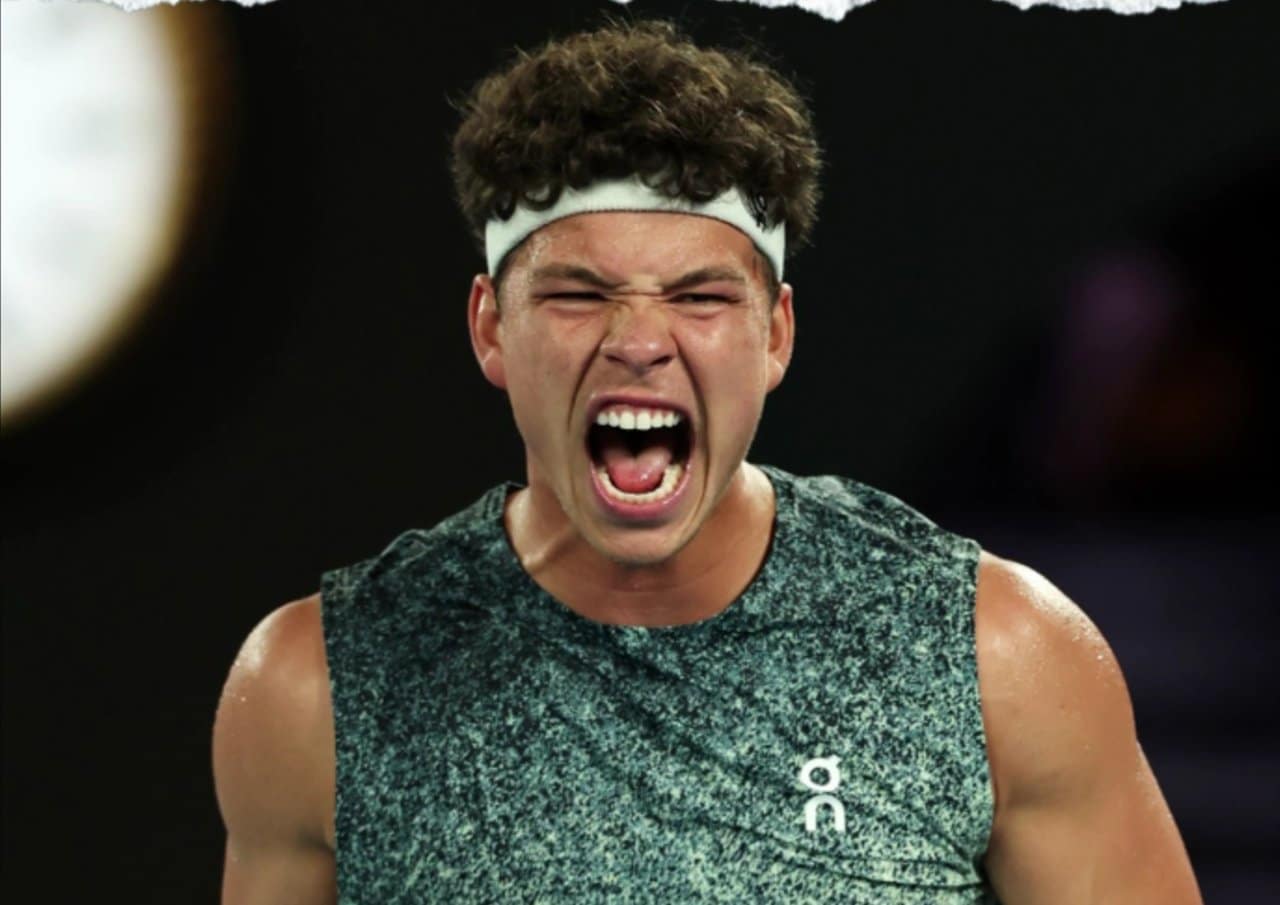
The world tennis scene witnessed another chapter in the rise of Ben Shelton, who secured his place in the quarterfinals of Australian Open. The young American overcame the experienced Norwegian Casper Ruud in a four-set battle at the iconic Rod Laver Arena. The victory consolidates Shelton as one of the main forces of the new generation and puts him in a prominent position in the first Grand Slam of the season.
The match was a clash of styles, pitting the aggression and power of Shelton against the consistency and backcourt play of Ruud. Após losing the first set, the American demonstrated remarkable mental and physical resilience to reverse the score, closing the game with partials of 3/6, 6/4, 6/4 and 6/4. Shelton’s ability to raise his level in crucial moments was decisive for the final result.
With this significant victory over a player from the world’s top 15, Ben Shelton not only advances in the competition, but also sends a clear message to its opponents. Sua performance in
Big Ben LOVES Melbourne 🇦🇺
The American is through to his third AO quarterfinal after outlasting Casper Ruud in four sets@wwos•@espn•@tntsports•@wowowtennis•#AO26 pic.twitter.com/7CcJuPbUUX
— #AusOpen (@AustralianOpen)January 26, 2026
Absolute dominance in service and power in strikes
Ben Shelton’s main tool for deconstructing Casper Ruud’s game was, without a doubt, his service. The American fired a total of 14 aces and maintained an impressive 83% of points won when he hit his first serve. Essa statistics were essential for him to dictate the pace of most of his service games, preventing Ruud from finding gaps to apply his counterattack strategy and long ball exchanges, which normally favor the Norwegian.
In addition to the effectiveness on the serve, the power of Shelton’s groundstrokes was a factor in constant pressure on Ruud. The American’s forehand worked with precision, opening angles and forcing his opponent to defend far behind the baseline. Essa tactic not only generated direct winners, but also created opportunities for Shelton to get to the net and finish the points in a shorter way, preserving his energy throughout the extensive and exhausting confrontation under Melbourne’s conditions.
Detailed statistics reflect tactical balance
An in-depth analysis of the match numbers reveals how Shelton’s efficiency in moments of pressure was the big difference. Ele converted 3 of the 11 service break opportunities he created, an advantage that proved to be surgical in the sets he won. On the other hand, Ruud had only 3 break chances in the entire game and managed to convert just one, precisely in the first set, which highlights the solidity of Shelton when serving under pressure.
The volume of the game also leaned towards the American, who won a total of 120 points against 101 for the Norwegian. Essa difference of almost 20 points reflects the control that Shelton exercised in most of the exchanges, especially from the second partial onwards. Casper Ruud, despite maintaining a good success rate of 70% on the first serve, suffered from the aggressiveness of Shelton’s returns, which prevented him from building his points with the usual tranquility.
Another fact that illustrates the American’s superiority was his performance in the second service. Enquanto Shelton managed to win a reasonable percentage of points with his second serve, Ruud was constantly attacked, committing 6 double faults at important moments. Essa vulnerability allowed Shelton to maintain constant pressure, even when the Norwegian managed to get the first serve onto the court.
Efficiency in service interruptions and physical consistency
The turning point of the match occurred in the third set, when Ben Shelton’s physical resistance began to shine. Mesmo After more than two hours of intense play, the American maintained the speed of his strikes and the explosiveness in his movement, while Ruud showed signs of wear. Shelton’s ability to sustain a high level of aggression was crucial in breaking the Norwegian’s defense and taking definitive control of the match, undermining the opponent’s confidence.
The decisive break in the fourth set came as a direct result of this continued pressure. A string of unforced errors from Ruud gave Shelton the edge he needed to serve for the win. With calm and confidence, the American did not hesitate, confirmed his serve with authority and sealed his qualification for the next phase, demonstrating impressive maturity for an athlete of his age on a stage as important as the Rod Laver Arena.
Overcoming critical moments and emotional control
Shelton’s journey in this match was not only a demonstration of strength, but also of great emotional control. Mesmo after an adverse start, losing the first set, he was unfazed. The American stuck to his game plan, trusting his main weapons and adjusting his tactics patiently. In several service games, he faced 30-30 or 40-40 situations, but responded with powerful serves and aggressive plays, neutralizing threats and frustrating Ruud’s attempts to react.
This mental resilience is a characteristic that has marked Shelton’s career so far. Sua ability to play his best tennis in the most important points sets him apart from many other young talents on the circuit. The victory over Ruud, a player known for his mental solidity and experience in major tournaments, serves as further proof that the American is prepared for the biggest challenges the sport can offer. The calm with which he managed the lead in the final set was that of a veteran.
High-yield technical performance at Rod Laver Arena
Despite the defeat, Casper Ruud also showed high quality tennis, especially in the first set, where he managed to neutralize Shelton’s serve and impose his pace. The Norwegian demonstrated his well-known defensive ability and variation of strikes, using slices and balls with more spin to take Shelton out of his comfort zone. However, from the second set onwards, he found it difficult to contain the speed and depth of his opponent’s balls, being forced into a more reactive rather than proactive game.
The match became a tactical duel where Shelton’s aggression prevailed over Ruud’s consistency. The American was more efficient in exploiting the few opportunities that arose, while the Norwegian was unable to capitalize on the moments when he had the chance to pressure Shelton’s service. The match was a clear example of how modern tennis demands not only technique and consistency, but also power and the ability to score points quickly, attributes that Shelton displayed masterfully.
Preparation for the quarterfinals
With classification assured, Ben Shelton now turns his attention to physical recovery and preparation for the quarter-final challenge. The victory over an opponent of the caliber of Casper Ruud certainly injects an extra dose of confidence into the American, who continues to surprise and establish himself as a name to watch closely in the rest of the Australian Open. Sua campaign so far raises expectations about their potential to reach the final stages of the tournament.



