
Graphics optimization and fast loading mode for Switch 2 appear in Monster Hunter Wilds leak


New unofficial information about the highly anticipated Nintendo Switch 2 has emerged from an alleged leak of technical data related to the development of Monster Hunter Wilds, Capcom’s next major release. The details, circulating on specialized forums, indicate that the new Nintendo console will feature a fast loading mode and advanced graphics optimizations, designed to handle large-scale open world games.
The leak suggests that Capcom is working hard to adapt its graphics engine, RE Engine, to the capabilities of Switch’s successor hardware. Essa movement reinforces expectations that Monster Hunter Wilds, already confirmed for other platforms in 2025, could be one of the main launch titles or the initial window of the new console, taking advantage of the franchise’s history of success on Nintendo portables.
The main revelation points to the implementation of a system called “FastLoadMode”, which aims to eliminate or drastically reduce loading times. Essa technology would be crucial to the fluid experience that Monster Hunter Wilds promises, with a continuous map and no abrupt transitions between areas, something that requires agile data management, similar to what is seen on last generation consoles.
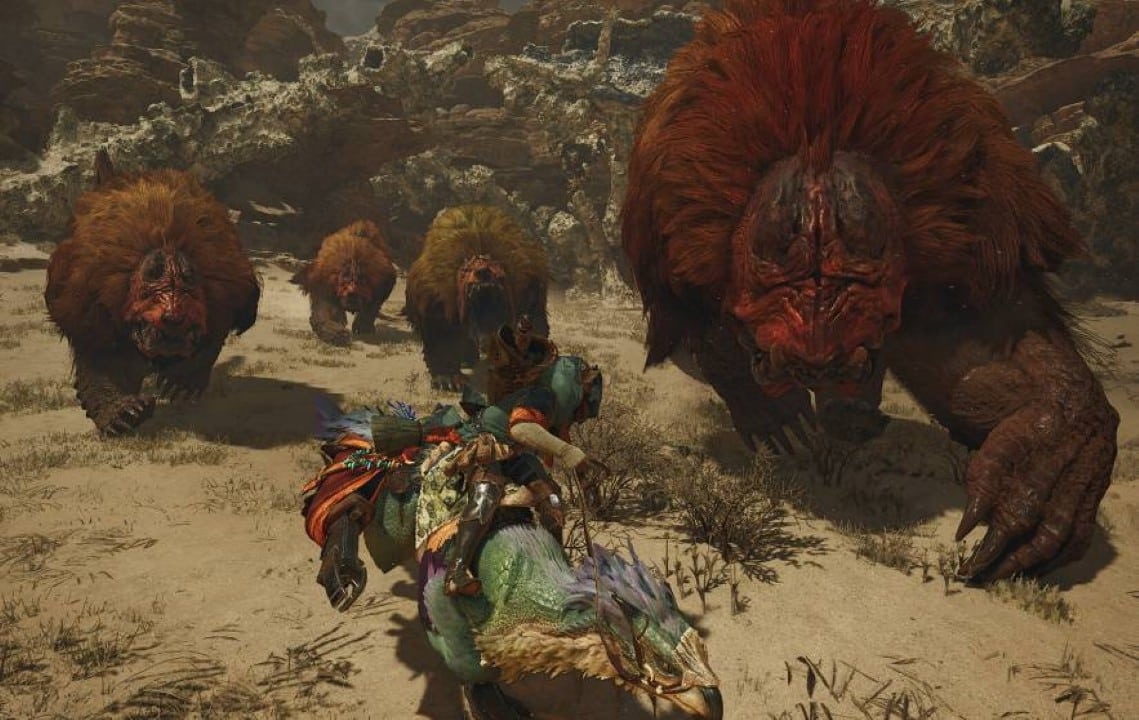
Graphics optimization details in RE Engine
The leaked information details that the version of RE Engine for Switch 2 will focus on two main fronts: memory management and rendering optimization. Para that, Capcom would be implementing sophisticated techniques to ensure that the game runs stably without compromising visual quality, even on potentially more modest hardware than the PlayStation 5 and the Xbox Series X|S.
One of the techniques mentioned is “Occlusion Culling”, a method that prevents the processing of objects that are not in the player’s field of vision. Isso relieves the load on the graphics processor (GPU), allowing resources to be directed to elements that are visible on the screen, resulting in more consistent performance.
Another key point is the use of dynamic Nível of Detalhe (LOD) systems. Essa technology automatically adjusts the complexity of 3D models based on distance from the player. Distant Objetos are rendered with fewer polygons and lower resolution textures, while those closer receive maximum detail, optimizing the use of resources without the player noticing a drop in visual quality.
These optimizations are essential for a game with the ambition of Monster Hunter Wilds to run satisfactorily on a hybrid console. The combination of these technologies allows you to create vast, detailed worlds while maintaining a stable frames per second rate in both handheld and TV mode.
What is ‘FastLoadMode’
The “FastLoadMode” feature, according to the leak, is Nintendo and Capcom’s response to the challenge of creating open and continuous worlds on a portable console. The technology was designed to manage asset streaming much more efficiently, loading new areas of the map in the background as the player moves, eliminating the need for traditional loading screens that fragment exploration. In games like Monster Hunter Wilds, where immersion in a living ecosystem is essential, the absence of interruptions is a significant differentiator. The implementation of a fast loading mode suggests that the Switch 2 may utilize a high-speed solid-state storage (SSD) solution, aligning with the architecture of the PlayStation 5 and Xbox Series X|S, which popularized this approach to drastically reduce wait times and enable new gameplay mechanics based on instant transitions. Essa feature would be a monumental technological leap over the original Switch, allowing developers to create more complex and immersive experiences without the limitations imposed by slower reading speeds.
The versatility of the Capcom graphics engine
RE Engine, Capcom’s proprietary graphics engine, is widely recognized for its flexibility and scalability. Desde its debut, it has been used in a variety of acclaimed titles, such as the Resident Evil series, Devil May Cry 5 and the recent Dragon’s Dogma 2, demonstrating its ability to adapt to different genres and platforms.
This versatility is a crucial factor for development on new hardware like the Switch 2. The engine has already proven to be capable of operating on systems with different power levels, from high-end PCs to last generation consoles, which facilitates the work of portability and optimization for the new Nintendo machine.
By adapting RE Engine to Switch 2, Capcom not only sets the stage for Monster Hunter Wilds, but also for future projects. The company can leverage the same technological base to bring other of its great games to the platform, ensuring a constant flow of high-quality releases.
Upscaling technologies in focus
The leak also mentions the use of upscaling technologies such as AMD’s FidelityFX Super Resolution (FSR) or similar solutions. Essas techniques are fundamental in modern consoles to achieve a balance between image quality and performance. Elas allow the game to be rendered internally at a lower resolution and then use artificial intelligence algorithms to reconstruct the image at a higher resolution, such as 1080p or even 4K.
For a hybrid console like the Switch 2, upscaling is an indispensable tool. Ele will allow games to present a sharp, detailed image in TV mode, without requiring processing power that would compromise portability or battery life. The effective implementation of this technology could be the difference for the new console to offer a visual experience competitive with current platforms.
Implications for the console launch
Having a title of Monster Hunter Wilds’s caliber available close to the release of Switch 2 would be an extremely valuable market strategy for Nintendo. The franchise has a gigantic and loyal fan base, especially on the company’s consoles, and its initial presence could significantly boost sales of the new hardware.
The technical collaboration between Nintendo and Capcom, suggested by this leak, indicates careful planning to ensure that one of the most anticipated games of the generation reaches the platform with the best possible performance. Isso signals the importance that large third-party studio partners will have in the life cycle of the successor to Switch.
The official positioning of Capcom
It is important to emphasize that, until now, the information should be treated as rumors. Oficialmente, Capcom confirmed the release of Monster Hunter Wilds for 2025, but only for PlayStation 5, Xbox Series X|S and PC. The company has not made any announcement regarding a release for the Nintendo Switch 2.
Nintendo, in turn, remains silent about its next console. The company traditionally adopts a secrecy stance regarding its new hardware, revealing details only when it considers the time to be opportune, which increases speculation and expectations among players.
Expectations from the gaming community
Despite the lack of official confirmation, the possibility of playing Monster Hunter Wilds on a new Nintendo portable console has generated great excitement in the community. Players eagerly await an announcement that confirms not only the game, but also the technical capabilities that will place Switch 2 as a relevant competitor in the gaming market.



