
NASA reveals new data on dark matter and expands understanding of the evolution of galaxies


The American space agency, Nasa, recently announced significant advances in understanding dark matter, a component that represents around 85% of the total mass of the universe. Through detailed observations and the use of cutting-edge technologies, scientists were able to map regions where this invisible substance exerts a predominant gravitational influence. The new data helps the scientific community understand how galaxies stay together and how the large-scale structure of the cosmos has developed over billions of years.
Dark matter does not emit, absorb or reflect light, which makes its direct detection impossible with currently available traditional optical instruments. Para overcome this barrier, Nasa researchers use the technique of gravitational lensing, observing how light from distant galaxies is distorted by the invisible mass in the path. Esse phenomenon allows the density and location of the substance to be calculated, filling fundamental gaps in current cosmological models.
- Dark matter acts as an invisible “scaffold” for the formation of stars and planets.
- Indirect detection occurs by analyzing the rotational movement of spiral galaxies.
- New computer simulations suggest that the substance may have more complex properties than anticipated.
- The current study focuses on the interaction between dark matter and dark energy in the expansion of the universe.
Technological advances in observing the deep cosmos
The instruments used in this specific mission allow for unprecedented precision in capturing high-resolution images of deep space. By analyzing fluctuations in the light reaching the sensors, astrophysicists were able to isolate the effect of gravity exerted by filaments of unknown matter. Esses filaments connect clusters of galaxies, forming what experts call a cosmic web, essential for the stability of the observable universe.
Collaboration between different research centers at Nasa made it possible to validate theories that previously lacked direct observational evidence. Processing this data requires immense computational capacity, capable of filtering out stellar noise and focusing only on subtle gravitational distortions. Esse coordinated work reinforces the agency’s position as a leader in exploring the fundamental mysteries that govern modern physics and the fate of the solar system.
Precision mapping and the gravitational lensing technique
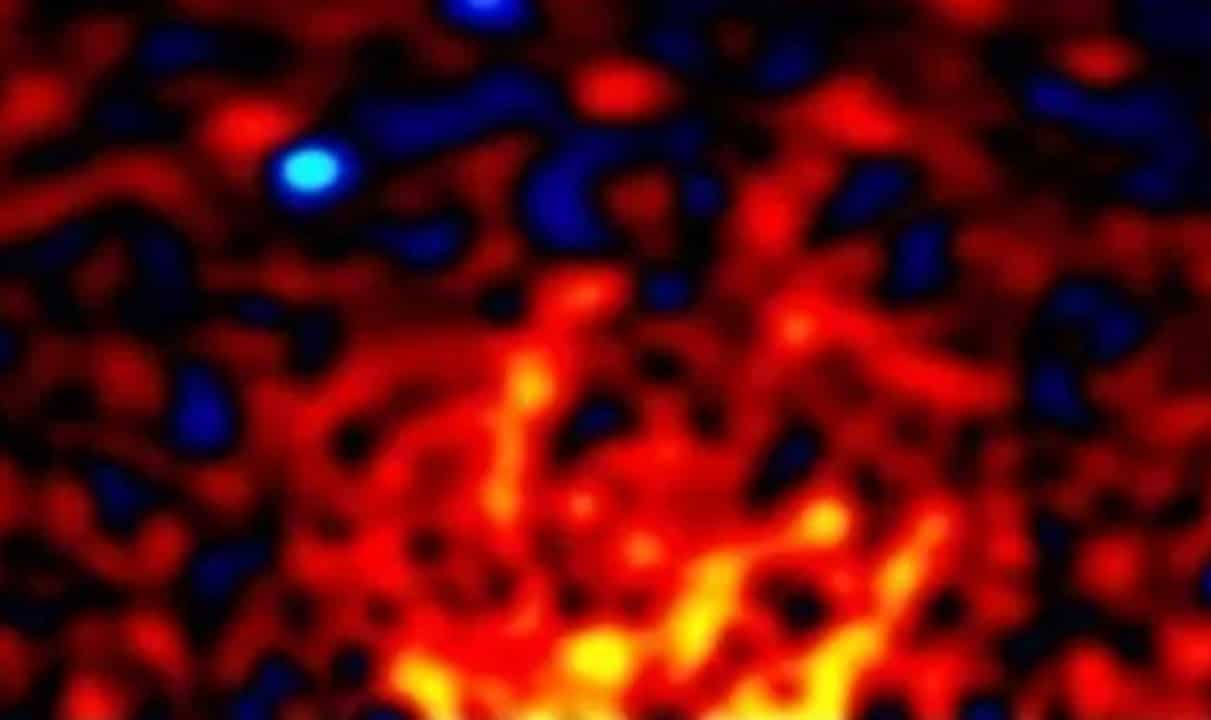
The gravitational lensing technique works in a way analogous to a cosmic magnifying glass, where large masses curve the fabric of space-time around them. Quando light passes through these distorted regions, it changes direction, revealing the presence of mass that cannot be seen with the naked eye or radio telescopes. With the refinement of this technique, Nasa was able to identify substructures within dark matter halos that surround smaller, isolated galaxies.
These observations are crucial for testing the Einstein theory of general relativity on extremely vast astronomical scales. If the results continue to confirm current models, science will have a solid basis for predicting how the universe will continue to expand in the coming millennia. The precision of the new maps generated even allows us to identify areas where the concentration of dark matter is lower than expected, challenging some previous hypotheses about cosmic uniformity.
Discovering details about the temperature and speed of dark matter particles is also on the radar for the next phases of research. Determinar Whether this matter is “cold” or “hot” drastically alters predictions about how quickly galaxies formed in the early universe. Scientists now cross-reference this information with cosmic microwave background data to create a complete history of space evolution since Big Bang.
Impact on modern physics and new research frontiers
Understanding dark matter is not just a matter of astronomical curiosity, but a pillar for contemporary particle physics. Muitos theoretical models suggest the existence of massive, weakly interacting particles, known as WIMPs, that could make up this mysterious substance. By observing the behavior of matter in space, Nasa provides vital clues so physicists in terrestrial laboratories know exactly what to look for in particle collision experiments.
Each new image processed by the agency’s supercomputers brings an additional piece to the puzzle of the constitution of reality. The international community awaits the full sharing of raw data to carry out independent and comparative studies between different gravity models. Este global effort demonstrates that space exploration depends on both the observation of the visible and the deep understanding of what remains hidden from our eyes.
Future missions are already being planned based on these new findings, targeting telescopes that are even more sensitive to infrared radiation. The ultimate goal is to create a three-dimensional atlas of the universe that includes all known forms of mass and energy. With this, humanity will be able, for the first time, to visualize the complete structure of the house in which it lives, from the smallest planetary system to the largest galaxy walls.
The fundamental role of satellite galaxies in detection
Small galaxies that orbit large galactic centers, like Via Láctea, serve as perfect natural laboratories for studying invisible gravity. Como have few stars compared to their calculated total mass, the influence of dark matter on them is much more evident and easier to isolate. Nasa directed part of its resources to monitoring the orbital movement of these satellites, finding patterns that confirm the presence of dense protective halos.
These halos are essential because they prevent stars from being thrown into intergalactic space due to the high rotation speed of galaxies. Sem the extra gravitational force provided by dark matter, the current configuration of the universe would be impossible, and galaxies would quickly fragment. Detailed study of these local interactions provides the necessary basis for applying the same concepts on scales of millions of light years.
Theoretical models and the search for definitive answers
Scientists from different nationalities collaborate with Nasa to adjust the parameters of star formation simulators based on this new evidence. Antes, many models failed to reproduce the exact number of dwarf galaxies observed, a problem known as the “satellite galaxy crisis.” With the new data on the granularity of dark matter, computational models now present results that are much closer to the reality observed by telescopes.
This convergence between theory and observation is a milestone that signals the maturation of cosmology as a precision science. Although the exact particle of dark matter has not yet been isolated in a jar, its gravitational footprint has never been so clear and well documented. The next step involves using artificial intelligence to analyze millions of galaxies simultaneously in search of statistical anomalies that could reveal new laws of physics.
The expectation is that, in the coming years, the integration of data from different space observatories will allow an even clearer vision. Combining information obtained at different wavelengths is key to distinguishing between the effects of ordinary matter and dark matter. Esse meticulous work ensures that science advances without leaving behind doubts that could compromise future conclusions about the origin of everything.
Shared knowledge and the future of space exploration
The publication of these results by Nasa reinforces the commitment to scientific transparency and the progress of human knowledge on a global scale. The findings are published in high-impact journals, allowing academics around the world to use the databases for their own investigations. Esse cooperative environment accelerates the discovery of answers to questions that have haunted humanity since the first astronomers looked at the sky.
Investment in fundamental science, such as the study of dark matter, generates derivative technologies that benefit society in diverse areas, from medicine to communications. Algoritmos image processing systems developed to detect spatial distortions are often adapted for more accurate diagnostic imaging in hospitals. Assim, the search for what is hidden in the confines of the universe also ends up illuminating the challenges faced here at Terra.



