
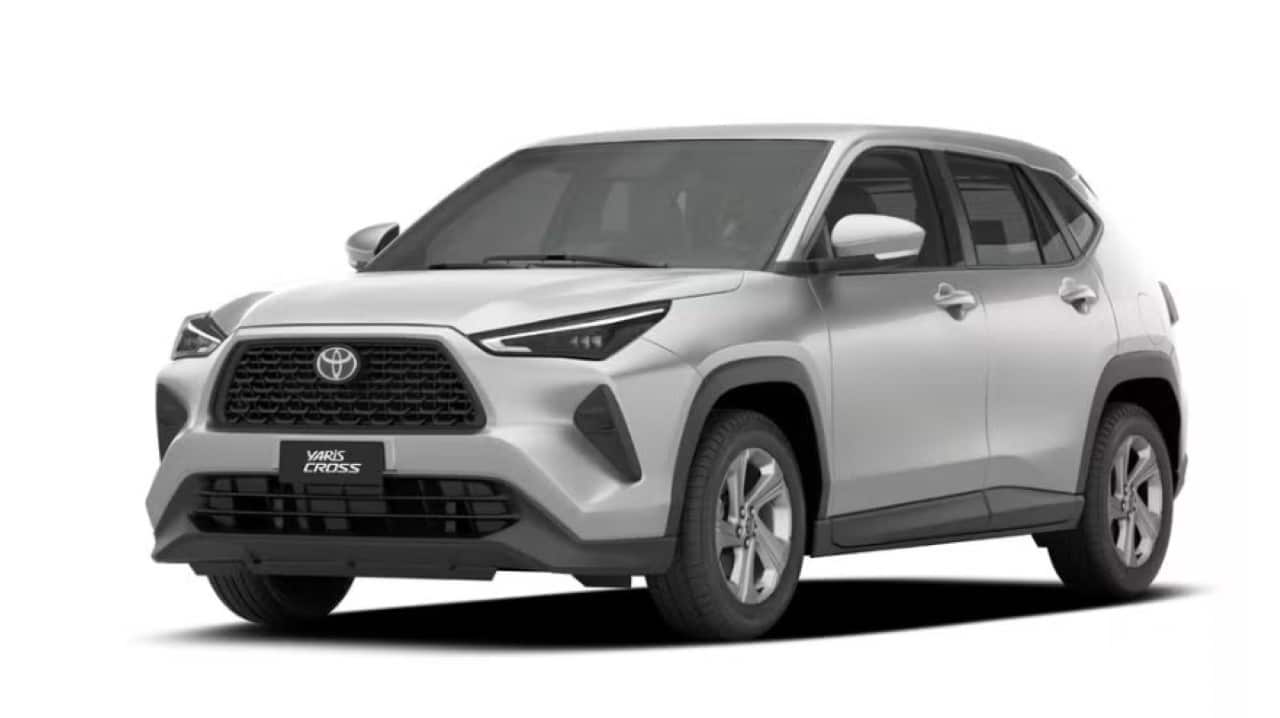
Toyota Yaris Cross XR hits the market with a price to directly challenge rivals Honda WR-V and Kicks


The compact SUV segment in the Brasil is preparing for a new phase of fierce competition with the official announcement of the Toyota. The automaker confirmed the launch of the Yaris Cross XR, scheduled to arrive at dealerships from April 2026. The model enters the market with an aggressive price positioning, set at R$149,990, aiming to compete directly with consolidated leaders in the category.
This pricing strategy puts the Yaris Cross XR in direct confrontation with the Honda WR-V and the Nissan Kicks, two of the most popular vehicles among Brazilian consumers. The arrival of the new Toyota SUV promises to reconfigure the options available in the R$150,000 range, one of the most sought-after and strategic niches for automakers operating in the country.
Initially, sales of the Yaris Cross XR will be focused on the direct sales channel, including the modality for Pessoas with Deficiência (PCD), an important audience for this type of vehicle. The expectation is that the new model will expand the Toyota’s participation in the sports utility vehicle market, offering a robust and well-equipped alternative.
The price range that defines the dispute
The value of R$149,990 for the Toyota Yaris Cross XR was not chosen at random. Ele is part of an extremely competitive edge, where every detail can influence the consumer’s purchasing decision. Analysis of direct competitors reveals how calculated this positioning was. The Honda WR-V, for example, is offered in two main versions: the EX, priced at R$147,100, and the EXL, which reaches R$152,100. Isso places the Toyota model exactly between the two Honda options, making it an attractive intermediate alternative.
On the other hand, the Nissan Kicks, in its Advance Plus version, has a price of R$149,890, practically identical to that of the new Yaris Cross. Essa parity of values further intensifies competition, leading consumers to carefully analyze equipment lists, engine performance, fuel consumption and internal space of each model to make a decision. Fighting at this price level benefits the customer, who now has more high-quality options to choose from.
Engine and performance under the hood
At the heart of the Toyota Yaris Cross XR is a 1.5 flex aspirated engine, capable of generating up to 122 horsepower and a torque of 15.3 kgfm when fueled with ethanol. Este conjunto mecânico trabalha em harmonia com uma transmissão automática do tipo CVT que simula sete velocidades, uma configuração que prioriza o conforto e a eficiência no consumo de combustível, características valorizadas pelo público do segmento. The Honda relies on a similar recipe for the WR-V, equipped with a 1.5 naturally aspirated engine that delivers 126 horsepower and 18.5 kgfm of torque, also coupled to a simulated seven-speed CVT transmission, offering a little more power. Já o Nissan Kicks uses a 1.6 aspirated engine that produces up to 113 horsepower and 15.3 kgfm of torque, combined with a CVT transmission that simulates six gears. Embora has a slightly lower power, the set is known for its smoothness and suitability for urban use. The three models, therefore, offer a balanced balance between everyday performance and economy, meeting the main demands of drivers looking for an SUV for the city and occasional trips.
Fuel efficiency in the spotlight
One of the decisive factors when purchasing a new vehicle is fuel consumption, and in this regard the dispute between the three SUVs is quite technical. The Toyota Yaris Cross XR stands out with promising numbers. Utilizando gasoline, the model records 12.6 km/l in urban cycle and 14.3 km/l on highways. With ethanol, the averages are 8.8 km/l in the city and 10.2 km/l on the highway.
The Honda WR-V has a consumption of 12 km/l in the city and 12.8 km/l on the highway when fueled with gasoline. With ethanol, the numbers are 8.2 km/l and 8.9 km/l, respectively. Estes data shows competitive efficiency, although slightly lower than that of the Toyota rival, especially on road routes.
The Nissan Kicks Advance Plus, in turn, records a gasoline consumption of 11.3 km/l in the city and 13.7 km/l on the highway. Quando the fuel is ethanol, the averages are 7.8 km/l and 9.4 km/l. Although the Embora is the least economical of the three for urban use, the Nissan model performs well on longer trips.
Dimensions and internal space for the family
The interior space and trunk capacity are essential attributes for a family SUV. The Honda WR-V leads this comparison, measuring 4.32 meters long and with a wheelbase of 2.65 meters, which translates into excellent space for occupants. Seu 458-liter trunk is the largest among the three, making it an important difference for those who need more cargo capacity.
The Toyota Yaris Cross XR has slightly more compact dimensions. São 4.31 meters long and 2.62 meters wheelbase. The Seu trunk has a capacity of 400 liters, a volume sufficient for the needs of most families, but which is behind the Honda’s competitor.
The Nissan Kicks, in turn, measures 4.30 meters in length, with the same wheelbase as the Yaris Cross, 2.62 meters. The trunk of the Kicks offers 432 liters of capacity, positioning itself as an intermediate option between its two main rivals in this regard.
Despite the small differences in measurements, the three models offer a good level of comfort for passengers. Ground clearance is also a point to be considered, with the WR-V standing out for its greater robustness when tackling ditches and speed bumps, while the other two offer a balance between comfort and ability to overcome urban obstacles.
Equipment and technology on board
All three models come well equipped as standard to justify their prices. Itens LED headlights and taillights and 17-inch alloy wheels are standard on the compared versions. The multimedia centers are another highlight, with 10-inch screens on the Yaris Cross XR and WR-V, and a 9-inch screen on the Kicks, all with wireless connectivity for Android Auto and Apple CarPlay.
Important differences appear in the details. The WR-V EXL, for example, offers an advanced safety package that includes adaptive cruise control and lane keeping assist. The Nissan Kicks Advance Plus stands out for its 360-degree camera, a very useful feature when maneuvering. The Yaris Cross XR, in turn, must rely on a balanced package of technology and comfort to attract customers.
Security as standard
In terms of security, all models analyzed offer a robust package from the entry-level versions. The three vehicles are equipped with six airbags (front, side and curtain), stability and traction control, as well as hill start assistant and ABS brakes with electronic brake distribution, ensuring a high level of protection for the occupants.
More advanced features, known as driver assistance systems (ADAS), are starting to become an important differentiator. The Honda WR-V stands out by including the Honda Sensing package in its versions, which adds adaptive cruise control (ACC), a braking system for collision mitigation and lane keeping assistant, technologies that significantly increase travel safety.
The scenario for consumers
The arrival of the Toyota Yaris Cross XR intensifies competition and creates a favorable scenario for consumers. With three high-quality models competing in the same price range, the tendency is for brands to invest in better purchasing conditions, more complete equipment packages and more attractive after-sales services to win over the public, who now have more power to choose.



