
Contamination of Hubble images by satellites could reach 96% according to new NASA study

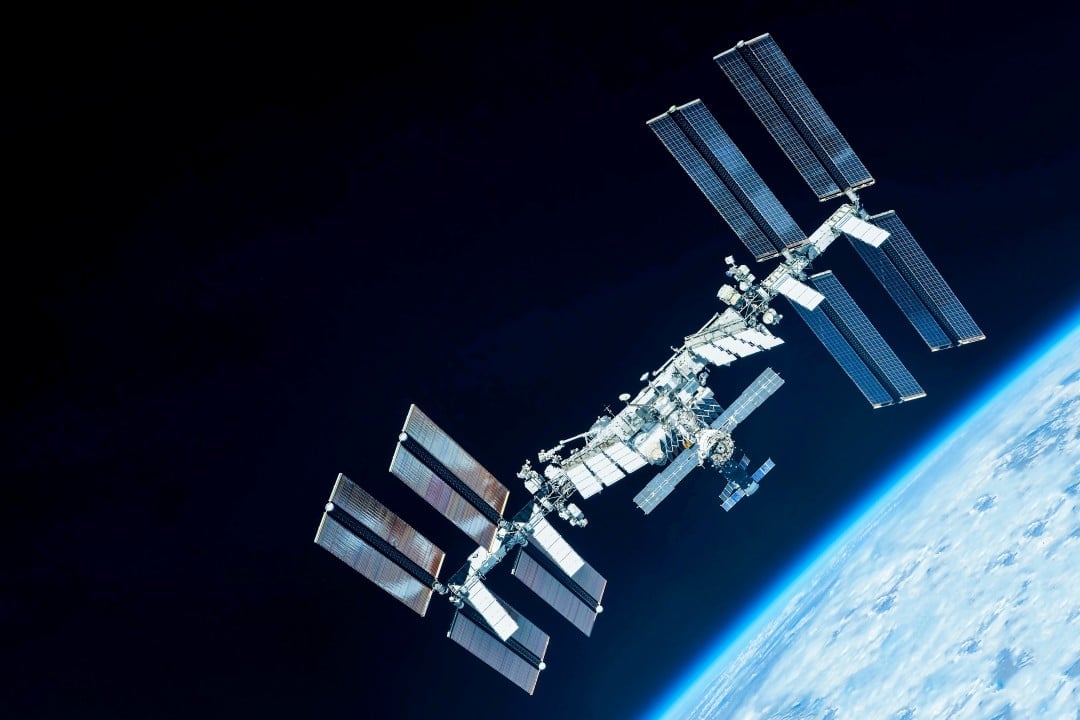
A new study led by researchers at Nasa reveals a growing threat to space astronomy, with the potential to severely compromise observations from iconic telescopes like Hubble. Simulations indicate that megaconstellations of satellites in low Earth orbit (LEO) can contaminate up to 96% of images captured by some instruments, turning the exploration of the cosmos into an increasingly greater challenge.
The research, published in the scientific journal Nature, analyzed the future scenario with the projection of up to 560 thousand satellites operating simultaneously. Empresas like SpaceX, with its Starlink project, and Amazon, with the Projeto Kuiper, are at the forefront of this expansion, which aims to provide high-speed internet globally, but which has unforeseen consequences for science.
The problem lies in the bright trails that satellites leave as they cross the telescopes’ field of view. Esses trails of light reflected from

The scope of the problem in low orbit
Órbita Baixa of Terra (LEO) is a region of space that extends up to 2,000 kilometers in altitude, ideal for communications satellites due to low latency. However, this convenience has turned the area into an extremely congested space, with an exponential increase in the number of active objects in recent years.
This accelerated growth is driven by the dramatic reduction in launch costs, a technological advancement led by private companies that have developed reusable rockets. What was once the exclusive domain of government agencies has now become a competitive and rapidly expanding market.
Space telescopes under direct threat
The Nasa study focused on the impact on four important space instruments. Três of them, which operate in low orbit, face the prospect of having almost all of their images (96%) affected by satellite tracks in the most pessimistic scenario, where all planned constellations come to fruition.
The Telescópio Espacial Hubble, one of the most important in history, is also at risk. Posicionado at an altitude of approximately 540 kilometers, it may have about 40% of its long-term exposures compromised. Embora the index is lower, it still represents a significant loss of observation time and scientific quality.
The difference in contamination rate is due to altitude. Hubble orbits just above most planned satellite constellations, giving it a slight advantage. Contudo, the increasing density of objects in LEO means that even this advantage may diminish over time.
Exponential acceleration of launches
Since 2019, the number of objects tracked in low orbit has jumped from a few thousand to more than 20,000, a statistic that highlights the speed of the new commercial space race. Reusable rocket technology, such as SpaceX’s Falcon 9, was the main catalyst, making it feasible to launch dozens of satellites in a single mission.
Governments and companies from several nations have already announced ambitious plans to launch hundreds of thousands of additional satellites by the end of the decade. Essas networks are designed for various purposes, from observing Terra to offering internet services to remote regions.
The projection of 560 thousand satellites used by Nasa represents a limit scenario, considering that all projects currently approved or under analysis by international regulatory agencies are in fact implemented. Essa estimate serves as a warning to the global community about the need for more sustainable orbital planning.
The concern is not just limited to active satellites. The increase in space traffic also increases the risk of collisions, which can generate clouds of dangerous debris. Esses debris, traveling at very high speeds, poses a threat to both operational satellites and future space missions, including manned ones.
Ground observatories are also affected
Light pollution from satellites is not a problem exclusive to orbiting telescopes; Ground-based observatories face an equally serious, perhaps even more complex, challenge. The Observatório Vera C. Rubin, located in the Chile, is a notable example. Projetado to enter full operation soon, its mission is to map the entire visible sky every few days with a 3.2 gigapixel camera, a project of unprecedented magnitude that promises to revolutionize astrophysics.
Simulations show that, even with a considerably smaller number of satellites, such as 50,000, up to 80% of Rubin images can be crossed out by bright trails. The crucial difference is that, unlike a space telescope that can theoretically adjust its orbit, a ground-based observatory is fixed. Não there is a way to divert or maneuver to avoid satellite traffic, making the problem a permanent condition that astronomers will need to work around with complex software algorithms to try to clean the data, with inevitable loss of information.
Solutions and mitigation under debate
Faced with the alarming scenario, the scientific community and satellite operators are actively discussing possible mitigation measures, although none offer a complete solution. One of the most explored proposals is the use of low-reflectivity coatings on satellites, such as dark paints or materials such as Vantablack, which absorb most of the incident light. SpaceX has already tested this approach on some of its Starlink satellites, achieving a reduction in brightness, but the trails, although fainter, have not been completely eliminated and can still interfere with sensitive observations. Outra front of action involves optimizing orbits and designing satellites to minimize the time they reflect sunlight toward Terra, especially during twilight, a critical period for astronomical observations. Manobras coordinates and sharing of real-time positioning data between all operators are also essential, but require a level of international cooperation and regulation that does not yet exist. Vale emphasize that Telescópio Espacial James Webb is immune to this specific threat, as it operates 1.5 million kilometers from Terra, far beyond the reach of the constellations in LEO, which highlights the unique vulnerability of observatories close to our planet.
The future of astronomical observation
The growing contamination of the night sky directly threatens fundamental areas of research, from the search for exoplanets and signs of life to the monitoring of asteroids that could pose a risk to Terra. Projetos that took decades to be developed and funded are at risk of having their quality and effectiveness severely compromised, requiring urgent and collaborative action to ensure that the sky continues to be a window to the universe.




