
Details of Monster Hunter Wilds’ graphics optimization on Switch 2 are exposed in alleged leak


New unofficial information about the highly anticipated Monster Hunter Wilds, from Capcom, has surfaced online, detailing possible graphical optimization strategies for a version intended as the successor to Nintendo.
The information, circulating on dataminer forums and gaming communities, suggests that Capcom is implementing specific technical solutions to overcome hardware limitations compared to more powerful platforms such as the PlayStation 5 and the Xbox Series X|S. Embora the company has not yet officially confirmed the launch of the game for the new console, the leaked details indicate advanced planning for this possibility.
The main focus of the optimizations would be to ensure a fluid and visually cohesive gaming experience, even with the specificities of the Switch 2’s hardware.
Optimization Techniques Revealed
One of the main features mentioned in the leak is a supposed “FastLoadMode”, designed specifically for the Switch version 2. The idea is to intelligently segment the game world so that the hardware processes only what is essential to the player at any given time, a crucial technique for large-scale games on portable systems. RE
Strategies to maintain graphics performance
In addition to the fast charging mode, the leak details the intensive use of Nível of Detalhe (LOD) systems. Essa technique adjusts the quality of 3D models and textures based on distance from the camera, displaying high-quality versions for nearby objects and simplifying those that are far away.
This approach significantly reduces the load on the graphics processing unit (GPU) without the player noticing a loss of visual quality during normal gameplay. LOD management is critical to maintaining a stable frame rate.
Another tool mentioned is “Occlusion Culling”, a method that prevents the graphics engine from rendering objects that are hidden behind other elements in the scene, such as a mountain or a large structure. By not processing what is not visible, the system saves precious resources.
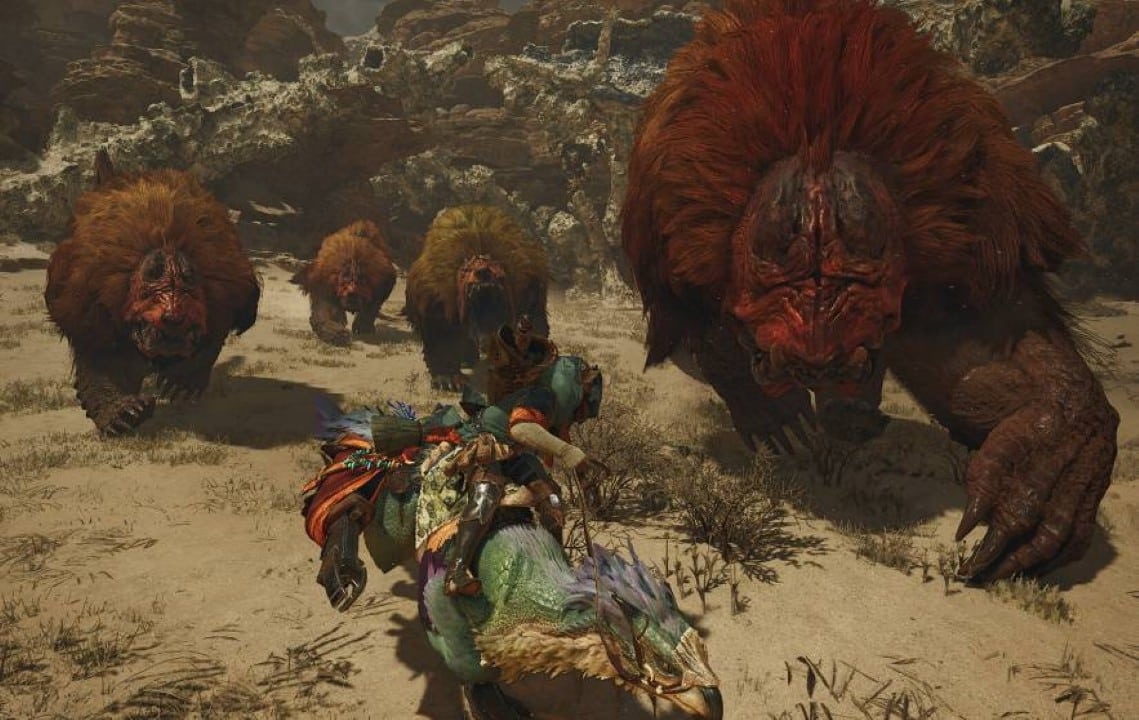
The combination of these two techniques would allow Monster Hunter Wilds to present a rich and detailed world in Switch 2, focusing processing power on the elements that really matter for player immersion, ensuring solid performance even in intense combat scenes with multiple monsters on screen.
Comparison with other platforms
According to the leaked documents, the visual experience of Monster Hunter Wilds on Switch 2 would be comparable to the “low” or “medium” settings of the PC version. Isso means that while there may be a reduction in resolution, shadow quality, and complexity of particle effects compared to the PlayStation 5 and Xbox Series X|S, the game would still maintain its art direction and impressive graphical quality for a handheld device.
The goal for Capcom would be to deliver a stable 30 frames per second, with a dynamic resolution that would adjust to maintain the fluidity of the action. Para many players, the possibility of playing such an ambitious title in portable mode would compensate for any graphical concessions, following the success of other major releases that have found a home in the Nintendo ecosystem.
The Capcom’s history with the Nintendo hardware
Capcom has a long and successful partnership with Nintendo, especially with the Monster Hunter franchise. The development of Monster Hunter Rise, which was initially an Switch exclusive, demonstrated the company’s ability to create rich, visually appealing experiences with RE Engine on more restrained hardware.
The knowledge acquired in this project would be directly applied to optimize Wilds to Switch 2. The company understands the particularities of the Nintendo hardware architecture and knows how to extract maximum performance from it.
Previous titles, such as the ports of Resident Evil to Switch, also served as a testing ground for RE Engine’s scalability.
This accumulated experience uniquely positions Capcom to deliver a high-quality port of Monster Hunter Wilds, turning what could have been a technical challenge into an opportunity to further expand its player base on the new console.
Official positioning and dates
It is important to highlight that, so far, Capcom has officially confirmed the launch of Monster Hunter Wilds only for PlayStation 5, Xbox Series X|S and PC, expected to arrive in 2025.
The information discussed is based entirely on rumors and alleged data leaks and should be treated as such until an official announcement is made. The community looks forward to more news during the next major gaming events.
The importance of RE Engine in the process
The Capcom’s proprietary graphics engine, RE Engine, is the core piece that makes all of this optimization possible. Desde debuted with Resident Evil 7, the engine has proven to be extremely versatile, capable of producing photorealistic visuals on high-end hardware while also being scalable to run efficiently on less powerful platforms.
This flexibility allows development teams to precisely adjust various graphics parameters, such as texture quality, lighting, and geometry, to achieve the ideal balance between performance and visual fidelity on each system. Para in the case of Switch 2, this means that developers can create a custom rendering profile that takes full advantage of the strengths of the new Nintendo hardware, ensuring that the essence of the Monster Hunter Wilds experience is preserved.



