
Early launch of the Galaxy A57 and A37 redefines Samsung’s strategy for the beginning of the year

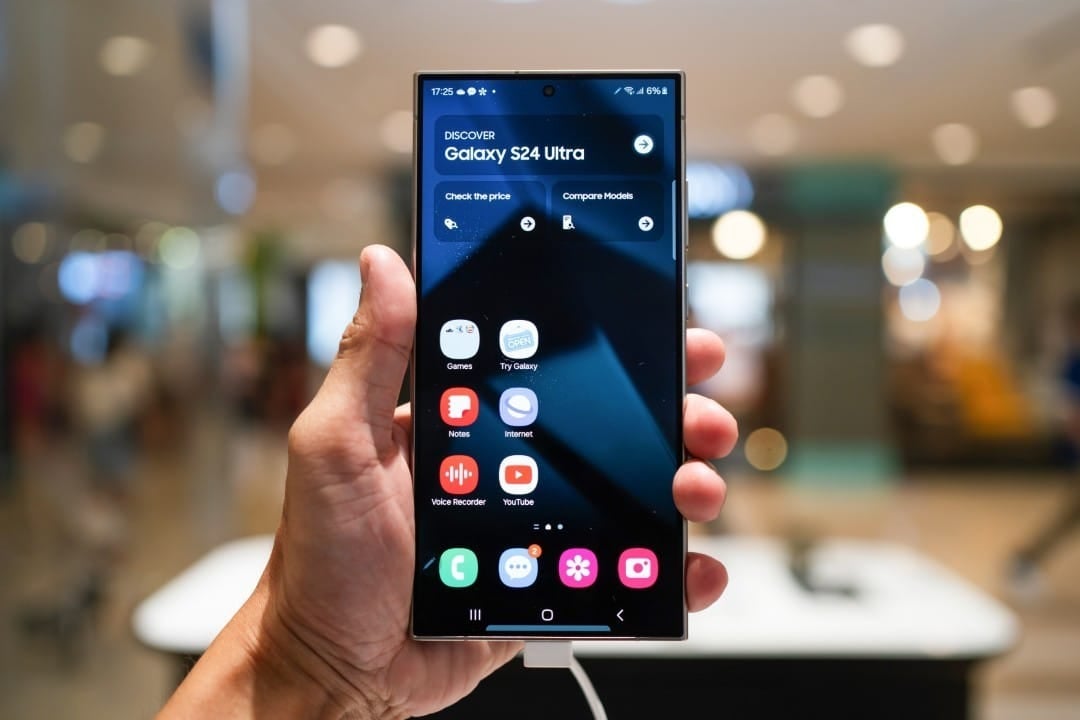
Samsung is redefining its launch calendar for the first quarter, in a strategic move that promises to shake up the smartphone market. The South Korean giant plans to bring forward the arrival of its popular intermediate models, the Galaxy A57 and the Galaxy A37, to the month of February. The Essa decision positions the A-line devices on the market even before the presentation of the long-awaited top-of-the-line Galaxy S26 series.
Traditionally, the company reserved the months of March and April to introduce new products from the Galaxy A family, taking advantage of the period after the big Unpacked event, dedicated to premium models. The change signals a new approach to competing in a fierce segment, guaranteeing consumers access to new technologies at the beginning of the year.
The change in schedule is not limited to intermediaries. The entry-level model, Galaxy A07 5G, will also have its launch advanced, expected to arrive between the end of December and the beginning of January. The objective is clear: maintain a constant flow of products and capture the seasonal demand at the beginning of the year, taking advantage of the momentum left by other promotional campaigns.

Samsung’s new strategy for line A
The decision to advance the launches of line A is directly linked to a complex scenario that involves the global supply chain and Samsung’s portfolio strategy. Analistas of the market point out that the shortage of essential components, such as DRAM memories, generated bottlenecks in the production of the most advanced models, such as the S26 series. By anticipating intermediate products, the company is able to keep its assembly lines active and supply retailers, mitigating possible negative impacts on first quarter revenue. The Essa maneuver allows the Samsung to take up valuable market space while the supply of components for higher specification models normalizes, avoiding losing ground to competitors with a more flexible supply chain.
Furthermore, anticipation works as a proactive response to fierce competition in the mid-range segment, where brands like Xiaomi, Realme and Motorola gain strength with aggressive launches. By putting its flagship A-line models on shelves early, Samsung seeks to reinforce its leadership and attract consumers who do not intend to wait for more expensive models or who are looking to upgrade their device at the beginning of the year. The distribution of these devices will be agile, prioritizing press releases and online sales channels, without the need for dedicated events, which optimizes costs and accelerates global availability.
What to expect from the new Galaxy A57 and A37
The Galaxy A57 is positioned as the most robust model of the duo, equipped with the new Exynos 1680 processor. Este chipset promises significant improvements in energy efficiency and graphics performance, making the device an interesting option for multitasking and gaming. Especula It is expected that the A57 can arrive with versions of up to 12 GB of RAM, an important differentiator in its price range.
In turn, the Galaxy A37 will be powered by the Exynos 1480 processor, which focuses on balanced performance for everyday use. This chip’s improved GPU will ensure a smooth experience in casual games and app navigation. Ambos models must maintain a design with a premium finish and the so-called “key island”, a visual identity that Samsung has adopted in its most recent devices.
Some rumors indicate that the Samsung could surprise by equipping the entire line with Super AMOLED screens with a refresh rate of 120 Hz, a feature previously limited to more expensive models. Além Furthermore, there are expectations that the Galaxy A57 will incorporate superior fast charging support than its predecessors, although the removal of the microSD card may be a change felt by some users.
Another highlight must be the set of cameras, with improved sensors to capture high-quality images in different lighting conditions, reinforcing the A line’s reputation as one of the best photographic options in the mid-range segment.
Galaxy A07 5G as a gateway
The Galaxy A07 5G will play a crucial role in the Samsung strategy to democratize access to fifth-generation connectivity. Posicionado as one of the brand’s most affordable 5G phones, it aims to serve a broad consumer base in emerging markets. The device must maintain solid specifications, such as a 6.7-inch screen and a 5,000 mAh battery, guaranteeing autonomy for a full day of use. The main update should focus on software, with the device leaving the factory with the Android 16 and the newest Samsung interface.
Challenges in the production of the Galaxy S26 line
As the A-line moves forward, production of the Galaxy S26 flagships faces significant obstacles. The global shortage of DRAM memory, which has already led competitors such as Xiaomi and OPPO to suspend their purchases, caused an increase of almost 50% in the price of the component. Esse scenario forces Samsung to recalculate its production and pricing strategies. Além Furthermore, the transition to the new 2 nanometer (nm) manufacturing process for the Exynos 2600 chip presented an initial yield rate of just 35%, a number considered low and which requires more time for stabilization. Esse technical challenge is causing delays, specifically in the S26 and S26+ variants, whose mass production was postponed until January, while the S26 Ultra model, which uses a different architecture, began production in December to guarantee stock at launch. The company is also implementing new technologies, such as the Heat Pass Block in the Exynos 2600, to optimize thermal management and prevent overheating issues, a recurring concern in high-performance processors.
Technical details of the new Exynos processors
The Exynos 2600, manufactured using the 2nm process, represents an important technological leap for the Samsung, placing it ahead of the Snapdragon in terms of industrial process. Apesar of the production challenges, the new chip promises a 21% increase in energy efficiency and transfer speeds of up to 10.7 Gbps.
The distribution of chips between markets will continue, with around 30% of global S26 and S26+ units using the Exynos, mainly in the Coreia of the Sul, Europa and part of the Ásia. The other 70%, including the American and Chinese markets, will be equipped with the Snapdragon 8 Gen 5.
For the mid-range, the Exynos 1680 and 1480 processors are designed to deliver superior graphics performance and enhanced artificial intelligence capabilities, elevating the user experience in tasks such as computational photography and battery optimization.
Event Unpacked focused on artificial intelligence
The big launch event for the S26 line, Unpacked, is scheduled for February 25th at São Francisco, at Estados Unidos. The main focus of the event will not just be hardware, but advances in artificial intelligence, with Samsung showcasing the next generation of Galaxy AI.
This emphasis on software and AI is an effort to differentiate its products in a market where hardware evolutions are increasingly incremental. The devices should arrive in stores between March and April, depending on the stabilization of production and global distribution logistics.
Movement in the smartphone market
The reorganization of the Samsung calendar is a calculated move that could reset consumer expectations for the first half of the year. By making competitive intermediate products available sooner, the company pressures its rivals to speed up their own launch cycles so as not to lose market share.
This strategy also strengthens the Samsung ecosystem, offering new options in all price ranges at the beginning of the year. The move creates a continuous sales stream, starting with the affordable A07 5G in January, moving to the mid-range A37 and A57 in February, and culminating with the S26 flagships in March.



