
Extreme radiation on Uranus was caused by atypical solar wind, Voyager 2 data reveals

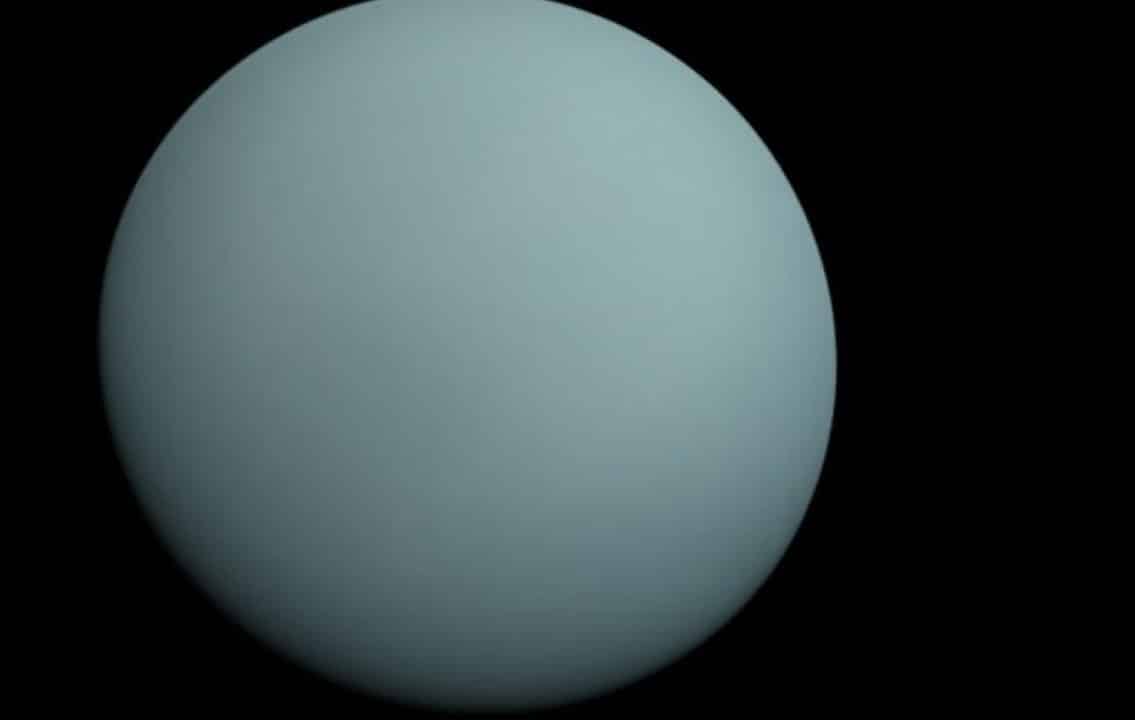
A reanalysis of data collected almost four decades ago by the Voyager 2 probe has brought the solution to one of the biggest enigmas in planetary exploration: the origin of the intense radiation belt of Urano. Pesquisadores of Southwest Research Institute (SwRI) concluded that the historic measurement, carried out in January 1986, captured the planet under the effect of a transient and powerful event in the solar wind, an exceptional condition that accelerated electrons to energies much higher than expected. Essa discovery not only contextualizes observations of Voyager 2 as an atypical moment, but also deepens understanding of how ice giant magnetospheres interact with particles emitted by Sol, a process that has proven to be much more dynamic than previously imagined. The study uses modern knowledge of plasma physics, applied to ancient data, to rewrite an important chapter about the seventh planet in our solar system.
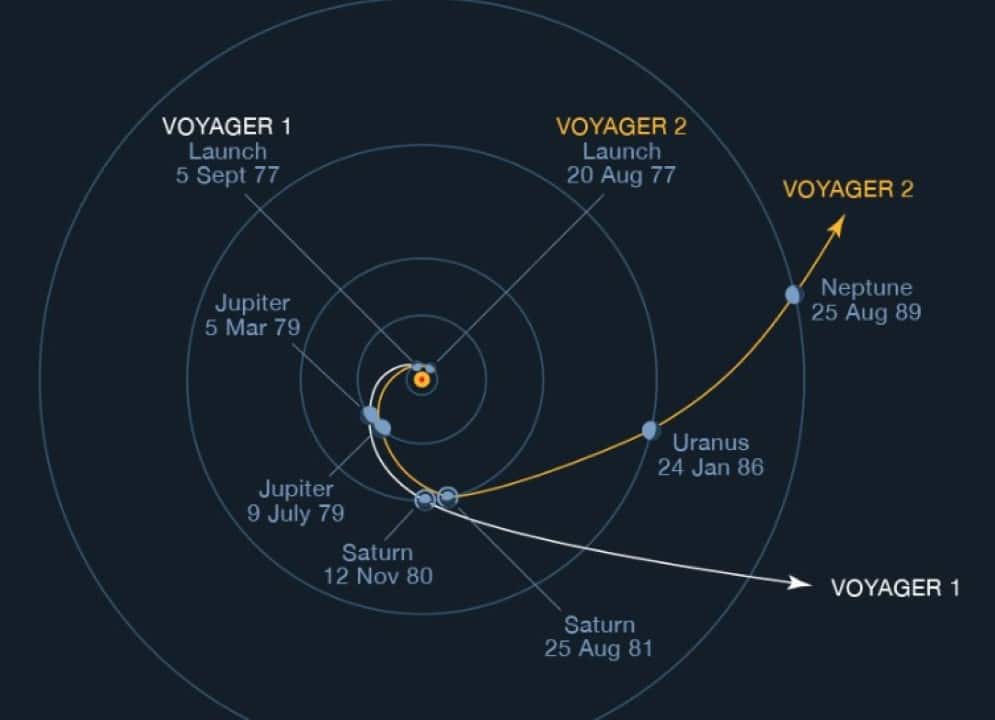
Voyager 2 remains the only mission to have visited Urano, providing a unique and valuable set of direct measurements. The original data described an environment with a relatively weak ion belt, but an electron belt with surprising intensity that is difficult to explain. Essa anomaly has challenged theoretical models for decades, raising questions about the mechanisms that could sustain such high levels of radiation trapped around the planet.
The difficulty in explaining the phenomenon increased when comparing Urano with other planets and even with exoplanets. The recorded intensity seemed incompatible with known particle acceleration processes for a planetary environment of that type. The solution required a new approach, looking not only at the planet, but at the space environment that surrounded it at the exact moment of the probe’s flyby.
The 1986 data enigma
When the Voyager 2 probe passed by Urano, its instruments detected high-frequency plasma waves, which at the time were considered the most powerful recorded on its entire journey through the solar system. The initial interpretation, based on knowledge of space physics from the 1980s, suggested that these waves should have a dispersion effect, that is, they would push electrons into the planet’s atmosphere, weakening the radiation belts instead of strengthening them. Essa apparent contradiction between the presence of strong waves and an intense electron belt has perplexed the scientific community for years.
With the advancement of terrestrial observations and missions in orbit of Terra in the following decades, understanding of the physics of magnetospheres evolved significantly. Scientists have discovered that under certain specific conditions, these same high-frequency waves can actually act as particle accelerators. Elas are capable of transferring energy extremely efficiently to electrons, injecting an extra boost into the radiation belts and raising their particles to relativistic energies, that is, to speeds close to that of light.
The key to the mystery: the solar wind
The new research proposes that a transient structure in the solar wind, known as the co-rotating interaction region (CIR), was crossing the Uranian system exactly during the flyby of Voyager 2. A CIR forms when a fast solar wind stream, expelled from a coronal region of Sol, catches up and collides with a slower solar wind stream emitted earlier. Essa collision creates a shock wave that compresses the plasma and magnetic field, generating a zone of high density and turbulence that propagates through space. Upon reaching a planet’s magnetosphere, a CIR can trigger a series of energetic processes, including the generation of very intense plasma waves. The SwRI researchers argue that it was this interaction that provided the energy needed to drive the high-frequency waves in Urano and, consequently, accelerate the electrons to anomalous levels. Essa explanation contextualizes the 1986 measurements not as a permanent state of the planet, but as a record of a specific, short-lived space weather event.
Parallels with the Earth’s magnetosphere
To validate the hypothesis, the team of scientists looked for similar events recorded closer to home. A clear parallel was found in an event that occurred at Terra in 2019, when a fast solar wind structure, with characteristics of a CIR, reached the Earth’s magnetosphere and caused a massive acceleration of electrons in the Van Allen belts, which are the radiation zones that surround our planet.
Plasma and wave signatures observed at Urano by Voyager 2 showed striking similarities to processes recorded by satellites orbiting Terra during geomagnetic storms. Essa comparative approach was instrumental in demonstrating that the same fundamental physical mechanisms operate in different planetary magnetospheres, despite vast differences in scale, composition and magnetic orientation.
The study reinforces the idea that the magnetosphere of Urano, despite its unique and eccentric configuration, responds to solar wind perturbations in predictable ways and analogous to those observed on other planets in the solar system, such as Terra and Júpiter.
How chorus waves accelerate particles
The central mechanism behind the acceleration of electrons are so-called chorus waves. Essas are very low frequency electromagnetic emissions that, when converted into sound, resemble a chorus of birds. Elas are generated in regions of low-density plasma within the magnetosphere, usually in response to injections of energetic particles from the planet’s magnetic tail.
The interaction caused by the CIR in Urano probably boosted the generation of chorus waves in an improved and generalized way. Essas waves have the right frequency and polarization to resonate with electrons, transferring energy to them continuously and efficiently. Esse process is similar to pushing a child on a swing at just the right moment so that they go higher and higher.
In this way, electrons that were already present in the magnetosphere were quickly accelerated to speeds close to that of light. Este phenomenon explains why energy levels measured by Voyager 2 drastically exceeded predictions based on standard equilibrium models, which did not take into account transient events of large magnitude.
The reevaluation of the data therefore transforms the interpretation of the measurements, showing that the probe witnessed the direct result of non-normal solar wind conditions, a true “space storm” on the ice giant.
A new perspective on the historic mission
The Voyager 2 data provided the only in situ measurements of the magnetospheric environment of Urano to date. Além of the elevated relativistic electron fluxes, the instruments also detected significant compression of the magnetosphere and substorm activity, which are sudden releases of energy stored in the planet’s magnetic tail. Esses elements align perfectly with patterns seen during geomagnetic storms in Terra, reinforcing the validity of the new explanatory model.
The science of space physics has advanced enormously since 1986, allowing researchers to reinterpret phenomena that were previously ambiguous. Ondas that were previously seen only as a particle loss mechanism are now recognized for their dual role, also acting as powerful accelerators. Essa paradigm shift was crucial to finally connecting the dots and solving the mystery of Urano.
Relevance to other ice giants
The findings of this study have direct implications for other planets with similar characteristics, especially Netuno, the other ice giant in our solar system. The findings highlight the extreme variability of radiation belts in response to solar wind activity, suggesting that the radiation environment of these distant worlds may be much more severe and dynamic than previously thought. Questões important questions remain about the exact physics of intense waves and how they form in magnetospheres as different as that of Urano, which has an extreme magnetic tilt.
The urgency of new exploration in Urano
The results of the reanalysis reinforce the importance and need for a new mission dedicated to Urano, preferably an orbital probe. The one-off observations of Voyager 2, while revolutionary, offered only a snapshot of a complex and dynamic system. A long-duration mission would allow monitoring variations in the radiation environment over time and correlating them with changes in solar wind conditions, providing crucial data for testing and refining current models.
Understanding how transient events can drastically alter a planet’s radiation environment is critical not only for planetary science, but also for planning future robotic missions. Estudos futures in




