
NASA’s Orion spacecraft carries four astronauts into lunar orbit on the Artemis II mission in February

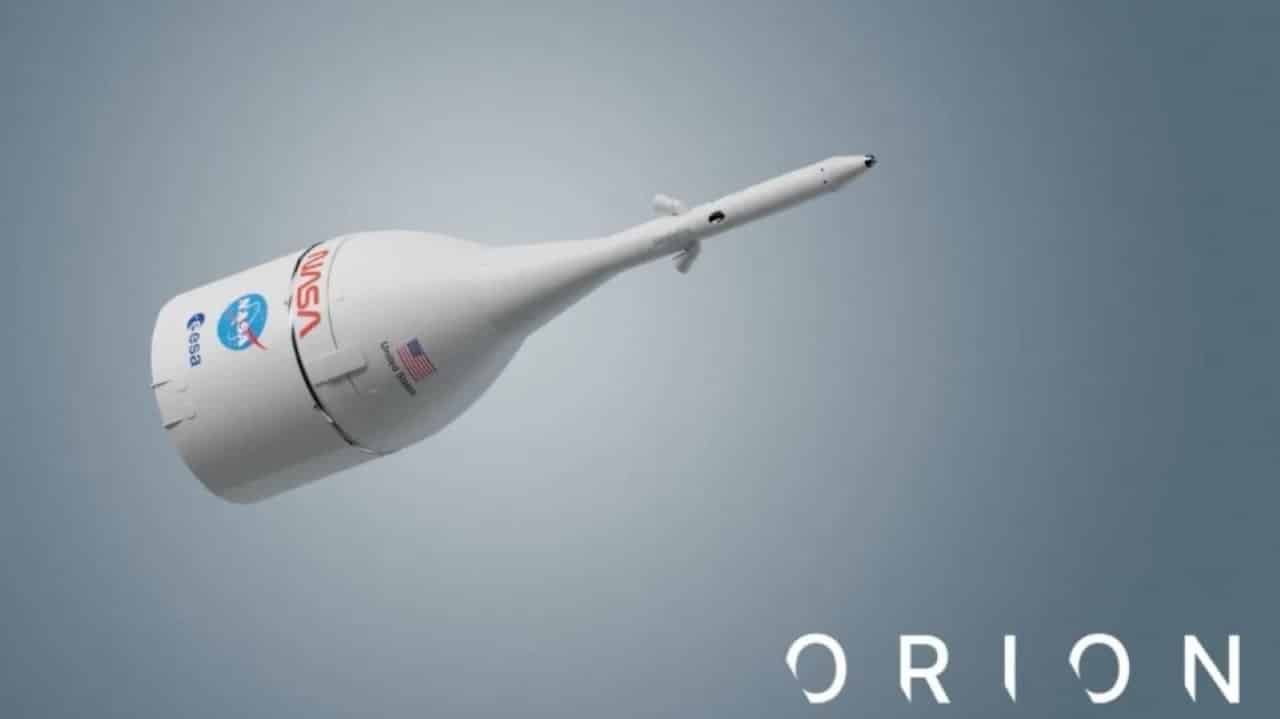
NASA is advancing preparations for the launch of the Artemis II mission, scheduled for a window that opens on February 6, 2026, from Centro Espacial Kennedy, at Flórida. The Orion spacecraft, developed to transport humans to deep space, will take four astronauts on a trajectory of around 10 days around Lua, without landing on the natural satellite. Essa will be the first manned mission of the Artemis program, which resumes human flights beyond low Earth orbit after more than 50 years.
The vehicle will be powered by the Space Launch System (SLS) rocket, the most powerful in operation, and represents an essential step towards future lunar explorations and missions to Marte. Orion operates autonomously for up to 21 days, providing full life support to crew members Reid Wiseman, Victor Glover, Christina Koch and Jeremy Hansen.
Preparations include the recent deployment of the SLS and Orion array to the launch pad, completed in January, with final testing underway to ensure safety and performance.
- Crew composed of three North American astronauts and one Canadian;
- Trajectory includes passage on the far side of Lua;
- Main objective validates systems for longer missions.
Crew module structure
The Orion crew module forms the spacecraft’s habitable core, designed to protect astronauts in extreme space conditions. Ele consists of a pressure vessel built with seven welded aluminum alloy pieces, ensuring strength and lightness.
The airtight structure prevents air or moisture leaks, while the five-meter-diameter heat shield at the base absorbs temperatures of up to 2,760°C during atmospheric re-entry. The material Avcoat, applied in blocks, burns in a controlled manner to dissipate excessive heat.
External thermal protections
The conical sides of the module have 1,300 silica fiber plates in the backshell, which insulate the spacecraft from both the intense cold of the vacuum and the heat of re-entry. Essas plates maintain structural integrity in drastic thermal variations.
The design prioritizes efficiency, reducing total mass and increasing reliability on long missions. Testes carried out after Artemis I identified improvements, implemented in subsequent versions for greater security.
We’re going back to the Moon — very soon! During Artemis II, astronauts will venture around the Moon and back on their first flight aboard NASA’s SLS rocket and Orion spacecraft.
— NASA’s Glenn Research Center (@NASAglenn)January 24, 2026
Get to know some more of the NASA Glenn employees who’ve made contributions to@NASAArtemis⬇️🧵pic.twitter.com/pJupn2EQnD
Interior designed for comfort
The interior of the Orion includes four adjustable seats, capable of accommodating 99% of the adult human population, fixed to an aluminum frame called the backbone assembly. Esse floor also houses storage compartments, which serve as shelter in solar radiation events.
Tanks provide drinking water, and a system heats food, while a compact hygiene compartment meets basic needs for men and women. Todos the elements aim to keep the crew operational for up to 21 days without external support.
European Service Module
Provided by Agência Espacial Europeia (ESA), the service module is positioned below the capsule and acts as a propulsion and vital support center. Ele integrates 33 engines of different sizes, with a main one for orbital maneuvers and emergencies.
Four solar panels, with 15 thousand cells, generate electrical energy converted for continuous use. Radiadores and heat exchangers regulate internal temperatures, maintaining habitable conditions.
Tanks store oxygen, nitrogen and water, transferred to the crew module as needed. Essa international partnership optimizes resources and divides technical responsibilities.
Propulsion and power systems
The service module allows insertion into lunar orbit and safe return to Terra. The auxiliary engines correct the trajectory, while the main engine performs larger burns.
Power generation depends exclusively on solar panels, which detach after launch. Esse system eliminates dependence on fuel for electricity, increasing autonomy in deep missions.
Advanced environmental control
The regenerable system removes carbon dioxide and moisture from cabin air, efficiently recirculating oxygen. Sensores monitor pressure and temperature, automatically adjusting for astronaut comfort.
Three main screens, 60 switches and hand controllers allow direct operation of the spacecraft. Esses commands guarantee human intervention in critical scenarios.
Parachute landing mechanism
Eleven parachutes deploy in sequence after reentry, reducing speed from 523 km/h to about 32 km/h before impact in the ocean. The Earth’s atmosphere begins to decelerate at 40,000 km/h.
The ejection occurs at around 7,000 meters of altitude, ensuring safe opening. Testes extensive validated the system under real conditions.
Final preparations at Kennedy
The SLS rocket, 98 meters high, moved to platform 39B in January, marking the final phase of integration. Centenas of engineers follow daily checks.
A general rehearsal simulates a countdown days before launch, identifying possible anomalies. The February window depends on positive results from these tests.
Artemis II crew
Reid Wiseman commands the mission, with experience on previous space stations. Victor Glover acts as pilot, bringing expertise from previous flights.
Christina Koch and Jeremy Hansen complete the team, with Koch holding the record for female stay in space. Hansen represents Agência Espacial Canadense.
They have been training for months in Orion simulators, preparing for all phases of the 10-day flight.
Importance for future explorations
Orion validates essential technologies for lunar landings on Artemis III and missions to Marte planned for decades to come. Sua autonomous capability reduces risks over greater distances.
The vehicle separates the service module before reentry, returning only the manned capsule. Essa configuration optimizes mass and security.
The Artemis II mission demonstrates human capabilities in deep space, paving the way for permanent lunar bases. Dados collected guides continuous improvements.
Innovations in thermal safety
Heat shield improvements incorporate lessons from the previous unmanned mission. Updated manufacturing Téc Samuelnicas increases uniformity of Avcoat.
Side plates resist repeated thermal cycling while maintaining structural integrity. Esses advances increase reliability in high-energy trajectories.
International partnership in the project
ESA contributes successive service modules, strengthening transatlantic collaboration. Airbus coordinates European assembly, integrating components into Estados Unidos.
Lockheed Martin leads construction of the capsule, combining industrial expertise with NASA requirements. Essa division accelerates development and reduces costs.
Detailed planned trajectory
Orion follows a hybrid orbit, reaching distances of up to 9,600 km beyond Lua. The flight tests real-time navigation and delayed communications.
Return uses lunar gravity for free acceleration, saving propellant. Toda the journey lasts approximately 10 days, with constant monitoring of Terra.
The mission collects environmental and human performance data in deep space. Resultados guide adjustments for more ambitious flights.



