
Proliferation of satellites in low orbit puts future space observations at risk, study says

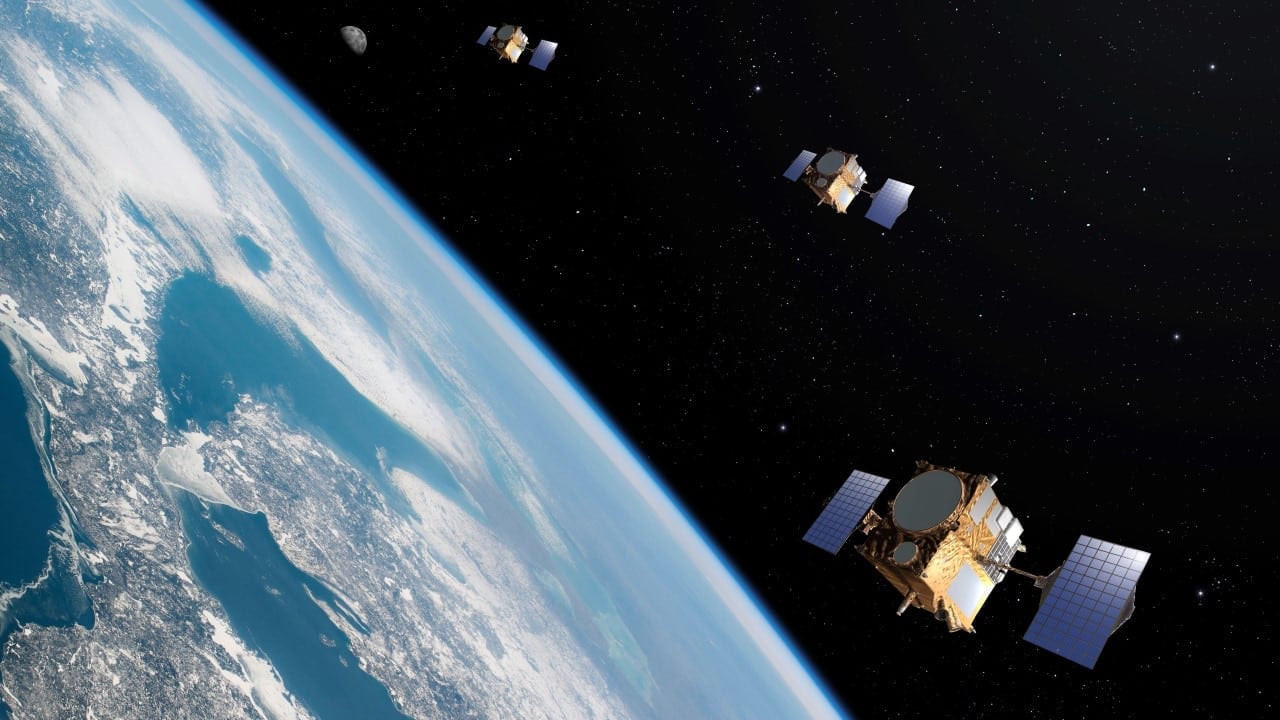
An alarming study led by NASA points out that the growing number of mega-constellations of satellites in low Terra orbit could severely compromise astronomical research. The analysis, published in the magazine Nature, simulates the effect of more than 560 thousand satellites planned by companies such as SpaceX, Amazon and Chinese state projects. The conclusion indicates that up to 96% of images captured by future space missions could be contaminated by light trails.
The exponential increase in the number of satellites, which jumped from approximately two thousand in 2019 to more than 15 thousand, represents a new era of challenges for observing the cosmos. Iconic Observatórios like Hubble and more recent missions like SPHEREx are already feeling the effects. Scientists’ main concern is that reflections of sunlight from these objects will erase faint cosmic signals, essential for discovering distant galaxies and exoplanets.
Simulations predict that missions planned for the next decade, such as Agência Espacial Europeia’s ARRAKIHS and the Chinese Xuntian telescope, will face the greatest challenges. Widespread contamination can invalidate long periods of exposure, making the collection of useful data a slower and more costly process, threatening the advancement of crucial areas of cosmology and astrophysics.

Simulations reveal the scope of the problem
To reach these conclusions, astronomers from NASA’s Centro and Pesquisa Ames used public data provided by the satellite operators themselves. Eles modeled the orbital trajectories, mainly concentrated at altitudes between 500 and 700 kilometers, where most broadband internet constellations plan to operate.
The computer models cross-referenced these trajectories with the fields of view and exposure times typical of major space telescopes. The results showed that, in the scenario with 560 thousand satellites, a standard image of Hubble would have, on average, two satellite tracks, a drastic increase from current levels.
Current telescopes face growing trails
The Telescópio Espacial Hubble, one of the most important instruments in the history of astronomy and in operation since 1990, already highlights the problem. Desde 2018, the rate of images with satellite trails rose to 4%. With the projected growth of constellations, this percentage could reach 40%, which would require a significantly greater effort in processing and cleaning the data.
Another affected observatory is SPHEREx, recently launched to map the sky in 102 different wavelengths. Sua technique of accumulating multiple short exposures helps mitigate the problem, but bright trails still require manual removal, a laborious process that consumes search time.
Unlike ground-based observatories, which can pause observations when a satellite is about to cross their field of view, space telescopes do not have this flexibility. Once in orbit, their trajectory is fixed, making them vulnerable to the increasing density of objects around them.
Impact on terrestrial observatories worsens
The problem is not restricted to space. In fact, for observatories on the ground, the situation is even more critical. Observatório Vera C. Rubin, located at Chile, was designed to perform the most comprehensive survey of the night sky ever, collecting an unprecedented amount of data.
Projections indicate that, even with fewer than 50,000 satellites, up to 80% of their images could be affected by light trails, especially during twilight, when satellites in low orbit still reflect sunlight.
Unlike a space telescope, the Vera C. Rubin cannot adjust its orbit or position to avoid interference. The only solution is to develop complex algorithms to identify and remove traces, but this is not always perfect and can lead to the loss of valuable information.
Previous studies, such as those carried out by the Legacy Survey of Space and
Proposals to mitigate contamination
Given the severity of the scenario, the scientific community and satellite operators are actively searching for solutions. One of the most discussed proposals is the imposition of altitude limits, keeping mega-constellations in orbits below 500 kilometers. Isso would allow future telescopes to be positioned above the highest traffic zone, but this measure is resisted by companies, as lower orbits increase atmospheric drag and reduce the useful life of satellites.
Another front of action involves the development of technologies to reduce the reflectivity of satellites. Applying special ultra-dark paints, similar to Vantablack, could reduce reflections by more than 50%. SpaceX has already carried out tests with prototypes, such as the “DarkSat” and the “VisorSat”, which incorporates a shield to block sunlight, with promising results, but implementation across the entire fleet is still a logistical and financial challenge. The União Astronômica Internacional (IAU) is coordinating these efforts through its Centro to the Proteção of the Céu Escuro and Silencioso (CPS), which serves as a bridge between astronomers, industry and regulators.
Shared orbits generate potential collisions
Light contamination is only part of the problem. The increasing density of objects in low Terra orbit drastically increases the risk of collisions. Telescópios like the Chinese Xuntian, which will orbit at about 450 km altitude, will share a space region dangerously close to constellations like Starlink, which operates at 550 km. A collision would not only destroy a billion-dollar scientific instrument, but also generate a cloud of debris that could trigger a chain reaction, known as Síndrome of Kessler, rendering entire swaths of Earth’s orbit unusable for decades. American Astronomical Society has already issued formal warnings about this risk, putting pressure on regulatory agencies like the US Federal Communications Commission (FCC) to establish stricter rules for managing orbital traffic and mitigating debris before the situation becomes irreversible.
Future missions require urgent action
The Agência Espacial Europeia ARRAKIHS mission, which is scheduled to launch in the early 2030s, exemplifies the urgency of the situation. Projetada to map dark matter using extremely long exposures, your images would be rendered useless by the presence of contrails. Simulações indicate that, in a scenario with one million satellites, each image could record up to 165 tracks, making scientific analysis practically impossible. Da Likewise, the wide field of view of the Xuntian would make it susceptible to dozens of simultaneous interferences. Astrônomos from around the world emphasize that immediate global coordination is needed to balance telecommunications needs with the preservation of scientific research.
Historical growth of constellations
The orbital expansion experienced in recent years is unprecedented. Entre the launch of Sputnik in 1957 and the year 2020, less than 10 thousand satellites have been placed in orbit. Contudo, just between 2021 and 2025, the number of launches exceeded the total of the previous seven decades combined. Projetos like Guowang of China, which plans 14 thousand satellites, and Projeto Kuiper of Essa space race, although it promises to democratize internet access in remote areas, is straining the orbital environment at an unsustainable rate.
International collaborations advance
In response, space agencies and scientific organizations are stepping up collaboration. NASA actively participates in workshops like SATCON, which bring together scientists and industry representatives to define best practices and develop mitigation policies. Agência Espacial Europeia (ESA) and Administração Espacial Nacional of China (CNSA) are integrating satellite interference simulations into planning their future missions. Além Furthermore, Nações Unidas reports on the sustainable use of orbital space now include specific recommendations from the astronomical community, signaling a growing recognition of the problem on a global level.




